By Prof Sunday Bobai Agang
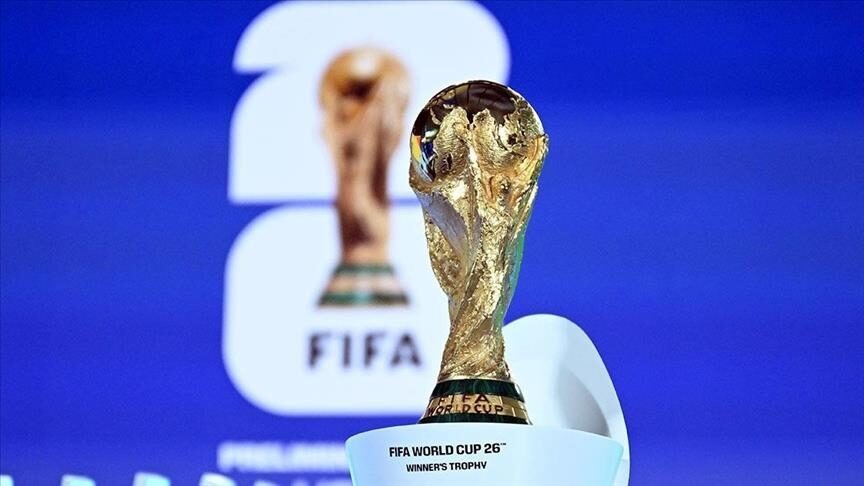
On the morning of June 12, 2026, Nigeria commemorated 27 years of unbroken democracy, a milestone that should have been filled with pride and celebration. However, as the world turned its attention to the opening ceremonies of the FIFA World Cup, a stark reality emerged: the green-white-green flag of Nigeria was conspicuously absent from the grand spectacle. For millions of Nigerians, this absence was not merely a sporting disappointment but a poignant moment of national reflection.
The missing flag symbolises a much deeper malaise afflicting the country—a profound crisis of leadership, accountability, and a deteriorating moral compass. The absence of Nigeria from the 2026 World Cup is emblematic of a national predicament that extends far beyond the realm of football. It serves as a stark reminder of the myriad failures that have come to define the Nigerian experience, particularly in the realms of governance and public trust.
The Super Eagles’ failure to qualify for the tournament was not an isolated incident; it was the result of a series of missteps characterised by unstable coaching, poor planning, and a lack of strategic vision. These failures are microcosms of the systemic decay that permeates Nigeria’s broader public institutions, where accountability is often sacrificed at the altar of personal interests and political patronage.
Football, as a national passion, does not exist in a vacuum. National sporting institutions often mirror the broader realities of the society in which they operate. When those institutions become fragile, accountability diminishes, and merit is consistently overlooked, the ramifications are felt across all sectors, including sports. The absence of Nigeria’s flag from the World Cup is a manifestation of this decay, revealing the cracks in a society where integrity has been compromised.
In Nigeria, the definition of corruption must be re-evaluated. While financial theft remains a significant national obstacle, corruption has morphed into a cultural norm that is far more insidious. It manifests itself in everyday life, where fairness is supplanted by nepotism, competence is sacrificed on the altar of ethnic loyalty, and public office is commandeered for private gain rather than the common good. This pervasive culture of corruption undermines the very institutions that were established to serve the public interest, leading to a situation where individuals benefit disproportionately at the expense of the collective.
This moral erosion has given rise to a “crisis of trust.” Citizens across the political spectrum increasingly feel that their voices are falling on deaf ears, that their concerns are ignored in the corridors of power. Political scientist Larry Diamond has cautioned that democratic decline seldom occurs suddenly; rather, it unfolds gradually as institutions weaken and public confidence erodes. This slow but steady degradation is evident in the disillusionment that pervades the populace.
In light of these realities, a strategic solution is imperative—one rooted in what I term the “weapon of righteousness.” Nations do not ascend based solely on economic policy; they rise on the strength of their moral foundations. Corruption poses the question: “Who is connected?” In contrast, righteousness demands: “Who is qualified?” This fundamental shift in focus is crucial for Nigeria’s recovery.
To reclaim integrity, there must be a concerted national effort. Educational institutions must reward excellence rather than mediocrity, empowering the next generation to aspire to higher standards. Religious communities must model accountability and transparency, fostering environments where ethical behaviour is the norm rather than the exception. Public officials need to embrace a philosophy of servant leadership, placing the needs of the people above their own ambitions.
The reality is that nations do not fail simply due to a lack of resources. They fail because they abandon what is morally right. Nigeria’s future will not be secured through the election of new leaders or the passing of new laws alone. Instead, the nation must return to a moral centre—a foundational ethos that prioritises righteousness over expediency.
As Nigeria continues along its journey through the 27th year of its democratic experiment, the “empty seat” left by the Super Eagles serves as a painful yet instructive reminder of the work that lies ahead. This void is a clarion call for introspection and action. The nation must heed the warning that echoes from the empty stands of the World Cup stadium, prioritising excellence in every facet of society.
In the pursuit of a better future, Nigerians must come together to dismantle the structures of corruption that have held the nation back for far too long. The missing flag is not just a symbol of disappointment; it is a challenge to rise above the status quo, to rebuild and redefine what it means to be Nigerian in a world that is all too ready to overlook the nation’s potential.
In conclusion, the absence of the Nigerian flag at the World Cup is a reminder of the moral decay that threatens the nation’s fabric. It urges us to reclaim our identity, to strive for a society grounded in integrity, accountability, and excellence. Only then can Nigeria hope to emerge from the shadows of its past and take its rightful place on the global stage.
–Prof. Sunday Bobai Agang is the Executive Director, Optima Centre for Exploration and Learning (OCEL), New GRA, Behind Mission Mind, Jos North LGA, Plateau State
We’ve got the edge. Get real-time reports, breaking scoops, and exclusive angles delivered straight to your phone. Don’t settle for stale news. Join LEADERSHIP NEWS on WhatsApp for 24/7 updates →
Join Our WhatsApp Channel