By Alfred Okoigun
Every generation inherits a defining challenge. A question that ultimately determines whether it advances or declines.
For our parents’ generation, the question was political independence. For many nations that emerged after the Second World War, it was industrializationindustrialisation.
For our generation, the question is different. It is more complex. More urgent. And perhaps more consequential. The question before us is this: Can Nigeria successfully transform resource wealth into knowledge wealth? Because make no mistake:
The future will not belong to nations that merely possess resources. It will belong to nations that possess capabilities. It will belong to nations that can create, innovate, solve problems, and continuously generate value through knowledge.
That is the defining question of our time. And the answer will determine the future of our nation. When Nigeria gained independence, we were blessed with extraordinary natural endowments. Oil. Gas. Minerals. Agricultural land. A strategic geographic location. And most importantly, a large and energetic population, estimated at 55.6 million, about the 10th to 12th in the world by population at the time. For decades, our national conversation focused heavily on the resources beneath our soil. But history has taught us an important lesson.
Natural resources can create opportunity. They cannot guarantee prosperity. Resources can generate income. But knowledge creates wealth. Resources can be exhausted. Knowledge compounds. Resources are inherited. Knowledge is built.
And nations that fail to understand this distinction eventually discover that possessing resources and creating prosperity are not the same thing.
The countries that dominate the global economy today understood this principle long ago. South Korea’s journey may be one of the most instructive lessons for Nigeria.
In the early 1960s, South Korea was one of the poorer nations in the world, with a national economy worth only a few billion dollars and exports accounting for less than three per cent of GDP.
Its leaders made a deliberate choice. They decided that their future would not be determined by what they lacked. It would be determined by what they built. They invested heavily in education. They invested in engineering. They invested in research.
They invested in technology. Today, South Korea is a nearly two-trillion-dollar economy and home to globally dominant companies such as Samsung, Hyundai, LG, and SK Group. Its exports account for more than forty per cent of GDP, and it ranks among the world’s leading nations in research and development, advanced manufacturing, semiconductors, and digital technology. Sixty years ago, few people would have imagined such an outcome.
That is the power of vision combined with execution. Singapore demonstrates what is possible when a nation commits itself to human capital development.
At independence in 1965, Singapore was a small trading port with few natural resources and significant development challenges.
Today, it consistently ranks among the world’s most competitive economies and enjoys one of the highest standards of living globally.
Through sustained investments in education, institutional excellence, innovation, and technology, it transformed itself into a global hub for finance, advanced manufacturing, logistics, and research.
Singapore proved that a nation’s greatest resource is not what lies beneath its soil. It is what exists within the minds of its people. China offers perhaps the largest example of knowledge-driven economic transformation in modern history, whatever the arguments about the merits or demerits of its political system may be.
Over several decades, China invested heavily in scientific research, engineering education, manufacturing capability, and industrial development. Today, it possesses the world’s largest manufacturing sector and has become a global leader in advanced technologies, renewable energy, robotics, artificial intelligence, and high-value manufacturing. China now spends trillions of yuan annually on research and development and produces more engineering graduates than any nation on earth. Its rise was not accidental.
It was the result of long-term investments in knowledge, capability, and national competitiveness. Different histories. Different cultures. Different political systems. Yet the pattern remains remarkably consistent. Nations rise when they invest in knowledge.
Nations stagnate when they rely exclusively on what nature has provided. I have seen this principle firsthand. More than four decades ago, when ARCO was founded, the easy path would have been to focus solely on trading opportunities created by Nigeria’s growing energy industry.
Instead, a different path was chosen. A path based on learning. A path based on partnerships. A path based on capability development.
When ARCO began operations in 1980, we started as the Nigerian representative of major international engineering companies. Some viewed those relationships simply as commercial opportunities.
But there was a deeper lesson. Every interaction was an opportunity to learn. To acquire knowledge. To understand global standards. To build local competence. To transfer expertise into Nigerian hands. Over time, those lessons became capabilities.
Those capabilities became businesses. Those businesses created jobs. And those jobs created opportunities for thousands of Nigerians. That journey reinforced a simple belief:
The most valuable asset any organization organisation possesses is not equipment. It is not facilities. It is not even capital. It is knowledge. Today, ARCO operates across engineering, marine services, asset integrity, aviation training, and advanced technologies, including drone operations. Yet if you look closely, all of these activities have one thing in common. They are ultimately about solving problems. Applying expertise. Creating value through human capability. That is why our philosophy remains: Powering Progress Through Quality Solutions. Not through resources. Not through circumstance. Not through luck. Through solutions.
And solutions are born from knowledge. They are born from innovation. They are born from people. The good news is that Nigeria is not starting from zero. We already have examples of institutions that were built with exactly this philosophy in mind.
One such example is the Petroleum Training Institute. Established in 1973, PTI was created to develop the technical and engineering manpower required to support Nigeria’s growing petroleum industry. It represented a simple but powerful idea:
That national development requires more than natural resources. It requires people with the knowledge and skills to transform those resources into economic value.
Over the decades, PTI has produced thousands of engineers, technologists, technicians, and industry professionals who have contributed significantly to Nigeria’s energy sector and broader economy.
I know this firsthand because I am proud to be one of its graduates.
In 1982, I also had the privilege of convening Nigeria’s first Gas Re-Injection Seminar at PTI.
At a time when gas utilization utilisation was still an emerging national conversation, the seminar brought together stakeholders to discuss issues that would later become central to Nigeria’s energy future.
Looking back, the lesson remains clear.
The most valuable outcome was not the event itself.
It was the exchange of knowledge.
The development of ideas.
The strengthening of local expertise.
And the building of capability.
That is what institutions such as PTI make possible.
And that is why investing in knowledge remains one of the most important forms of nation nation-building.
Which brings me to what I believe is Nigeria’s greatest strategic advantage.
People.
Talented people.
Creative people.
Resilient people.
Ambitious people.
And those who doubt Nigeria’s ability to become a scientific and technological powerhouse need only examine what Nigerians have already achieved when given the opportunityallowed to compete on the world stage.
Philip Emeagwali helped pioneer advances in high-performance computing.
Bartholomew Nnaji contributed significantly to robotics, manufacturing systems, and engineering innovation, earning recognition across the worldworldwide before returning home to help build institutions in Nigeria.
Abidemi Ajiboye’s groundbreaking biomedical engineering research is helping restore movement to individuals living with paralysis.
Oluwasanmi Koyejo is helping shape the future of artificial intelligence and machine learning at the highest levels of global research.
Azeez Butali’s work in genetics is advancing scientific understanding and improving healthcare outcomes for patients around the world.
Voke Ogueh, recipient of the United States Presidential Award for Excellence in Mathematics and Science Teaching, is helping inspire and develop future generations of scientists, engineers, and innovators.
And the story extends far beyond science and technology.
Wole Soyinka became the first African Nobel Laureate in Literature.
Chimamanda Ngozi Adichie continues to influence global conversations on identity, culture, and human experience.
Hakeem Olajuwon rose to become one of the greatest basketball players in history.
Anthony Joshua became a two-time unified heavyweight champion while proudly embracing his Nigerian heritage.
These are only a handful of examples among thousands.
Thousands of Nigerians are excelling in research laboratories.
Universities.
Technology companies.
Hospitals.
Engineering firms.
Financial institutions.
Creative industries.
And entrepreneurial ventures across the world.
The evidence is overwhelming.
The problem is not Nigerian talent.
The problem has never been Nigerian talent.
The challenge is creating systems capable of producing these outcomes at scale.
The difference between developed and developing nations is often not the presence of talent, but the ability of institutions to systematically identify, nurture, retain, and deploy that talent at a national scale.
Because if Nigerians can help build the future of artificial intelligence in America, advance medical science in leading universities, pioneer engineering breakthroughs across the globe, and excel in virtually every field of human endeavour, then there is no reason why Nigeria itself cannot become a centre of innovation, scientific discovery, and technological leadership.
Our challenge is not proving what Nigerians can achieve.
The world already knows that.
Our challenge is creating an environment where more Nigerians can achieve those things here.
The transition from resource wealth to knowledge wealth, therefore, requires a fundamental shift in national thinking.
We must stop viewing education merely as a social programme.
We must begin treating it as economic infrastructure.
We must stop viewing research as an academic luxury.
We must recognize recognise it as a strategic national investment.
We must stop seeing technology as something we consume.
We must begin seeing it as something we create.
This responsibility does not belong to the government alone.
It belongs to all of us.
Universities must become engines of innovation.
Industry must become partners inresearch researchpartners.
Government must become an enabler of scientific advancement.
Investors must support long-term innovation, not only short-term returns.
Professional institutions must promote excellence and continuous learning.
Private companies must invest in training, mentorship, and capability development.
And business leaders must recognize recognise that nation nation-building is not separate from business success.
It is a prerequisite for it.
At ARCO, one of the lessons we have learned over forty-five years is that sustainable growth comes from investing in people long before the returns become visible.
When you train an engineer, you may not see the full impact immediately.
When you mentor a young professional, the benefits may take years to emerge.
When you invest in technical capability, research, or innovation, the rewards often arrive much later.
But when they arrive, they create value far beyond the original investment.
This is true for companies.
It is equally true for nations.
The countries that will dominate the twenty-first century are already making those investments.
They are investing in artificial intelligence.
Advanced manufacturing.
Biotechnology.
Robotics.
Energy technologies.
Space research.
Quantum computing.
Scientific discovery.
The future is already being built.
The question is whether Nigeria will help design it.
Or simply purchase it.
Future generations will not judge us by the speeches we delivered.
They will judge us by the institutions we built.
The knowledge we created.
The opportunities we expanded.
The systems we strengthened.
And the people we empowered.
They will ask whether we had the couragedared to move beyond dependence and build capability.
Whether we transformed talent into productivity.
Whether we transformed ideas into industries.
Whether we transformed resource wealth into knowledge wealth.
I believe we can.
I believe Nigeria possesses the talent.
The creativity.
The resilience.
The entrepreneurial spirit.
And the ambition required to succeed.
But success will not happen automatically.
It will require deliberate choices.
Consistent investment.
Long-term thinking.
And an unwavering commitment to excellence.
The future belongs to nations that unlock the power of the human mind.
Not merely the wealth beneath the ground.
Let us therefore invest in knowledge.
Let us invest in science.
Let us invest in innovation.
Let us invest in our people.
Because when we do, we are not merely building companies.
We are not merely growing industries.
We are building a nation.
And there is no greater responsibility than that.
The story of PTI reminds us that when a nation invests in people, it is ultimately investing in its future.
The story of ARCO demonstrates that when knowledge is transformed into capability, capability can be transformed into opportunity.
And the story of Nigeria is still being written.
The question is whether we will choose to be remembered as a nation that merely possessed resources,, or as a nationone that built the institutions, developed the talent, and created the knowledge necessary to compete with the best in the world.
I believe we can do the latter.
And I believe the time to begin is now.
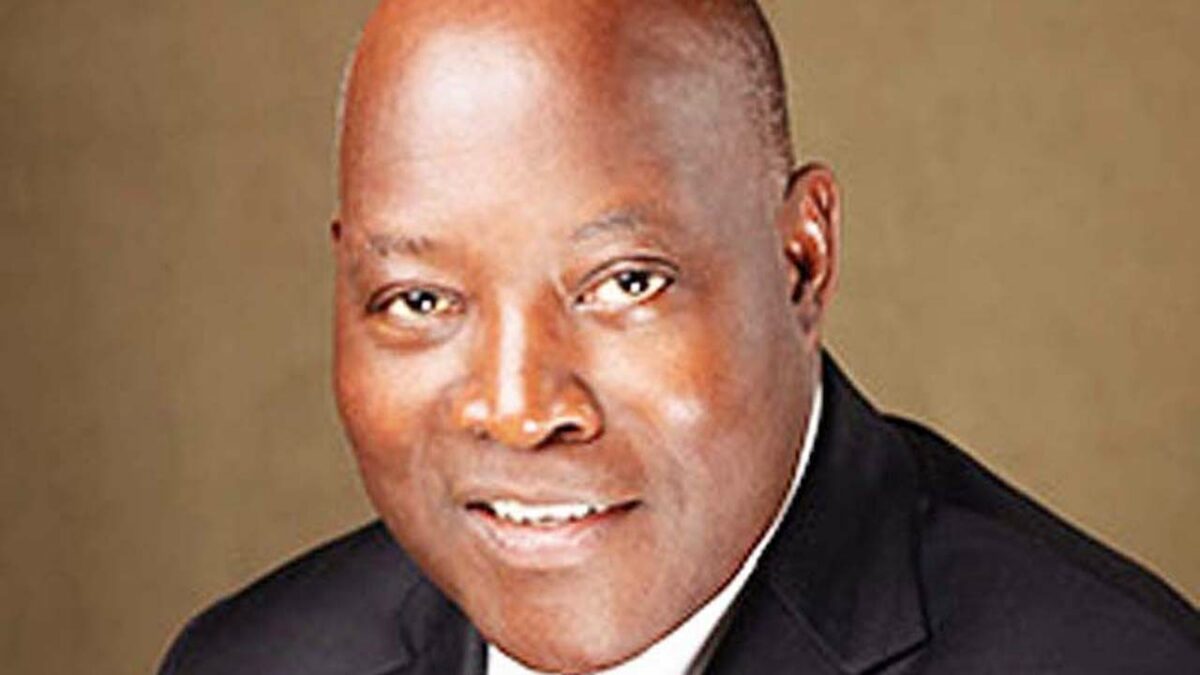
**Alfred Okoigun, the Founder and Group Managing Director of ARCO Group PLC.
We’ve got the edge. Get real-time reports, breaking scoops, and exclusive angles delivered straight to your phone. Don’t settle for stale news. Join LEADERSHIP NEWS on WhatsApp for 24/7 updates →
Join Our WhatsApp Channel