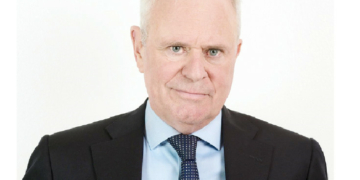
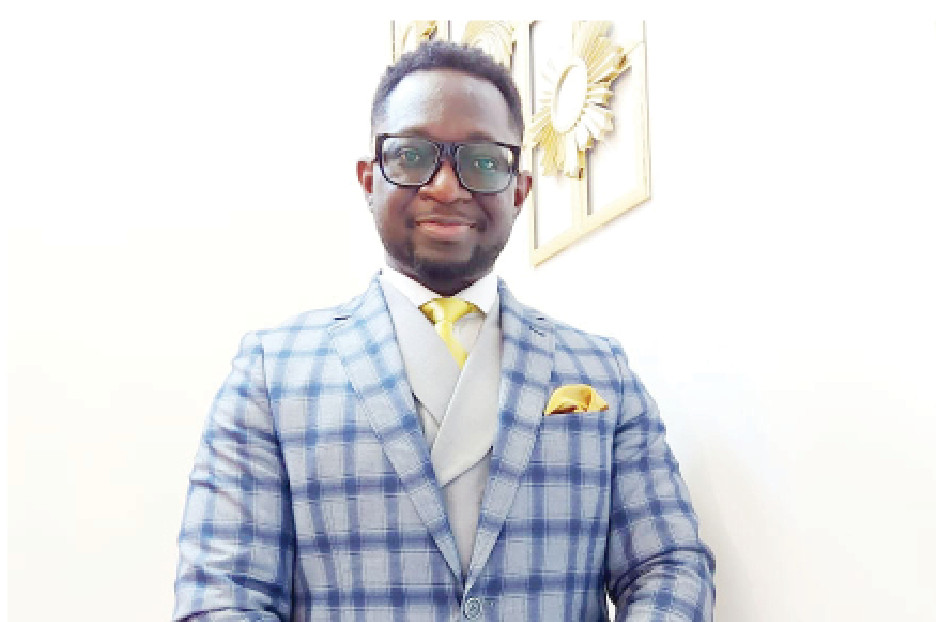
Olufemi Eyitope Bamidele is an engineer and research scientist based in Canada. In this interview with ABDULLAHI OLESIN, Bamidele spoke on a wide range of issues including governance, insecurity and rising poverty among other challenges bedeviling Nigeria.
Could you briefly describe your educational and professional background, including your engineering specialization, professional affiliations, and current location?
I relocated from Nigeria to pursue academic opportunities in 2013. As a professional engineer, I was a member of the Nigerian Society of Engineers (NSE), with a specialisation in Mechanical Engineering. My professional experience is primarily in the manufacturing sector, and I am currently based in Ontario, Canada.
What is your perspective on global governance trends and the state of governance in Nigeria?
Governance around the world is evolving rapidly, and history has witnessed different eras of political and economic development. In my view, the current era is characterized by what I would describe as “superpowerism,” where major global powers are increasingly focused on protecting and advancing their own national interests.
In the past, governance was more centered on national independence and the sovereignty of individual states. Today, however, there is a growing trend toward strategic alliances, resource sharing, economic integration, and, in some cases, efforts to expand influence through geopolitical partnerships and territorial interests.
There also appears to be a gradual shift in global influence, with power becoming more distributed among nations such as the United States, China, and Russia. At the same time, the world continues to face significant challenges, including armed conflicts, geopolitical tensions, cultural differences, terrorism, and competition for resources.
When it comes to Africa, I believe the continent is still developing within this broader global landscape. While Africa possesses immense potential and abundant resources, many countries are still working through foundational governance and development challenges. This is why I view Africa as a continent of great promise and opportunity.
With respect to Nigeria, despite being widely regarded as the “Giant of Africa,” I believe the country is still lagging behind when measured against global governance and development trends. In my opinion, Nigeria has yet to establish many of the fundamental structures required for effective governance and sustainable national development.
There are significant gaps that need to be addressed, including institutional strengthening, infrastructure development, economic diversification, accountability, and public service delivery. Considerable foundational work remains to be done before Nigeria can fully realize the ideals and benefits of a mature and effective democratic system. This represents my personal perspective on the current state of governance in Nigeria.
Based on your observations from abroad, how would you assess Nigeria’s performance since its return to democratic governance nearly three decades ago?
Nigeria’s democratic journey over the past three decades has been somewhat lukewarm. By that, I mean there have been periods that appeared very promising and others that were quite disappointing. A number of factors have contributed to this mixed experience.
One of the challenges, in my opinion, is that Nigeria is not as united as we often perceive ourselves to be. When a leader emerges from a particular region of the country, there are sometimes opposing forces from other regions. This can undermine government efforts and make it more difficult to achieve meaningful progress during a particular administration.
Nigeria also continues to face significant security challenges, including terrorism, banditry, and other forms of criminality. These issues are linked to broader structural and infrastructural weaknesses that have existed within the country for many years.
Looking at the various democratic administrations, I believe the administration of President Olusegun Obasanjo was quite promising, at least until discussions around a potential third term began to dominate the political landscape.
President Umar Musa Yar’Adua’s administration was also very promising. Unfortunately, his health challenges affected the momentum of his government. In addition, it appeared that the administration was pursuing too many objectives simultaneously. A more focused approach may have yielded stronger results. In some respects, it seemed we attempted to achieve more than was realistically manageable within a single administration.
The administration of President Goodluck Jonathan had both strengths and weaknesses. However, one of its notable strengths was the relatively high level of democratic freedom and freedom of expression. During that period, citizens could openly criticise the government and express their opinions without feeling significantly constrained. From my perspective, that level of openness appears to have diminished somewhat in recent years.
Under President Muhammadu Buhari’s administration, the country experienced significant challenges, and in my view, many key indicators began to decline over time.
Today, President Bola Ahmed Tinubu is attempting to address some of these longstanding issues. He has introduced several bold policies and initiatives. For example, the removal of the fuel subsidy was, in principle, a necessary reform. However, the implementation could have been better managed to reduce its impact on ordinary citizens. Similarly, efforts to improve power generation and energy infrastructure are commendable, but there is still considerable room for improvement.
At present, some of Nigeria’s major challenges include insecurity, particularly banditry, as well as concerns about transparency and accountability in governance. Projects such as the Lagos-Calabar Coastal Highway have generated significant public debate. While such infrastructure initiatives may offer long-term benefits, there are questions regarding transparency, priorities, and overall execution.
From an overall perspective, I would say that Nigeria’s democratic experience has produced mixed results. There have been periods of progress and optimism, but there have also been setbacks. At the highest level, and from an outsider’s perspective, the current situation does not appear as encouraging as some previous democratic administrations, with the possible exception of the Buhari administration. Nevertheless, I remain hopeful that the country can overcome its challenges and build a stronger democratic foundation for future generations.
Considering the multidimensional nature of insecurity in Nigeria, with non-state actors increasingly challenging the authority of the state, what factors do you believe have contributed to this situation, and what solutions would you recommend?
Insecurity in Nigeria is a complex and multidimensional challenge. While I am not directly involved in governance or security management, I believe every citizen can offer observations on some of the factors contributing to the current situation.
One of the key issues, in my opinion, is the perceived lack of transparency and political will on the part of government. Effective security management requires decisive leadership, accountability, and a clear commitment to addressing the root causes of insecurity. Where citizens perceive gaps in these areas, confidence in the government’s ability to tackle security challenges may be weakened.
Taking banditry as an example, it initially appeared to be a regional issue, largely concentrated in parts of Northern Nigeria. Over time, however, the problem has expanded beyond its original locations. It spread into the North-Central region and has increasingly affected parts of Southern Nigeria, including states such as Oyo. This suggests that insecurity can quickly evolve from a localised problem into a national challenge if not addressed effectively and promptly.
Another factor is the need for stronger collaboration between government institutions, local communities, and influential stakeholders who may be able to contribute to security solutions. Security challenges are often best addressed through a combination of intelligence gathering, community engagement, strategic partnerships, and law enforcement efforts.
For example, there have been public discussions involving Sunday Igboho and the Oyo State Government regarding efforts to address security concerns in certain areas. From my perspective, situations such as these highlight the importance of exploring constructive partnerships and dialogue where appropriate. Governments should be willing to engage with credible stakeholders and community leaders who can contribute positively to peace-building and security initiatives, while ensuring that all actions remain within the framework of the law.
As for possible solutions, I believe there is a need for greater transparency, stronger political commitment, improved intelligence gathering, enhanced security coordination, and increased community involvement. Addressing unemployment, poverty, and social exclusion is also important, as these factors can create conditions that make insecurity more difficult to contain.
Ultimately, insecurity cannot be solved through force alone. It requires a comprehensive strategy that combines effective governance, economic opportunities, community engagement, and a genuine commitment to protecting citizens and strengthening public trust in state institutions.
Beyond transparency and political will, what other factors do you believe contribute to insecurity in Nigeria, and what practical measures can be taken to address them?
There is also a lack of effective rule of law. We see various state and non-state actors making grievous statements. There are religious leaders across the country who directly or indirectly incite violence and terrorism, yet we have not really seen the full effect of the rule of law in holding such individuals accountable for their comments and actions. This lack of accountability encourages banditry and allows those involved to become more influential and emboldened.
There is also the selective use of technology and the legal system in addressing banditry and terrorism. I am convinced that the Department of State Services (DSS) has the capacity to track financial transactions, weapons flows, and other activities within the system to identify those sponsoring banditry and terrorism. In many cases, these individuals make appearances online and leave digital footprints. Yet, very little seems to be done. At the same time, when an ordinary citizen expresses an opinion about these issues, the DSS may be in that person’s direct messages the next day. That speaks volumes.
There are several factors contributing to the problem, but these are some of the more obvious and immediate issues. If they are addressed effectively, we can begin to see greater accountability. People will understand that their actions have consequences, which may help reduce the encouragement and spread of these criminal activities.
Our security system is also not properly structured or adequately empowered. It is difficult to expect security personnel to effectively combat terrorists when they are not sufficiently equipped or supported. We have seen military generals and soldiers lose their lives in the line of duty, which is deeply concerning and discouraging.
Therefore, the political will to act, the enforcement of the rule of law, and greater transparency are critical steps the government can take to address these challenges. From there, additional reforms can be built upon that foundation.
Furthermore, our current approach to policing and border security is far from ideal. The borders remain highly porous, making it relatively easy for individuals to enter and leave the country without adequate monitoring.
I do not believe that all those involved in terrorism and banditry are Nigerian citizens. Based on reports, observations, and even the languages spoken by some of those apprehended, it appears that a number of them may have entered the country from neighbouring states. This includes some of the suspects who were recently displayed on television after being captured with weapons.
Strengthening border security and developing a more effective internal security network would go a long way in addressing these challenges. At present, we do not have sufficient accountability regarding who enters and exits the country. These are some of the fundamental measures that can be taken as a starting point in reducing terrorism, banditry, and other security threats across the nation.
Some analysts argue that economic hardship, widespread poverty, and rising unemployment are significant drivers of insecurity in Nigeria. There are also concerns that criminal groups use ransom proceeds to recruit vulnerable and unemployed youths into their networks. What is your perspective on the relationship between unemployment and the growing insecurity in the country?
While I acknowledge the impact of poverty in crime, terrorism and others, I think that is one of the places we get it wrong in Nigeria. Situation and condition should, whatsoever, in no way, tailor us toward criminal acts. When we start crossing our boundary, we are in huge problem, which is where we are in Nigeria. I intentionally downplayed that because that shouldn’t even be considered. No one under no circumstance should use situation as an excuse to commit crime. When that starts happening, the moral decadence in the nation or society has really gone bad. So, it shouldn’t be an excuse.
While I’m not underplaying the economy that it is a factor (for insecurity), it shouldn’t really be when it comes to moral compass and considering Nigeria as a very religious country, that shouldn’t come to play. I’m not saying that is not happening but that shouldn’t be an excuse.
Moving to Kwara State, as a citizen, are you concerned about the rising insecurity in parts of Kwara South, and what impact do you think this has on residents in that region?
It is highly concerning and perturbing. Kwara south used to be a quiet and more serene region of Kwara State. But right now, it is a no go area. Recently, our people praying overnight got kidnapped. It is crazy. Absolutely, it is an understatement to say ‘concern’, it is disturbing. The situation in southern part of Kwara State has deteriorated overtime because we have allowed that to happen. What is happening in Kwara south is very ridiculous and across the country. It just needs to be dealt with the same way.
In recent times, terrorists have reportedly displayed ransom collected from victims on social media. In your view, does this suggest that the government is becoming ineffective in apprehending these criminals?
I’m not saying government is helpless. No. Helpless would be a situation where someone wants to really do something but he is unable to do it due to certain situations. Nigeria is not helpless and Nigeria government cannot be helpless. That doesn’t make any sense at all. So, if any government official is saying that they are helpless, that is lack of accountability.
We have gotten a stretch of help from the United States as well. Recently, we have had good collaboration with the French government. And we do have ties with the United Kingdom. President Bola Ahmed Tinubu was there recently. So, it is not the lack of help. It is the will to do. I believe very strongly that if someone comes online to threaten the life of President Bola Ahmed Tinubu or any other government officials on social media, within 24 hours, that person will be picked up.
So, if we have the capability to do that, yet we still have bandits coming online to display their lawlessness and even carry out acts of violence publicly, I think that speaks for itself. It is not necessarily a matter of helplessness; it is a matter of will to act.
Again, leaders are elected because we believe they have the capacity and capability to act, or at least the ability to build that capacity and capability. If the leaders we have are saying they are helpless, then there is something fundamentally wrong.
I am not in government, so I do not know what their internal strategies are. However, it is clearly not working. At this stage, we should not have people roaming the streets even with something as simple as a knife. That is how seriously this situation should be taken.
The military and the police should be properly empowered to take strict action. This is a state of emergency; it is not a normal situation.
We’ve got the edge. Get real-time reports, breaking scoops, and exclusive angles delivered straight to your phone. Don’t settle for stale news. Join LEADERSHIP NEWS on WhatsApp for 24/7 updates →
Join Our WhatsApp Channel