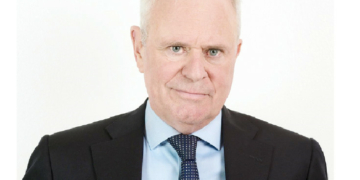
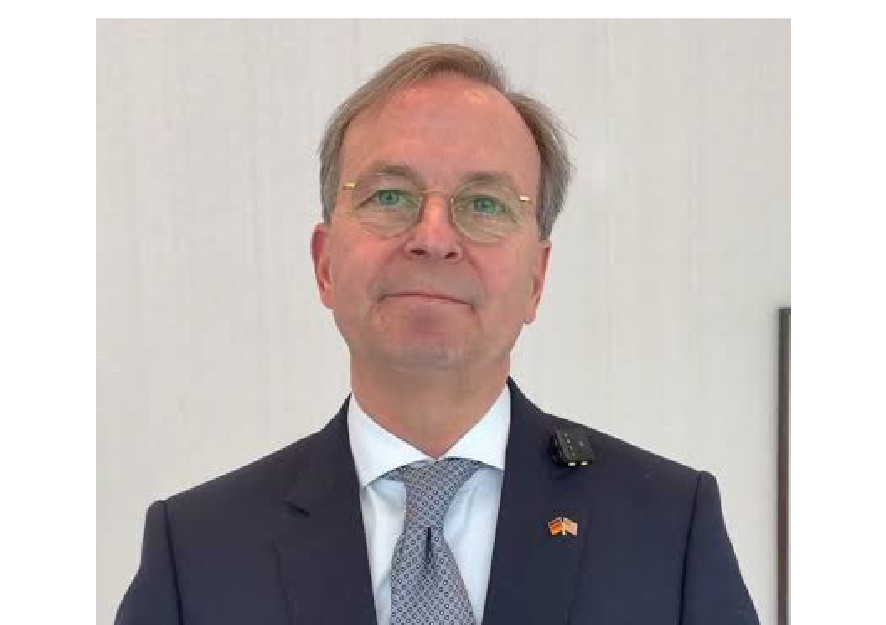
Thomas Rachel is Germany’s Federal Government Commissioner for Freedom of Religion or Belief, an office he has held since 2025. He has been a member of the German Federal Parliament (Bundestag) since 1994 and has served as spokesperson of the CDU/CSU parliamentary group on churches and religious communities. In this interview with select journalists, he raises concerns over persistent fear among citizens, human rights issues linked to blasphemy laws, and the urgent need for unity and dialogue. JONATHAN NDA-ISAIAH was there for LEADERSHIP Weekend.
Tell us about your visit to Nigeria.
Nigeria is one of our partners on this continent, and Nigeria and Germany share important values. Both countries are democracies.
They are free societies. Germany remains fully committed to protecting and promoting the freedom of religion and belief. You know, we have the Universal Declaration of Human Rights, Article 18, which says that every person can believe and have a religion and pray and worship whatever he or she wants, or change religion, or have no religion at all.
This is a fundamental right which is one of the human rights of the United Nations. It is also important because the freedom of religion and belief is an indicator of human dignity, a country, and also peace in a country. I realise that Nigeria is probably the most religious country I have ever seen, perhaps in the world. The people live with religion, and I think this is really impressive. I had a lot of talks with ordinary people, with representatives of religion and faith, with politicians, and along the way, as you also read in international media, we have received worrying reports of targeted attacks by Islamist terrorists against Nigerian people—Muslims against Muslims and against Christians.
And you see that Christians and Muslims have a common enemy. These are the terrorists. So let me express my full solidarity with Nigeria.
I spoke with Muslim people, with Christians, and with humanist representatives. I visited the IDP camp at the International Market in Makurdi. I spoke with victims, I spoke with family members of victims, both female and male, and you can feel that they are not sure if they have a perspective on their lives. This makes sense. I am still moved by my visit to Yelawata, the village where a massacre took place in June 2025. More than 200 Christians were killed there. The people with whom I spoke ask for safety. They ask what the government can do. They ask for support for living. And they want to have a chance to return as IDPs, as internally displaced persons, to their ancestral homes, to their villages where they live. As I already mentioned, in the north of your country, Nigeria, Muslims and Christians have been killed by Boko Haram and IS. So I think the question of security and safety for the people is a predominant one.
And we, as Germany, try to support with mediation between conflict parties, together with our Nigerian partners, the Centre for Humanitarian Dialogue. They organise dialogue processes in different regions of Nigeria with conflicting groups and generations to bring them to one table, like here, and bring people to speak to each other, although they have mostly never spoken to each other before, and to work for a common perspective. We heard about the concerns of quite a lot of people about the partial application of blasphemy laws in certain northern states, which leads to severe violations of human rights, as well as the freedom of religion and belief.
We will continue to support Nigeria on its way and in its efforts for stability and peace. And let me finally conclude with the inspiring message of Nigeria’s Coat of Arms: unity of faith, peace, and progress. This motto brings together unity and faith without placing any particular religion in the foreground.
Unity and faith are considered together here. I am convinced that peace and security will only succeed if unity prevails despite different religions, whether one is Muslim or Christian, or of another belief. So we will support the Nigerian people on the way, also in the future.
Do you believe the Nigerian government is doing enough to protect religious communities?
I think it’s more important what people say than what we say. We had talks with representatives of the government at the state and security levels, and they said they do a lot. But I also hear the voices of the people—ordinary people, IDPs, people who are living in villages, and they have fear.
And I think as long as the people have fear, it is still a challenge for the whole country, and that also means for the government.
You came for an elaborate engagement to meet with various sectors in terms of proffering peace to Nigeria. So what was your advice, or what was your engagement when you went to meet all those people so that we will hear what you discussed in proffering peace to our various communities that are war-torn?
I think it is not my role to give advice, but the experience of other countries also shows that it is very important, if you have different religions, that you work for respect and respectful coexistence between these religions, and that you fight against those who take and misuse religious aspects to justify their attacks against people of one or another belief. We see it now in Nigeria—you see Boko Haram and IS—they misuse religion to kill people, and this is not acceptable. And I think everyone has to say this.
The representatives of Muslims, the representatives of Christians, the representatives of Jews, of other religions, and also of non-religious groups. We must realise that the real enemies are those who misuse religious aspects to kill other people.
So you said that you are going to support Nigeria, because you have come here to see what we are going through, especially the Middle Belt and parts of the country. So what exactly, after going around listening to politicians and victims, are those steps that you have to help Nigeto security and the killing of Christians?
First of all, I tried to motivate and support all those religious leaders to come to speak together, because they have a common basis. That means the appreciation of human beings. All religions have it.
And as they say this, it has two communities. And then, as it is noted, the Middle Belt—those people with whom we spoke—we spoke with royal highnesses of different tribes, religious representatives, ordinary people, farmers, and also representatives of the herders. It seems that those people who have lived together for years or even longer, whether farmers or herders, coexist respectfully.
But in recent times, it seems to me that there have been a lot of external herders from other countries coming into this country, and problems have arisen. And I think this is a subject that society and politics also have to tackle.
I want to bring you back a little to the earlier question, because you emphasised that you met with a number of groups, traditional rulers, victims, villagers, government officials, and others. I’m curious about some of the key things you have noted that have informed your understanding of the nature of the violence in Nigeria. And perhaps you can talk about what you understand abouhave arisen intersectionality that exists when we are discussing violence in the country.
I think we have different phenomena. We have conflicts between farmers that have arisen initially with external herders in the Middle Belt. In these regions, I was in Benue State, as I told you people, Christians in a village, told me that in Yelawata they were shouting.
So there is a concrete problem. We know, and as we heard, that in the northern part, where mostly Muslims live, but also Christians, they are killed by Boko Haram and ISIS. So it is a real terrorist problem.
And in this case, it is combined with the misuse of religious aspects, which is not acceptable. So it is a complex situation in Nigeria, and one ,has to address all these different issues with different approaches.
And also give people a perspective for living, including IDPs. We have a tremendous number of IDPs.
You were talking about unity and peaceful coexistence as the bedrock for peace to thrive in Nigeria and in any community around the world.
How do you send the message of peace? How do you preach peace? Because we have had many groups promoting peaceful coexistence, yet it does not seem to work. So what message are you bringing differently that can truly address the issue?
The first message is that you have people living in the country. So we have to find a way with these people, even if they are different—different in their ethnic background, religious background, and other aspects. They are living here, and they will be here in the next 20, 50, or 70 years.
Knowing this strengthens the responsibilities of those who have roles in society. These include, on the one hand, religious leaders, who must work out the common principles of their religions. These religions appreciate human beings, the Koran and Allah, the Bible and God and they speak against killing others.
So there is a real chance that if they emphasise this together, they can start to change the minds of those who are on the wrong track. And this can be supported by society and politics.
I spoke with parliamentarians, governors, and representatives of the government. Respectful engagement with different groups and religious communities is the basis for peace. And peace is the foundation for fruitful development in this country.
Actually, this is the same in all countries, because there are others that also face problems and challenges. All of this will make society stronger.
Are you going to recommend that countries help the Nigerian military with training or equipment to fight these terrorists? Because Nigeria is regarded as a giant of Africa, partly because of its strong military. But lately, we have had many fallen heroes as a result of these terrorist attacks.
Even the U.S. has made such pledges. Would it also be good for Germany to send military personnel to train or provide equipment to fight insurgents? Germany will support Nigeria as we have done in the past, politically, economically, and through cooperation to give your country a good perspective. We are strong partners in multilateral areas.
We have some personnel from our Bundeswehr who advise and train the Nigerian military. That is the way we do it. We will not engage in any direct military activity in Nigeria. Nigeria is a strong country. You have experienced people, and I think the best way is for the country to find its own path.
But if we can provide recommendations based on military experience, this is something we can offer additionally. Political cooperation is the most important, alongside economic cooperation—working together, supporting companies, and advancing the country through vocational training and other initiatives. People need a sense of perspective. That is also part of the answer.
We’ve got the edge. Get real-time reports, breaking scoops, and exclusive angles delivered straight to your phone. Don’t settle for stale news. Join LEADERSHIP NEWS on WhatsApp for 24/7 updates →
Join Our WhatsApp Channel