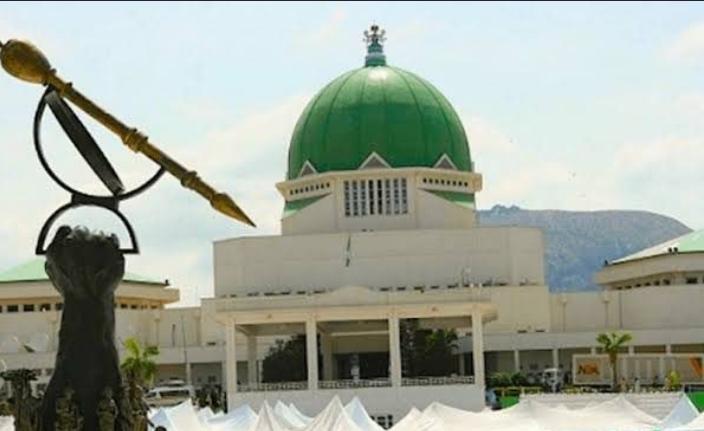
Strong indications emerged on Friday that the number of seats in the National Assembly may increase through a proposed constitutional amendment aimed at boosting women’s representation in governance.
Under the proposal, Senate seats would increase from 109 to 121, while membership of the House of Representatives would rise from 360 to 397, beginning with the 2027 general elections.
The proposed 12 additional Senate seats and 37 House of Representatives seats would be reserved exclusively for women.
They would be filled through an electoral college system across the six geopolitical zones, the 36 states and the Federal Capital Territory, rather than through the general election.
The proposal received renewed support at a zonal caucus meeting organised by the League of Women Voters of Nigeria (NILOWV) in collaboration with the sponsors of bills seeking special seats for women in Parliament.
One of the sponsors of the bill, Hon. Iduma Igariwey Enwo, said the leadership of both chambers of the National Assembly was favourably disposed to the proposed legislation but stressed that sustained lobbying was still required to ensure its passage.
“Myself and a considerable number of members of the House of Representatives have been strong advocates of women’s inclusion in governance. That is why we are fully in support of the bill on special seats for women from the 11th National Assembly,” he said.
According to him, the proposed mechanism would provide women with greater representation in the National Assembly and state Houses of Assembly while creating opportunities for them to subsequently contest and win seats through the regular electoral process.
“The procedure proposed in the bill for the emergence of women lawmakers through special seats will create a platform for women to gain appreciable representation in the National Assembly and state Houses of Assembly, from where they can subsequently contest through the general election,” he said.
Igariwey assured participants that the leadership of both the Senate and the House of Representatives, as well as many federal lawmakers, were favourably disposed to the bill and would support it.
He, however, emphasised the need to intensify advocacy among members of the 36 state Houses of Assembly, whose approval would be required for the constitutional amendment.
The Executive Director of the African Parliamentary Resource Centre (APRC), Mr. John Ebikeseye, explained that the proposed 12 additional Senate seats would be shared equally among the six geopolitical zones, with each zone producing two female senators.
He added that the proposed 37 additional House of Representatives seats would be allocated one each to the 36 states and the Federal Capital Territory.
According to Ebikeseye, occupants of the proposed special seats would emerge through electoral colleges rather than direct elections.
He explained that the electoral college for the Senate seats would comprise elected local government councillors, chairmen and vice-chairmen within the affected senatorial districts, while elected local government officials within the affected federal constituencies would serve as the electoral college for the House of Representatives seats.
Ebikeseye said the arrangement would run for four electoral cycles, 2027, 2031, 2035 and 2039, to deepen women’s participation in governance before it is reviewed.
Earlier, the National President of NILOWV, Ms. Irene Ikyegh, said the campaign for special seats was not intended to displace men from existing legislative positions.
“This advocacy is not about taking legislative seats away from men but about creating additional seats for women to ensure inclusive participation in governance,” she said.
We’ve got the edge. Get real-time reports, breaking scoops, and exclusive angles delivered straight to your phone. Don’t settle for stale news. Join LEADERSHIP NEWS on WhatsApp for 24/7 updates →
Join Our WhatsApp Channel