
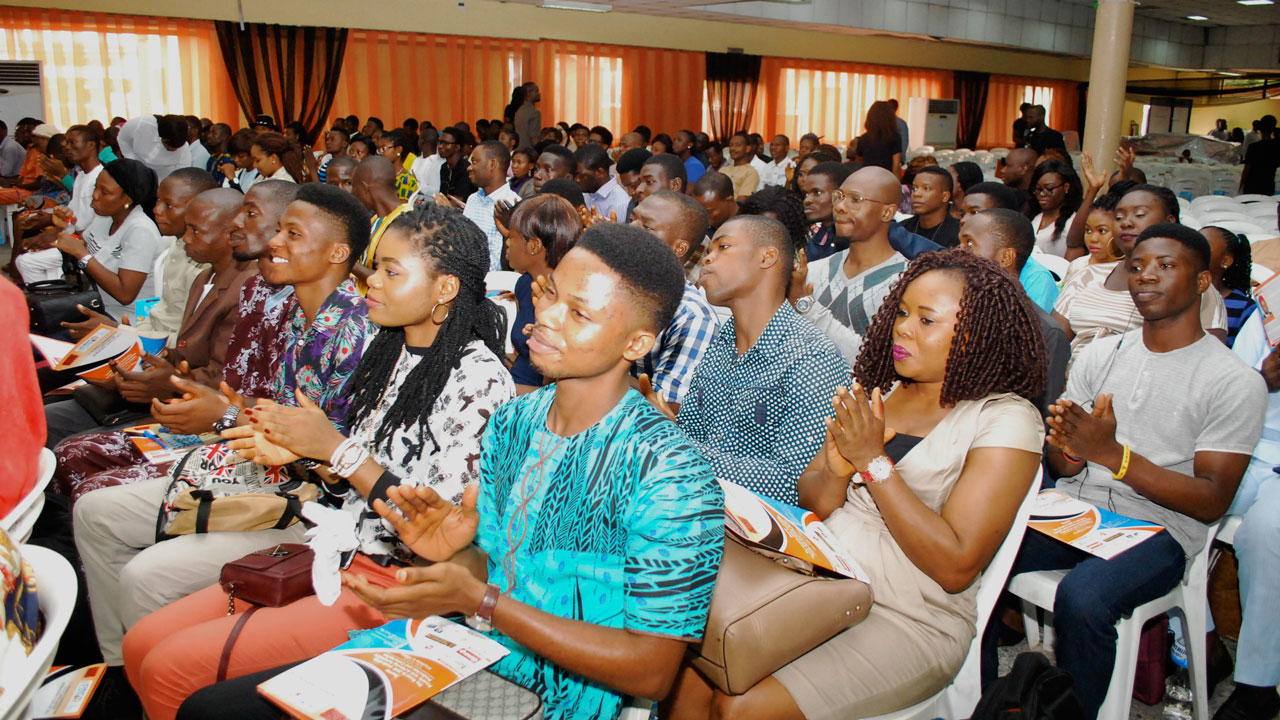
As Nigeria marks International Youth Day 2026, the growing gap between academic qualifications and workplace demands is putting fresh pressure on universities to produce graduates with the practical skills needed to compete in the modern economy.
Observed annually on August 12, the United Nations-designated day provides an opportunity to draw international attention to youth issues and celebrate the contribution of young people to development.
The 2026 theme, “Different Contexts, Common Aspirations”, shows the different circumstances in which young people live while recognising their shared aspirations for opportunity, dignity and a better future.
For Nigeria, where young people constitute a significant part of the population, the occasion comes at a time when the country is confronting the difficult question of whether its education and training systems are giving young people the practical skills required to secure meaningful employment and adapt to the future of work.
A university degree was once widely regarded as a reliable pathway to employment. Today, that expectation is becoming increasingly uncertain as young graduates enter a labour market where academic qualifications alone may not be enough to secure a job.
The changing demands of employers, rapid advances in technology and the growth of new industries are placing greater emphasis on practical skills, digital competence, communication and problem-solving.
This is putting renewed pressure on Nigeria’s universities and other training institutions to prepare young people for the realities of the modern workplace.
The challenge has prompted renewed attention to Technical and Vocational Education and Training (TVET), entrepreneurship, digital education and skills development.
The Federal Government’s efforts include the Federal Ministry of Education’s TVET Initiative, which provides tuition-free training, stipends and start-up support in selected high-demand trades.
Government figures show that the programme has received more than 1.3 million applications, with 160,000 young people matched to training and more than 73,000 currently enrolled across over 1,700 accredited centres.
The programme has also recorded N13.98 billion in total disbursements.
The scale of applications alone provides an indication of the appetite among young Nigerians for skills that can translate into employment or enterprise.
The government’s wider approach also recognises that the skills challenge cannot be addressed through vocational training alone.
The Federal Ministry of Education is working with Amazon Web Services on an AWS Academy project aimed at equipping students and educators in tertiary institutions with digital competencies, including cloud computing and machine learning.
Also, the Federal Ministry of Education’s Student Venture Capital Grant provides funding, mentorship, validation support and visibility for student-led businesses and innovation projects.
Yet, despite these initiatives, questions remain about whether the country’s universities are changing quickly enough.
For decades, Nigeria’s higher education system has largely been structured around academic disciplines and the acquisition of qualifications.
That model has produced millions of youths, but the changing labour market is placing greater emphasis on what graduates can actually do with their knowledge.
A student may graduate with a degree in computer science, engineering, economics, agriculture or the social sciences, but employers may still expect practical experience, familiarity with industry tools, communication skills, teamwork and an understanding of how to solve real-world problems.
The National Universities Commission (NUC) has introduced reforms aimed at making university education more responsive to contemporary needs.
The Core Curriculum and Minimum Academic Standards framework places greater emphasis on competencies and broader skills alongside disciplinary knowledge.
Universities have also established entrepreneurship centres, innovation hubs, career development units and partnerships with industry to expose students to opportunities beyond conventional classroom learning.
Some institutions are already developing programmes designed to bridge the gap.
At the University of Lagos, entrepreneurship and innovation training has been incorporated into the student experience, while its innovation ecosystem provides opportunities for students and young innovators to develop technology-based solutions and businesses.
Other universities have similarly established incubation centres, entrepreneurship programmes, technology hubs and career development initiatives.
The Federal Government’s emphasis on TVET also presents an opportunity for universities to rethink their relationship with practical skills.
However, one of the biggest obstacles is infrastructure. Practical skills training requires functional laboratories, workshops, modern equipment, reliable electricity, high-speed internet and access to current industry technologies.
In many institutions, students still face limitations in accessing the facilities needed to turn theoretical knowledge into practical competence.
There is also the issue of lecturers and trainers. Curriculum reform can only achieve limited results if educators do not receive continuous professional development. Industry itself is changing rapidly, particularly in areas such as artificial intelligence, cybersecurity, software development, renewable energy and advanced manufacturing.
Universities therefore need mechanisms that allow lecturers to remain connected to current professional practices.
For Nigerian universities, the future challenge is not to abandon academic education but to make it more useful, flexible and connected to the world beyond the campus. Academic knowledge remains essential, but it must increasingly be combined with practical experience, digital competence, entrepreneurship, creativity and problem-solving.
International Youth Day provides a timely reminder that young people are not simply beneficiaries of education and government programmes.
The United Nations Under-Secretary-General and Special Adviser on Africa, Ahunna Eziakonwa, in her message on the day, called for greater investment in creating conditions that will enable young Africans to thrive.
Eziakonwa, who described Africa as the world’s youngest continent, said young people remain central to the continent’s prospects for prosperity and sustainable development.
She noted that young Africans are already playing a significant role in driving innovation and developing solutions to some of the challenges confronting the continent.
“As the world’s youngest continent, young people hold the key to Africa’s prosperity,” Eziakonwa said.
She added that the ideas, creativity and determination of young people would be essential to building a future that is more inclusive, prosperous and sustainable.
According to her, Africa’s youthful population represents a major opportunity, but unlocking its potential requires deliberate efforts to provide young people with the right environment and opportunities to succeed.
“Every day, they are driving innovation and shaping solutions to the challenges of our time. Their ideas and determination are essential to building a more inclusive, prosperous, and sustainable future,” she said.
Also speaking on the commemoration, an educationist, Mr Collins Aondo, said that for Nigeria, closing the youth skills gap would require more than producing more graduates.
According to him, it would require universities that teach both knowledge and application, technical institutions equipped with modern facilities, employers willing to participate in training, and government programmes that are properly funded and measured by outcomes.
“The central question, therefore, is no longer simply how many young Nigerians are entering universities. It is whether, when they leave, they possess the skills, experience and confidence to create value in an economy being transformed by technology.
“That may ultimately determine whether Nigeria’s large youth population becomes a demographic advantage or whether the gap between education and opportunity continues to widen,” he stated.
We’ve got the edge. Get real-time reports, breaking scoops, and exclusive angles delivered straight to your phone. Don’t settle for stale news. Join LEADERSHIP NEWS on WhatsApp for 24/7 updates →
Join Our WhatsApp Channel