The federal government spent N9.39 trillion on wage adjustments, minimum wage increases and allowances for public servants between June 2023 and December 2025, almost twice the N5.4 trillion it received as its share of resources generated from petrol subsidy removal.
The expenditure has raised questions among economic analysts and civil society activists over whether the savings from subsidy removal and other reforms are translating into improved living standards for Nigerians.
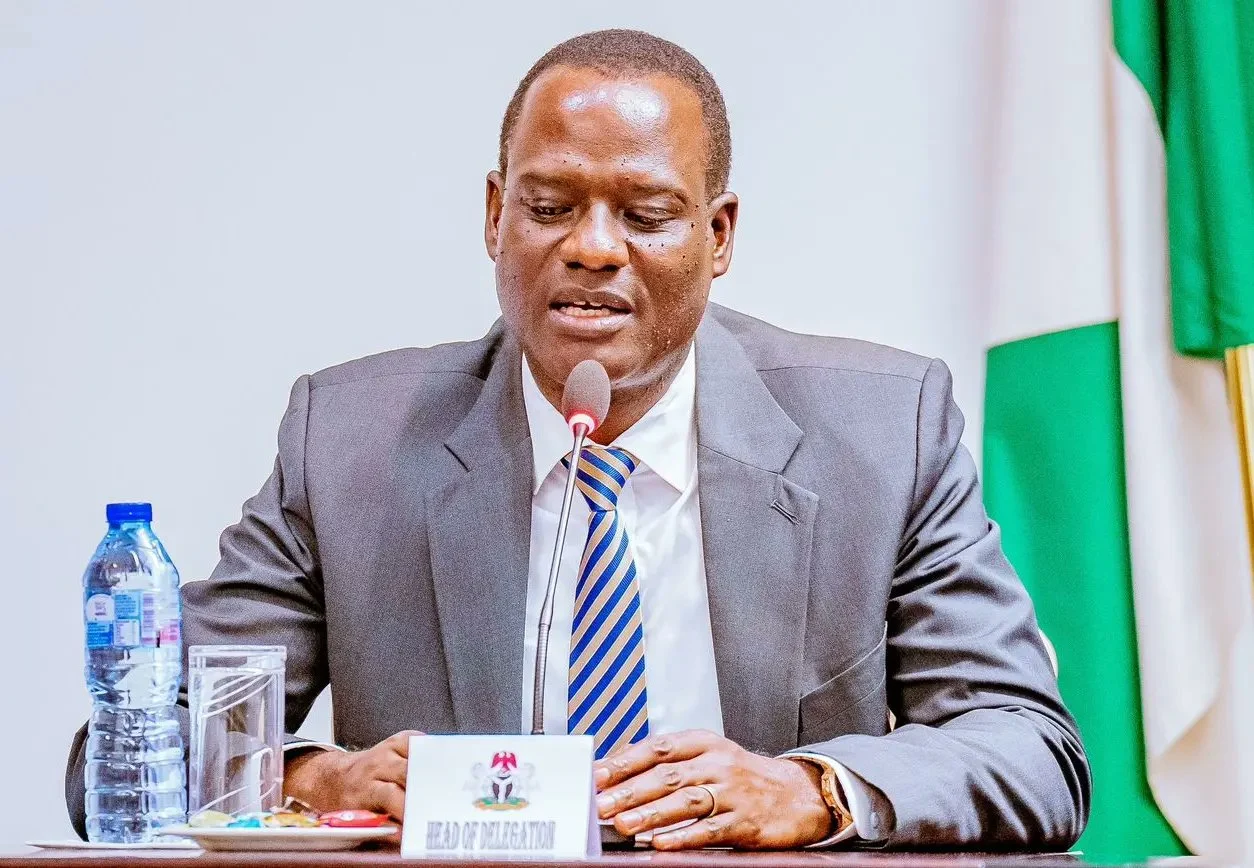
The concerns followed the disclosure by the Minister of Finance and Coordinating Minister of the Economy, Taiwo Oyedele, at a media conference on Nigeria’s reform scorecard yesterday that N15.8 trillion had been mobilised for the Federation from subsidy savings.
Shared according to the statutory Federation Account Allocation Committee (FAAC) formula, the resources gave the Federal Government N5.4 trillion, representing 34 per cent of the total.
However, the government’s wage-related expenditure during the period was N9.39 trillion, making it the largest component of its incremental spending.
Oyedele said the government’s incremental expenditure rose to N30.64 trillion, with N20.4 trillion funded by additional resources generated during the period and N10.24 trillion from the existing revenue base.
The N20.4 trillion comprised N5.4 trillion from the Federal Government’s share of subsidy savings, N3.1 trillion in other incremental revenue, mainly remittances from government-owned entities, and N11.9 trillion in additional borrowing.
“The incremental expenses of the federal government alone, not the federation, was N30.64 trillion. Of this, N9.39 trillion went to wage adjustments, minimum wage increases and allowances for public servants,” Oyedele said.
He added: “The incremental amount that the federal government spends paying higher wages is more than the entire savings that the federal government earned from subsidy removal.”
After wages, external debt servicing was the second-largest expenditure item, at N9.37 trillion. Oyedele attributed the increase largely to the naira cost of servicing dollar-denominated obligations following exchange-rate depreciation.
“When you have debt service to pay, you don’t negotiate, you don’t delay, you pay, because delay or default has consequences,” he said.
Strategic infrastructure development accounted for N6.47 trillion, while electricity subsidies took N3.14 trillion and domestic debt servicing consumed N1.24 trillion.
Oyedele said additional borrowing between June 2023 and December 2025 amounted to N11.9 trillion, adding: “The figure would have been far higher and economically destabilising without the fiscal space the reforms created.”
Commenting on the figures, Head of Financial Institutions Ratings at Agusto & Co, Ayokunle Olubunmi, said although Nigeria’s macroeconomic indicators had improved since the administration came into office, the gains were yet to sufficiently reflect in the lives of ordinary Nigerians.
He said the removal of the subsidy and liberalisation of the foreign exchange market had improved the macroeconomic outlook, but the key challenge was translating those gains into better living conditions.
“The macro picture is good, but the challenge is what happens on the micro side of things. Allocations to state governments have increased massively, but we have not seen that translate into the modern life of the people,” he said.
He added: “It is even shocking to hear that some state governments are still owing workers. Some of them are struggling to even pay the N70,000 minimum wage. Another challenge we have in Nigeria is that we do not have any official social security scheme. Oftentimes, you find that your uncle or your brother is actually your social security plan.”
Olubunmi questioned whether subsidy savings were being put to the best possible use, particularly amid pressure on households.
“Although the government claims that there are some schemes, at times when you interview people, you find that very few people have benefited from them directly or meaningfully,” he said.
“So the question is not whether we should remove the subsidy. The question is: Have we used the savings in the best possible way? Is that the best use of those funds?
“There is always an alternative. There are different opportunity costs for different things. But you need to ask yourself: Are you using it for the best purpose? Are you spending it on the best things? Are you spending it on things that will give you the highest return for the overall citizenry? That is actually the major concern.”
On his part, civil rights activist and Executive Director of the Civil Society Legislative Advocacy Centre, Auwal Musa Rafsanjani, said many Nigerians were yet to see the benefits of the subsidy savings or government borrowing.
“At the end of the day, nobody is seeing anything. So you borrowed and you are punishing the citizens to pay for reckless spending. This is exactly what they are saying,” he said.
“We are told that all the so-called savings have been channelled into paying debts and paying so-called wages. Now, the question we are asking is: Why must you continue to make Nigerians suffer after withdrawing the subsidy?”
Rafsanjani criticised what he described as unnecessary and oversized government projects, arguing that borrowing should produce measurable economic and social benefits.
“Government clearly knows that under the Fiscal Responsibility Law, you borrow to inject into the economy. You borrow not to chop the money. You borrow not to waste the money. But they keep doing that.”
He urged the government to stop what he called unnecessary borrowing for “gigantic projects” whose benefits were not apparent to Nigerians.
“You can budget according to your size. You do not need to be overambitious. Be smart. Be measurable, so that people can see the results of what you are doing,” he said.
While acknowledging the hardship associated with the reforms, Oyedele argued that the alternative would have been worse.
He said the number of states unable to pay salaries had fallen from 27 in 2023 to zero in 2026, while the debt-service-to-revenue ratio was projected to decline to about 50 per cent in 2026 from roughly 100 per cent in 2022.
The Ministry of Finance also said gross foreign exchange reserves had risen from about $35 billion in May 2023 to $52.5 billion in July 2026.
However, the figures have shifted the debate from the resources generated by the reforms to whether they are being deployed effectively and whether their benefits are reaching households.
Oyedele acknowledged that the reforms came with significant costs, saying the decisions came at a “real cost, and we are not here to pretend otherwise”.
We’ve got the edge. Get real-time reports, breaking scoops, and exclusive angles delivered straight to your phone. Don’t settle for stale news. Join LEADERSHIP NEWS on WhatsApp for 24/7 updates →
Join Our WhatsApp Channel