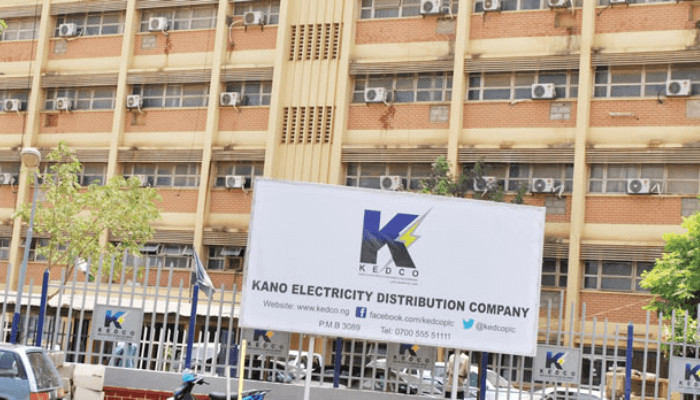
A small solar asset in Kano has generated more revenue for the federal government in just 12 months than it earned in dividends from its shareholding in Kano Electricity Distribution Company (Kano DisCo) in over 13 years, the Ministry of Finance Incorporated (MOFI) has disclosed.
The striking disparity, according to MOFI, highlights the potential of renewable energy assets and the need to overhaul how government-owned infrastructure is managed, operated and financed.
The disclosure came yesterday at the formal launch of the Renewable Assets Management Company (RAMCO) in Abuja, as the Federal Government set a target of 6,500 megawatts (MW) of electricity supply by the end of this year and 8,000MW by the end of 2027.
RAMCO is designed to provide long-term management and commercialisation of Nigeria’s renewable and off-grid power infrastructure, while unlocking private capital to expand electricity access.
Speaking at the launch, the managing director/CEO of MOFI, Dr Armstrong Takang, said the Kano experience emerged from a pilot project in which ownership of a solar asset was separated from its management, with MOFI retaining ownership while Kano DisCo handled operations.
The outcome, he said, demonstrated the value of professional asset management.
“We took a small renewable asset in Kano and tried a different model of ownership and management. We separated the ownership under MOFI and the management went to Kano DisCo. To date, the amount of revenues we have generated in one year from a small asset is more than the dividends we have collected in 13 years of our shareholdings in the DisCo,” Takang said.
According to him, the disparity points to a broader structural problem in the management of Nigeria’s electricity distribution companies and public infrastructure generally.
“That, for us, pointed to something. It is the fact that our ability to have a framework for managing our assets is fundamental to better managing public assets and public resources,” he said.
Takang was also critical of the performance of the country’s electricity distribution companies, noting that of the estimated 45,000MW powering the economy, DisCos account for only about 6,000MW on-grid, suggesting that a significant portion of electricity consumed nationwide is generated off-grid.
“The DisCos have to wake up. Because if you think about the fact that they only get out of 6,000 of the total 45,000 megawatts that is powering the economy, it tells you that we need to begin to change our model for that,” he said.
He added that off-grid renewable energy companies would play an increasingly important role in Nigeria’s power sector.
“The future energy companies, especially as power is concerned, are the likes of RAMCO. That is a fact,” Takang said.
He linked the Kano pilot to MOFI’s broader mandate, which he said revolves around three key objectives: establishing what public assets the Federal Government owns, professionalising the management of government-linked enterprises and mobilising capital at scale for investment across sectors.
Takang disclosed that when MOFI first attempted to catalogue the value of federal government assets, it could verify only N1.25 trillion worth of assets, a figure dwarfed by Nigeria’s domestic and foreign debt, which runs into tens of trillions of naira.
“Until we are able to establish what we own, we will not be in a position to optimise and make the best use of what we own,” he said, noting that the mismatch between the country’s debt levels and identifiable asset value had remained unresolved for years.
He said RAMCO was designed to operate across the three areas of MOFI’s mandate — asset identification, professional governance and capital mobilisation — with the ultimate objective of using stronger balance sheets to attract private-sector capital.
“Once we’ve corporatised RAMCO and we have a strong balance sheet…” Takang said, signalling that the entity’s long-term structure is intended to attract institutional investment beyond government funding.
Also speaking at the unveiling, chairman of the Rural Electrification Agency (REA), Ayodele Fayose, described RAMCO as “the best thing to happen to Nigeria’s electricity sector.”
Fayose commended the REA management for maintaining institutional continuity and warned that constructing new projects without ensuring consistent operation and maintenance would undermine the sustainability of such investments.
“Infrastructure will last significantly longer when Nigerians adopt an ownership mindset and protect public utilities,” he said.
Delivering the keynote address, the Minister of Power, Joseph Tegbe, said renewable energy was not a peripheral component of Nigeria’s energy mix.
He announced plans by the government to build mini-grids in areas facing transmission deficits, stressing that RAMCO was established to promote sustainability and reliability while bridging the gap between electricity access and long-term commercial viability.
Tegbe disclosed that a technical audit was underway on infrastructure that is more than 42 years old, adding that obsolete facilities would be replaced with modern assets within weeks.
He also highlighted asset optimisation through aggregation, explaining that energy resources would be strategically linked to high-demand clusters.
The minister added that the Federal Government would revisit the East-West Supergrid project as part of efforts to strengthen the resilience of the national grid.
On electricity supply, Tegbe said the government was targeting 6,500MW by the end of the year and 8,000MW by the end of 2027.
“We’re struggling to wheel 5,000 megawatts today, and my target is that by the end of this year, we will conveniently be wheeling 6,500 megawatts. We will be wheeling conveniently 8,000 megawatts by the end of next year,” he said.
He also disclosed plans to put 21 dormant dams to productive use, noting that those identified along the Sokoto-Badagry Expressway corridor would be made commercially viable.
“Public investment must be matched by discipline to protect the assets,” Tegbe stressed.
He further tasked MOFI with prioritising grid and transmission assets, dispelling concerns that the assets would be sold.
Rather, he said, they would be placed on a stronger balance sheet to guarantee optimal utilisation.
In his remarks, the managing director/CEO of REA, Abba Aliyu, described RAMCO as the future of productive renewable energy asset utilisation.
He said institutional continuity between the ministry and the agency had provided the foundation for the initiative, adding that RAMCO would not burden the national treasury but would instead unlock fresh private capital and revenue streams to ensure the long-term sustainability of off-grid infrastructure.
“RAMCO will reduce Nigeria’s dependence on government budgets, sovereign borrowing, and development finance to expand electricity access,” Aliyu said.
According to him, the new model would enable existing renewable energy assets to generate predictable revenues that could be aggregated and leveraged to attract private capital for additional infrastructure.
He added that RAMCO would enable capital deployed in mature renewable energy assets to be refinanced or recycled under robust commercial and regulatory frameworks, freeing up liquidity for new projects.
Beyond asset management, Aliyu said RAMCO would support Nigeria’s efforts to develop local renewable energy manufacturing capacity.
He disclosed that REA had entered into a joint development arrangement with MOFI and InfraCorp involving German manufacturers for the production of solar modules, batteries, inverters, street-lighting equipment and solar asset recycling.
Similarly, the managing director of InfraCorp, Dr Lazarus Angbazo, described RAMCO as a landmark achievement of collaboration, saying a portfolio of well-managed assets would unlock asset-backed financing, credit enhancement and long-term institutional capital.
“Infrastructure does not create value simply because it has been commissioned; it creates value because it continues to work,” Angbazo said.
“RAMCO exists to provide stewardship of Nigeria’s renewable energy assets by maintaining, optimising and restoring underperforming systems so they continue to deliver services. It represents a major opportunity for the private sector and will cultivate a competitive renewable energy economy,” he added.
The director-general of the Budget Office of the Federation, Tanimu Yakubu, also welcomed the initiative, saying RAMCO would provide investors with a transparent portfolio backed by sound lifecycle planning and credible performance tracking.
He said the framework would position Nigeria as a serious destination for global renewable energy investments.
Delivering his remarks, the Minister of State for Health and Social Welfare, Dr Iziaq Adekunle Salako, described reliable electricity as a non-negotiable clinical input critical to saving lives, powering neonatal incubators and operating theatres, and maintaining cold-chain vaccine storage.
He said between 60 and 70 per cent of Nigeria’s public health facilities face severe power outages or complete energy poverty, while teaching hospitals spend up to half of their operating budgets on diesel.
Salako described RAMCO as the missing operational link needed to support the Presidential Nigeria Power-for-Health Initiative, which aims to provide electricity to at least 30 per cent of health facilities by the end of 2027.
He explained that more than 30 per cent of solar systems installed in primary healthcare centres historically fail within three years because of inadequate maintenance budgets, shortages of spare parts and the absence of clear post-commissioning ownership.
To address the challenge, he proposed four key areas of collaboration: designating health facilities as a distinct asset class within RAMCO; integrating RAMCO’s commercial asset management with hospital-level energy teams; unifying energy audit data; and directing a portion of recycled capital towards aggregating and sustaining off-grid primary healthcare centres.
We’ve got the edge. Get real-time reports, breaking scoops, and exclusive angles delivered straight to your phone. Don’t settle for stale news. Join LEADERSHIP NEWS on WhatsApp for 24/7 updates →
Join Our WhatsApp Channel