When the Presidential Campaign Council list was released, assembling that much institutional weight under one roof, from the Senate President to the Speaker to seasoned governors, was no small administrative feat. What I did not anticipate, though perhaps I should have, was how quickly the rumour mill would turn that achievement into a funeral notice for another structure entirely.
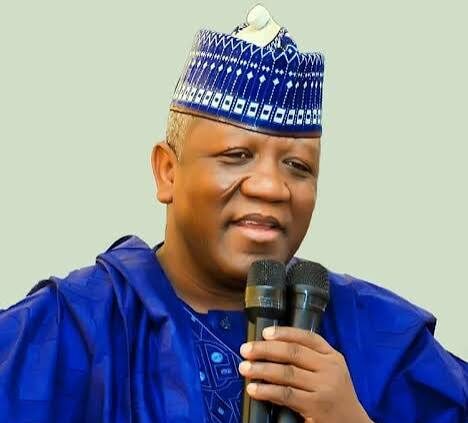
Within days of Senator Abdulaziz Yari being unveiled as Director-General of the campaign council, word began circulating in some quarters that the Renewed Hope Ambassadors, the grassroots movement Governor Hope Uzodinma has superintended since President Bola Ahmed Tinubu’s emergence, had quietly been put to sleep. Mind you, in Nigerian politics, a rumour like that does not need evidence to travel. It only needs a WhatsApp group and an idle afternoon.
To his credit, Uzodinma did not allow the speculation to fester. He summoned coordinators, directors and members to Abuja on Tuesday and said, in as many words as it took, that nothing had changed. I find that instructive, and I want to explain why, because there is a governance lesson buried inside what looks, on the surface, like routine political housekeeping.
The distinction Uzodinma drew is worth repeating carefully because it clarifies something that confuses many Nigerians about how political structures actually work. The Presidential Campaign Council, he explained, is an election structure. It exists to fight and win a specific contest, and once that contest is decided, its work is done. The Renewed Hope Ambassadors, by his own description, is something else entirely, what he called the “organic structure” of the President, built from the polling unit upward through wards, local governments and, ultimately, the national level. His analogy, and I will admit it is a good one, was military.
Soldiers will come, soldiers will go, but the barracks will remain. A campaign council is a deployment. The Ambassadors are the standing barracks that outlast any single deployment.
That is not spin for spin’s sake. Anyone who has watched Nigerian politics across successive election cycles knows exactly what he is describing. Campaign councils are assembled with fanfare before an election and quietly disbanded the moment the votes are counted, their directors and secretaries reabsorbed back into whatever office or ambition they held before. Grassroots mobilisation structures, when built properly and not merely as election-season vehicles, are meant to survive that cycle, because governance itself does not stop the day after inauguration.
If the Renewed Hope Ambassadors genuinely intend to keep functioning as a vehicle for explaining government policy to ordinary Nigerians long after the 2027 ballots are counted, that is a more ambitious and, frankly, more useful proposition than the usual pattern of structures that exist for eighteen months and vanish.
Consider what Uzodinma says the organisation is actually doing right now, while all this speculation was swirling. He disclosed an ongoing media tour across all six geopolitical zones, specifically designed to explain the Renewed Hope agenda and what he termed the results and dividends of the President’s reform policies to the public.
Whatever one’s politics, an organisation whose stated job is public education about policy, rather than merely campaign sloganeering, is doing something closer to civic communication than pure electioneering. He also pointed to a structural footprint that extends across all 36 states, the Federal Capital Territory, and each of the six geopolitical zones, which, if accurate, represents a genuine grassroots architecture rather than a paper organisation that exists only in press releases.
There is also a concrete date to watch. Uzodinma announced a political summit for the third week of September, to be convened jointly with the Progressive Governors Forum and local government chairmen, bringing together elected and appointed officials from across the country, with President Tinubu and his running mate expected to address the gathering. That is a specific, verifiable commitment, and it gives the public something to hold the organisation to. If the summit happens as described, it will do more to settle the argument about whether the Ambassadors are alive than any number of reassuring statements in Abuja meeting rooms.
It is also worth noting the tone Uzodinma struck toward the newer structures rather than treating them as rivals. He told members that the emergence of the campaign council should not be read as a threat, insisting that “the more the merrier” when it comes to organisations working toward the same electoral outcome. That is a healthier posture than the turf wars we have seen in past election cycles, where competing camps within the same party spent more energy undermining each other than confronting the opposition. If Uzodinma’s line holds in practice and not merely in a Tuesday press briefing, it would mark a welcome departure from the internal sabotage that has cost the ruling party votes in the past.
Now, to be sure, there is a question worth asking here, and I would not be doing my job if I glossed over it in the rush to credit a good governance instinct. Uzodinma himself listed his own overlapping roles almost as a badge of coordination: Director-General of the Renewed Hope Ambassadors, Secretary of the Presidential Campaign Council, and head of the secretariat that houses both.
That concentration of responsibility in one man’s hands may indeed explain, as he suggests, why there is no friction between the two structures.
But it should also prompt Nigerians to ask a fair question about the wisdom of stacking that much authority in a single office. When one person sits atop every relevant structure, “there is no fight, no quarrel” is not entirely a coincidence of goodwill; it can also simply reflect that no one is positioned to disagree.
A movement this large, with offices in every state of the federation, deserves a governance structure robust enough that its continuity does not depend on the political survival of any one governor, however capable. What happens to the Ambassadors’ barracks if the man commanding it moves on to something else before 2027? That is a question worth Uzodinma and the party addressing now, not after the fact.
There is a related cost question too, one I raised in the earlier column on the campaign council and which applies with equal force here. A country still absorbing the shock of subsidy removal and currency reform is entitled to ask what it costs to run parallel political structures, campaign councils, Ambassadors, Progressive Governors Forum, local government chairmen’s associations, all converging on the same presidential secretariat with overlapping mandates and, presumably, overlapping budgets. None of this is illegitimate.
Political parties are entitled to organise however they see fit. But transparency about how these structures are funded, and reassurance that none of it draws, directly or indirectly, on public resources meant for governance rather than campaigning, would go a long way toward disarming the very mischief-makers Uzodinma complained about.
What I do credit, without reservation, is the instinct to communicate quickly rather than let a damaging narrative calcify. Too many Nigerian political organisations let rumours of internal collapse or irrelevance sit unanswered for weeks, allowing speculation to become its own kind of truth simply by going unchallenged long enough.
Uzodinma’s decision to convene an urgent meeting, address the coordinators directly, and put a specific date on the calendar for the September summit is the kind of rapid-response political management that Nigerian parties, across the aisle, have historically been terrible at. Say what you will about the substance of the Renewed Hope agenda, the communications discipline on display here, moving within days rather than months to kill a damaging story, deserves recognition.
The larger point, and the one I would urge readers to take from this, is that a functioning political movement in a democracy this size genuinely needs both kinds of structures that Uzodinma described. It needs the campaign council, tight, election-focused, built to win a specific contest against a specific opponent on a specific date. And it needs something like the Ambassadors, a standing civic and mobilisation architecture that keeps citizens informed about government policy in the long stretches between elections, when public attention naturally drifts and misinformation about government performance fills the vacuum.
Nigeria’s chronic problem has never been the absence of structures. It has been the absence of structures that outlive the election cycle they were built for. If the Renewed Hope Ambassadors genuinely intend to be that kind of standing barracks rather than another seasonal deployment, it should prove it, not merely by holding meetings to deny dissolution, but by still being visibly active, informative and accountable to the public long after the January 2027 ballots are counted and whichever soldiers were fighting that particular battle have gone home.
We’ve got the edge. Get real-time reports, breaking scoops, and exclusive angles delivered straight to your phone. Don’t settle for stale news. Join LEADERSHIP NEWS on WhatsApp for 24/7 updates →
Join Our WhatsApp Channel