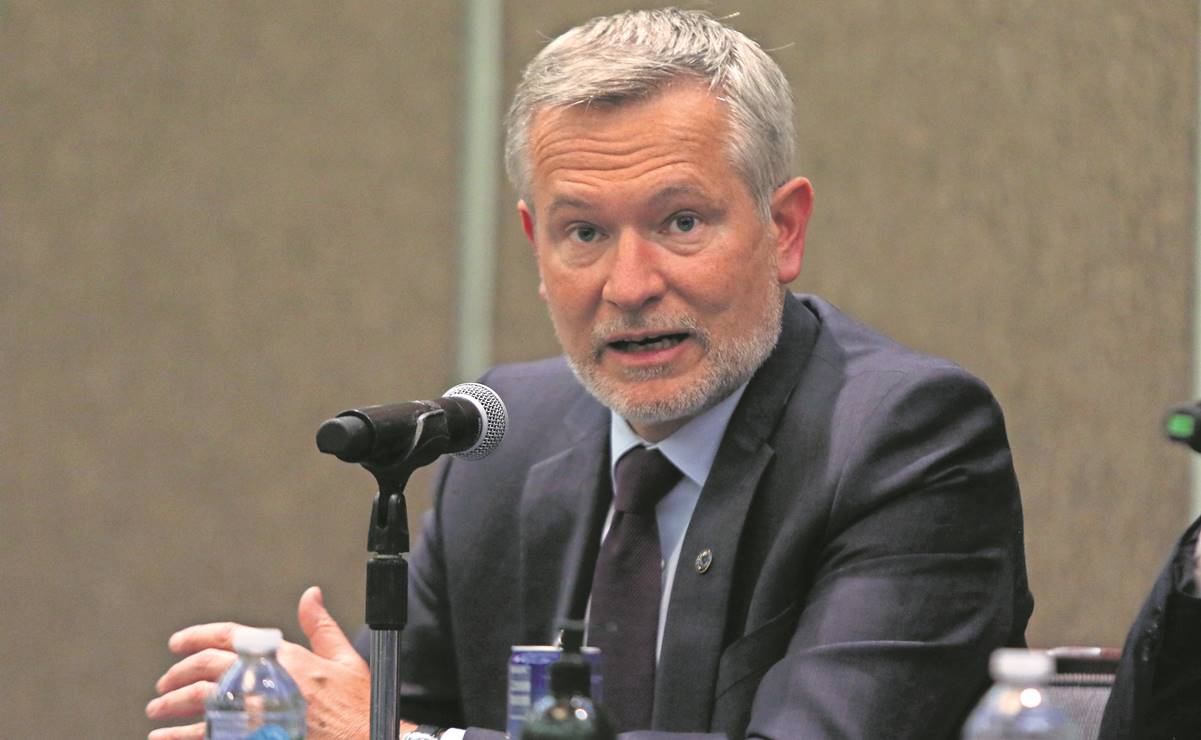
The European Union and the European Investment Bank have mobilised more than €500 million in funding and leveraged investments to support entrepreneurs, innovation and business growth across Africa, with Nigeria emerging as a major beneficiary.
EU Ambassador to Nigeria and ECOWAS, Gautier Mignot, disclosed this at the Boost Africa Impact Forum and media briefing in Abuja on Wednesday.
Mignot said the Boost Africa Initiative had provided more than €100 million in funding and leveraged about €400 million in additional investments to support businesses and innovation across sub-Saharan Africa, including Nigeria.
He said the initiative, launched to promote sustainable economic growth, was about more than investment figures, stressing that its ultimate goal was to create jobs, expand opportunities and improve livelihoods.
“Today’s event is about more than investment figures. It’s about people, entrepreneurs, innovation, jobs and opportunities created when Africa’s talent is matched with the right partners and the right financing,” he said.
According to him, Boost Africa was part of the EU’s wider Global Gateway strategy, aimed at strengthening local value chains, promoting sustainable growth, and attracting private-sector investment in Africa.
The ambassador said the next phase of the partnership would focus on expanding opportunities for African entrepreneurs.
The EIB’s country relationship manager for Nigeria, Moussa Nakoulima, said access to early-stage capital remained a major challenge for African entrepreneurs, particularly those seeking to build and scale innovative businesses.
He said traditional financial institutions were often reluctant to finance young companies because of the risks associated with early-stage ventures.
“This is precisely where Boost Africa comes in,” Nakoulima said.
Launched in 2016 by the EIB and the African Development Bank, with support from the EU and other partners, Boost Africa operates primarily through venture capital funds and financial intermediaries rather than through direct lending to individual companies.
Nakoulima said the model combines investment with technical assistance and ecosystem development to help businesses become sustainable and scalable.
“Boost Africa is a smart combination of capital and capacity,” he said.
He disclosed that the programme had invested about €108 million and attracted an additional €400 million from other investors, meaning that every euro invested through the initiative leveraged roughly three euros from other sources.
Nakoulima identified Nigeria as a critical market for the programme because of its large youthful population and expanding technology and business ecosystem.
He, however, noted that access to reliable early-stage funding remained a major obstacle for many Nigerian entrepreneurs.
Among the sectors supported by the programme are fintech, healthcare, digital services, renewable energy, logistics and e-commerce.
Koulima said the objective was not merely to increase the number of startups in Nigeria but to build companies capable of expanding across Africa and into international markets.
Meanwhile, investment director of the Cathay AfricInvest Innovation Fund, Lavanya Anand, said EIB and Boost Africa support had enabled investment funds to provide both financial and technical assistance to growing African businesses.
She said the €110 million venture capital fund, launched in 2019, had invested in 15 companies across sectors including healthcare, financial services, logistics and e-commerce.
According to Anand, EIB was one of the fund’s anchor investors, while Boost Africa provided up to €1 million in technical assistance.
She cited GoMyCode, an education technology company providing digital skills training in programming and artificial intelligence, as one of the companies supported by the fund. The company has expanded into Nigeria with training centres in Lagos and Abuja.
Another portfolio company, OZE, uses technology to improve financial inclusion for small and medium-sized businesses by supporting credit assessment.
Anand said the fund’s portfolio companies had created 7,600 direct jobs and about 272,000 indirect jobs, while reaching more than 46 million people with improved financial services.
She added that the companies had trained more than 13,000 students and helped save more than 3,000 lives through their services.
We’ve got the edge. Get real-time reports, breaking scoops, and exclusive angles delivered straight to your phone. Don’t settle for stale news. Join LEADERSHIP NEWS on WhatsApp for 24/7 updates →
Join Our WhatsApp Channel