Airline operators have challenged the Nigerian Civil Aviation Authority (NCAA) over its August 2026 flight disruption data, arguing that the reported over 60 per cent domestic flight delays cannot be blamed solely on airlines.
The operators attributed a significant proportion of flight delays and cancellations to airport congestion, inadequate infrastructure, bad weather and other factors beyond the control of airlines.
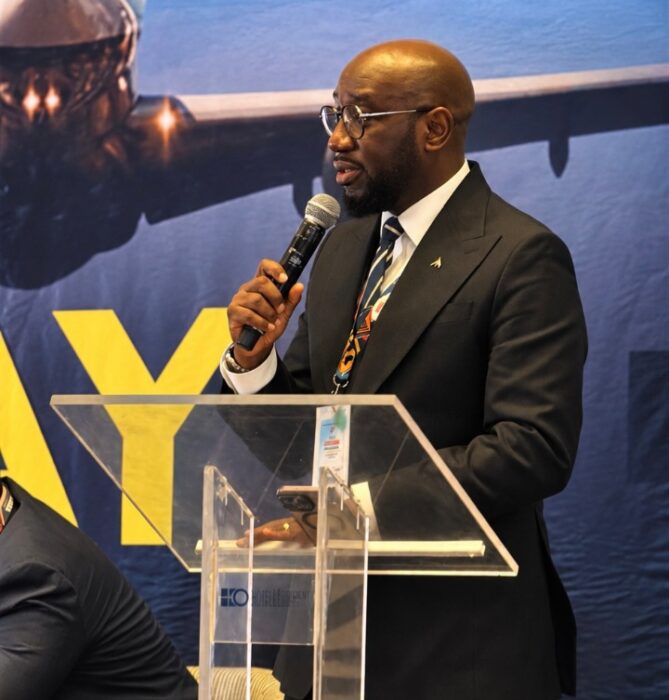
The position was canvassed during the Aviation Day of the 23rd Akwaaba African Travel Market in Lagos, held on Tuesday with the theme, “Delayed and Cancelled Flights: The Rules and the Rights of Passengers – The Airline Perspective.”
Speaking on the panel, the Chief Commercial Officer of United Nigeria Airlines, Adedayo Olawuyi, said the NCAA data failed to distinguish between delays caused by airlines and those resulting from external factors.
Reacting to the NCAA’s data showing that over 60 per cent of domestic flights were delayed in August, Olawuyi said the figure should not automatically be interpreted as evidence of poor airline performance.
“I will use an analogy. You go to school and 60 per cent of the students fail, is that the fault of the school? Yes or no?
“My point is very simple. The first problem we have with that data, personally speaking, is that the data was not presented in a way where we have removed controllable delays and uncontrollable delays.
“When you remove the controllable delays and you have a high number of 60 per cent, then you can say the problem is the airlines.
“The question about the reason for the delays should not be directed to the airlines. The question should be directed to all stakeholders. Airports, regulators, everybody in the ecosystem shouldn’t ignore that 60 per cent.”
Olawuyi said airport infrastructure and congestion were among the major challenges confronting airlines, particularly during peak periods.
“There are many reasons that lead to cancellations and delays of flights in Nigeria’s aviation sector. I would first like to speak about the infrastructure that we have.
“I don’t know how many of you have ever lived in a five-bedroom apartment where there is only one car park? You know, before you go out in the morning, they need to call you to come and move your car. Sometimes that’s what we face because of congestion at the airport.
“So, if you get to the ramp early in the morning, there are times when the aircraft is blocked from moving simply because there are many operators operating today.
“A flight that pushes back at 6:59 a.m. eventually takes off at 7:38 a.m. The flight was supposed to arrive in Abuja by 8 a.m., but there’s already a 40-minute delay that the airline knows nothing about.
“Now, we are not saying delays will continue or that we intentionally want to delay flights. Airlines don’t want to intentionally delay flights but the challenges we face are what brings about these delays.”
He also identified technical challenges as another source of disruption, stressing that airlines could not compromise safety to maintain schedules.
“Secondly, we operate machines. Have you ever woken up, and your car did not start? Sometimes we have technical challenges. When these technical challenges occur, we must maintain the safety of that flight and ensure that everything is properly done and that the aircraft is fixed before it is released into service,” he said.
Olawuyi further cited adverse weather and inadequate night-flight infrastructure at many airports as factors that could force airlines to cancel flights.
He recalled a recent Lagos-Kano flight which was delayed by bad weather and subsequently had to return to Lagos after a thunderstorm affected runway lighting at Kano.
He said the aircraft, which eventually departed Lagos at about 10:30 p.m., was unable to land in Kano after the runway lighting system was disabled by the storm and returned to Lagos, arriving at about 1 a.m.
“That’s not the fault of the airline,” Olawuyi said.
“In Nigeria today, the bulk of the airports we operate in are dusk-to-dawn operations, meaning they do not even have lighting and cannot operate at night. So, when you have delays from every other reason that extend into the night, sometimes we are forced to cancel.”
He, however, acknowledged that airlines were responsible for delays within their control and said operators must continue to improve their performance.
On passenger rights, Olawuyi said travellers were entitled to certain forms of care when flights were delayed or cancelled.
“Passengers should know that their rights protect them. If your flight is delayed up to two hours, you should receive refreshments.
“If the delay extends up to four hours, you should receive a full meal. If you have extended delays of up to six hours, you should receive compensation as well,” he said.
He also urged passengers to play their part by arriving on time, checking flight updates and remaining calm during disruptions.
“When your flight is cancelled, there are times when the airline is mandated to provide accommodation. If your flight is cancelled after 10 p.m., the airline should provide accommodation and transportation.
“However, the airline must be able to prove that the cancellation was entirely its fault. If it’s a situation that was not the airline’s fault, then the airline will not provide accommodation.
“But out of duty of care, if you are based in Lagos and have a flight out of Lagos, and your flight is cancelled, we tell you that you can go back home, and we give you an alternative flight,” he added.
The Chief Commercial Officer of ValueJet, Trevor Henry, who also participated in the panel, supported Olawuyi’s position, identifying several factors responsible for delays across the aviation ecosystem.
According to him, “Delays and cancellations are usually caused by issues like presidential movements, weather, airport congestion at check-in, congestion in the boarding lounge due to security checks, and congestion at the boarding gate.
“When the aircraft taxis to the runway, especially in the morning, there can also be congestion from the taxiway to the runway before takeoff.”
Meanwhile, the Chief Operating Officer of Murtala Muhammed Airport Terminal Two (MM2), Remi Jibodu, has proposed the introduction of a coordinated slot system to address congestion and reduce delays at the airport.
Jibodu said the concentration of flights around the same period, particularly in the morning, was contributing significantly to congestion.
He said thousands of passengers arrive at the airport to board flights around 7 a.m., while more than 10 airlines could have scheduled departures around the same time.
According to him, such a concentration of flights makes delays almost inevitable.
“What we can do at that point in time is to have a coordinated system, which means that we have to collaborate with the airlines to say instead of having everybody going out at 7 o’clock, can we stagger it a little bit?
“The truth is that at this point, we have to look at the slot system to see how we can coordinate it. It may not be a full slot system, but we must be able to give a little bit of concession to that,” he said.
We’ve got the edge. Get real-time reports, breaking scoops, and exclusive angles delivered straight to your phone. Don’t settle for stale news. Join LEADERSHIP NEWS on WhatsApp for 24/7 updates →
Join Our WhatsApp Channel