
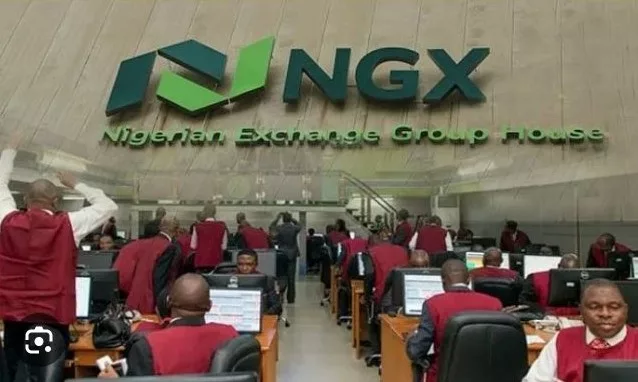
Nigeria’s equity market is increasingly being driven by a small group of highly capitalised companies, with nine firms controlling about 68 per cent of the Nigerian Exchange (NGX) equity market valued at N157.74 trillion as of August 31, 2026.
The concentration highlights the growing influence of blue-chip stocks on market direction, as the broader equities market continues its strong performance this year.
At the close of trading on August 31, the NGX market capitalisation stood at N157.74 trillion, while the All-Share Index closed at 244,199.39 points, representing a 56.93 per cent year-to-date gain.
Data from market analysts showed that the nine companies, each with market capitalisation of at least N5 trillion, had a combined value of N107.59 trillion by the end of August. This represented about 68 per cent of the total NGX equity market capitalisation.
The dominance of the megacaps has become more pronounced following the strong rally in large-cap stocks in the first eight months of the year.
The nine companies added N46.69 trillion to their combined market value between December 2025 and August 31, accounting for nearly 80 per cent of the N58.36 trillion increase in total NGX equity market capitalisation during the period.
Airtel Africa, Dangote Cement and MTN Nigeria were the biggest contributors among the megacaps, jointly adding N28.53 trillion to the increase in the value of the nine companies.
Airtel Africa emerged as the biggest contributor, with its market capitalisation rising to about N23.68 trillion by August 31. Dangote Cement and MTN Nigeria followed with approximately N17.45 trillion and N16.94 trillion respectively.
The concentration means that price movements in a relatively small number of highly capitalised companies can have an outsized impact on the headline performance of the NGX.
The banking sector has also emerged as a major component of the market, with the market capitalisation of 12 listed banks rising to N28.4 trillion by the end of August, from N16.12 trillion in December 2025.
The 56.8 per cent increase in the banks’ combined market value means the sector alone accounted for about 18 per cent of total NGX market capitalisation.
The strong performance of banking stocks has been supported by expectations surrounding the banking sector recapitalisation programme, improved earnings and renewed investor appetite.
Commenting on the concentration, the vice chairman of Highcap Securities Limited, David Adonri, said large-cap stocks tend to attract greater institutional interest because of their liquidity and visibility.
He said this reinforces a cycle in which more investor funds flow into companies that already dominate the market.
“We see the dominance of telecoms, cement and banks as a reflection of the structure of Nigeria’s economy, where essential services, financial intermediation, communications and infrastructure-related businesses command significant investor interest,” Adonri said.
He, however, said the market would need stronger participation in mid- and small-cap stocks to achieve greater diversification.
For the market to become more diversified, Adonri said more companies outside the traditional heavyweight sectors would need to grow their market value and liquidity.
He argued that deeper participation by institutional and retail investors in mid- and small-cap stocks, alongside stronger corporate performance and new listings, would help broaden the market.
Also, the chief executive officer of InvestData Consulting Limited, Ambrose Omordion, said high share prices are a major reason why some stocks rank among the most capitalised companies on the NGX.
“For highly capitalised stocks, it is not just about investor confidence. Their high share price is a major reason they are the most capitalised. They also drive market activity,” he said.
Omordion, however, cautioned that large-cap stocks do not offer the same flexibility for quick entry and exit as smaller stocks do.
He explained that only about three of the large-cap stocks truly meet market expectations and qualify for full inclusion in major indices.
megacaps differ
According to him, the market dynamics for the megacaps are different because their size makes their price movements less volatile than those of small-cap stocks.
“The development underscores the need for deeper market participation, stronger corporate performance and more new listings to reduce concentration and ensure that gains in the equities market are more broadly distributed,” he stated.
We’ve got the edge. Get real-time reports, breaking scoops, and exclusive angles delivered straight to your phone. Don’t settle for stale news. Join LEADERSHIP NEWS on WhatsApp for 24/7 updates →
Join Our WhatsApp Channel