When someone dies in their home, in a hospital or in an accident, there are often questions. But when a citizen dies in the custody of the state, the questions become much bigger because the state has assumed responsibility for their safety.
That is why the deaths of 37 suspected illegal miners in an NSCDC detention facility in Minna, Niger State, cannot be treated simply as another tragic consequence of Nigeria’s illegal mining crisis. These were human beings with names, families and people who expected them to return home.
Among them was 25-year-old Sulieman Mohammed, described by his father as a motorcycle mechanic. His father, Lawan Mohammed, reportedly went to the facility the morning after his arrest to bring him food, only to learn that his son was dead. Another family said their 17-year-old relative was among those who died.
This story unfortunately reflects the value we place on Nigerian lives.
A Suspect Is Not a Convict
We need to confront one dangerous habit in our national psyche: once the state labels somebody a “suspect”, we assume that the person has already been convicted.
The 37 were described as suspected illegal miners. That distinction matters. The Constitution protects personal liberty and permits detention only within legally prescribed circumstances. It also guarantees a fair hearing in the determination of civil rights and obligations.
Being suspected of an offence does not erase a person’s humanity. It does not cancel the right to breathe, to water, to medical attention, to humane treatment, and it certainly does not cancel the presumption that a person is entitled to due process before punishment.
This is where the Minna tragedy becomes bigger than illegal mining. The government has every right and responsibility to confront illegal mining, especially where illicit mining may be connected to environmental destruction, criminal networks and insecurity. But lawful enforcement cannot become a licence for unlawful treatment.
The question therefore should not be whether security agencies should arrest people suspected of illegal mining, but what happens after the arrest? Because that is where the state assumes a special responsibility.
Once a person is locked inside a government facility, he cannot walk away to find water. He cannot call a doctor. He cannot open a window. He cannot escape a dangerous environment. The state has taken away his liberty and must therefore provide his safety.
The Cell Was Not Supposed to Be a Death Sentence
The most disturbing details emerging from Minna are not only about the number of people who died but about what allegedly happened inside that cell.
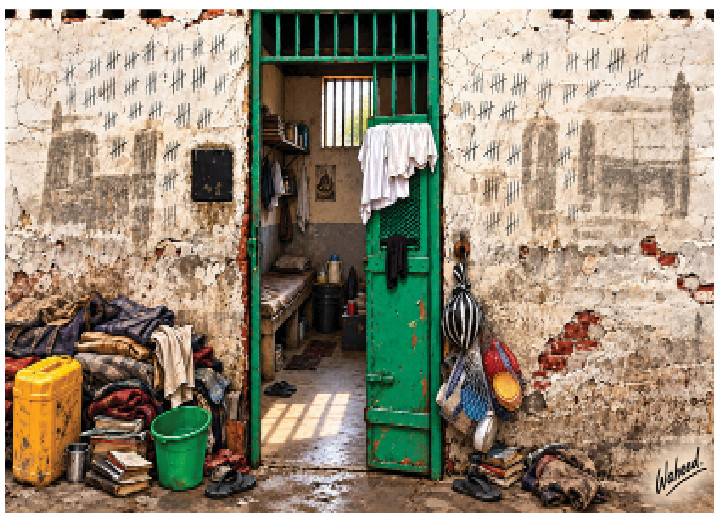
Reports say about 65 or 67 detainees were held in a single cell. Survivors have described struggling for air, crying for help and pleading for water. One survivor told reporters that detainees banged on the cell door and called for assistance but alleged that officers did not respond. Families have separately alleged that some detainees were beaten and badly mistreated.
These allegations must be investigated, not converted into facts before the inquiry is completed. But they raise a question that should trouble every Nigerian: How does a government detention facility become a place where dozens of human beings can reportedly cry for help, and nobody comes?
That is the real story, and the answer cannot be that there was an “outbreak”. If there was a disease, why were so many people packed together? Were there medical checks when they were arrested? Were vulnerable detainees identified? Was there adequate ventilation? Was water available? Were officers monitoring the cell? Were detainees separated according to age and health status? Was anyone medically examined? When people began showing signs of distress, what emergency procedure was activated?
Nigerians already knows that detention conditions can be dangerous. A recent UN human-rights assessment raised concerns about poor ventilation, inadequate food and water, inadequate medical care and the need for detention practices to comply with the Nelson Mandela Rules.
The Nigerian Correctional Service itself describes safe, secure and humane custody as part of its statutory mandate. The principle should be even simpler: custody must never become a sentence to suffering.
Behind Every Body Is a Family
Perhaps the easiest thing to lose in stories like this is the individual. Thirty-seven becomes a number. “Illegal miners” becomes a category. “Suspects” becomes a label. And once that happens, it becomes psychologically easier to discuss the incident as an operational failure rather than a human catastrophe.
But there was a Sulieman in that cell. There was a Saleem. There was a young man whose mother expected him home. There was somebody’s brother who was probably the family’s hope. That is the face of this tragedy that statistics cannot capture.
One grieving father reportedly said he had many expectations for his son, but those expectations had now been shattered. Another family described taking food to detainees for three days before discovering that their son was among the dead.
Nigeria has become dangerously accustomed to mass death. We count bodies after bandit attacks. We count victims after communal violence. We count passengers after road crashes. We count worshippers after building collapses. Now we are counting people who died inside a government detention facility.
At what point do we stop counting bodies and start examining the systems that keep producing them?
Accountability Must Mean More Than Suspension
The Federal Government has acted by ordering an investigation, constituting an independent 10-member committee and suspending officers linked to the incident. The Interior Ministry has said the committee will examine the arrests, detention conditions, identities of the deceased and the circumstances and causes of death.
That is necessary, but it cannot be sufficient. Suspension is administrative action. Accountability is something deeper. The families deserve to know exactly what happened to their sons, brothers and fathers. They deserve credible forensic evidence and an investigation that is genuinely independent and transparent.
They deserve to know whether the arrests were lawful, whether detention procedures were followed, whether officers responded appropriately to distress calls, whether detainees were tortured or otherwise abused, whether medical care was available and whether anyone ignored warnings that lives were in danger.
And if wrongdoing is established, accountability must reach beyond the convenient punishment of a few junior officers. There must be institutional accountability. Because a detention facility does not become overcrowded by accident. The tragedy in Minna therefore presents Nigeria with an opportunity to ask a much larger question about security.
A security agency must have the power to arrest where the law permits. But that power must exist alongside restraint, professional standards, medical safeguards, oversight and respect for human dignity. Otherwise, the citizen is caught between two fears: the fear of the criminal and the fear of the institution empowered to protect him.
The 37 young men did not need to be saints for their lives to matter. They did not need to be innocent of every allegation for their lives to matter. They only needed to be human. And they were.
Their families will carry the consequences long after the headlines disappear, the committee submits its report, and the country moves on to its next crisis. We owe those families more than condolences; we owe them the truth.
And we owe every Nigerian who may one day find himself behind a government cell the assurance that being detained does not mean being disposable.
We’ve got the edge. Get real-time reports, breaking scoops, and exclusive angles delivered straight to your phone. Don’t settle for stale news. Join LEADERSHIP NEWS on WhatsApp for 24/7 updates →
Join Our WhatsApp Channel