Agricultural experts have called on the federal government to establish a reliable and regularly updated livestock database to support its plan to grow Nigeria’s livestock sector from an estimated $32bn to $74bn by 2035.
The experts said accurate data on the country’s livestock population and its distribution would be critical to effective planning, investment, animal health management, and the measurement of progress under the Nigeria Livestock Growth Acceleration Strategy (NL-GAS).
The strategy is the federal government’s 10-year roadmap for transforming the livestock sector.
The minister of Livestock Development, Idi Mukhtar Maiha, has repeatedly stated the government’s target of increasing the sector’s estimated value to $74 billion by 2035.
The minister has said achieving the target would reduce Nigeria’s dependence on imported animal products, create millions of rural jobs and position the country as a major player in Africa’s livestock market.
The strategy estimates that livestock accounts for about nine per cent of Nigeria’s $363 billion Gross Domestic Product in 2023, representing approximately $32 billion.
It targets an increase in the sector’s value to about $74 billion by 2035, while a higher-growth scenario puts its potential value between $74 billion and $90 billion.
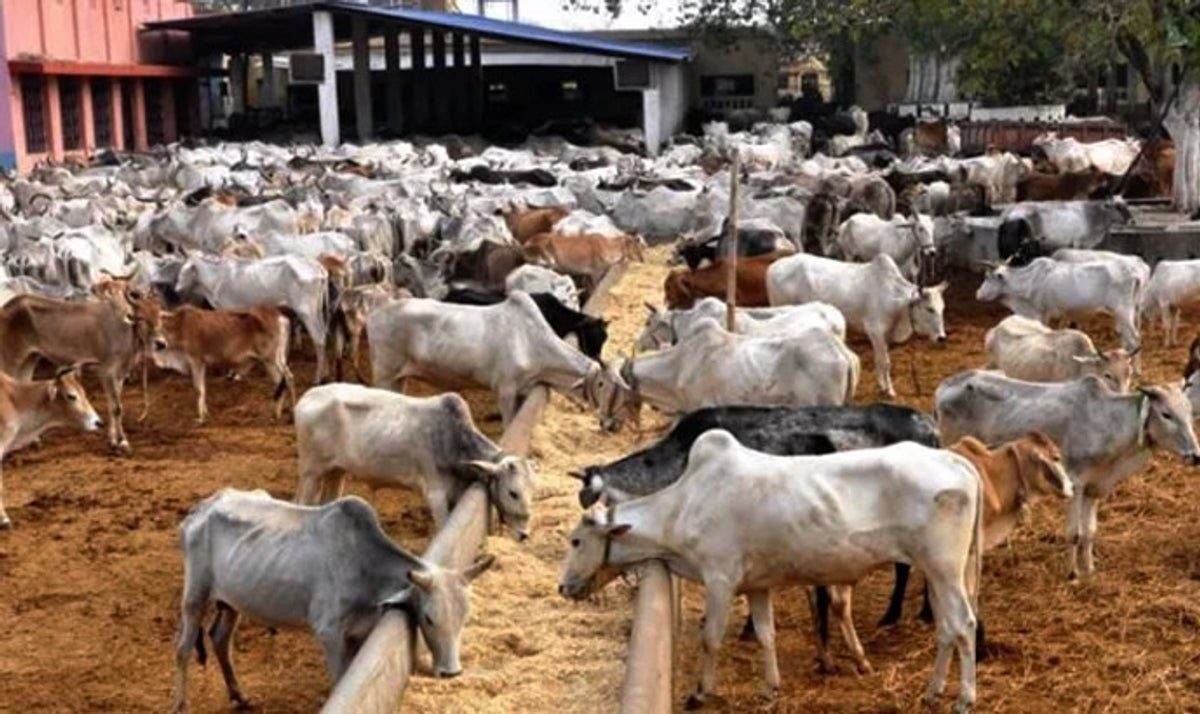
The plan also seeks to increase Nigeria’s livestock herd and flock from about 400 million animals to at least 900 million by 2035, while improving productivity across the value chain.
However, experts said the reliability of existing livestock population estimates must be addressed if the government is to plan effectively and assess whether the ambitious growth targets are being achieved.
An agribusiness practitioner and researcher, Terkula Aduku, said changes in livestock numbers, reproduction and the movement of animals across national and state boundaries could contribute to differences in population estimates.
Aduku said a proper census was therefore important because the government needed accurate information on the number of animals in the country and their distribution to plan and make policy effectively.
He said reliable data would also help the government plan revenue generation and regulate livestock movement, particularly where the movement of animals across state or national boundaries affected other economic activities.
Similarly, an agricultural policy expert, Jeffrey Hemba, said that differences in livestock population estimates highlighted the need for the government to establish a reliable, regularly updated database for the sector.
Hemba said accurate livestock data would enable the government to determine the actual size and distribution of the country’s animal population, improve planning for animal health and feed supply, guide investment and provide a basis for measuring the impact of livestock development programmes.
He said the planned census should clearly define its methodology and reference period so that figures generated by different government agencies could be properly compared.
Hemba’s concerns are significant because the government’s strategy identifies animal nutrition, water supply, breeding and genetics, animal health, data and traceability, infrastructure, finance and private-sector investment as areas requiring urgent attention.
The strategy envisages increased investment in feed production, veterinary services, animal health, processing, packaging, transportation, marketing and exports as part of efforts to increase the value generated from livestock.
An agricultural economist and Graduate Research Assistant at Universiti Malaysia Terengganu, Solomon Gbaa-aondo, said the government’s $74 billion target was ambitious but could be pursued if growth was driven by productivity and improvements across the value chain rather than simply by increasing the number of animals.
Gbaa-aondo said the government would need to improve the quality and availability of feed and fodder, breeding and genetics, vaccination and veterinary surveillance, water supply and production systems.
He also identified modern ranching, efficient slaughter and processing facilities, cold-chain systems and better market infrastructure as necessary to achieving the target.
According to him, the biggest gains should come from producing more milk, meat, eggs and other livestock products per animal and capturing more value through processing, rather than relying primarily on herd expansion.
The call for an accurate census is therefore linked not only to the government’s plan to expand the livestock population, but also to its broader objective of increasing output and value across the sector.
Reliable figures would help policymakers determine where additional feed, water, veterinary services and infrastructure were most needed. They would also enable government and private investors to identify commercially viable opportunities and track the performance of livestock programmes.
The government’s strategy emphasises stronger coordination among public institutions and greater participation by the private sector. Under the plan, the government is expected to provide the regulatory and enabling environment for investment, while businesses are expected to play a larger role across the livestock value chain.
The experts said the success of the plan would depend on whether the government could match its growth ambition with credible data, improved productivity and sustained investment.
The strategy further states that increased domestic production and processing would help meet demand for animal protein, create opportunities for rural employment and expand Nigeria’s participation in international livestock markets.
We’ve got the edge. Get real-time reports, breaking scoops, and exclusive angles delivered straight to your phone. Don’t settle for stale news. Join LEADERSHIP NEWS on WhatsApp for 24/7 updates →
Join Our WhatsApp Channel