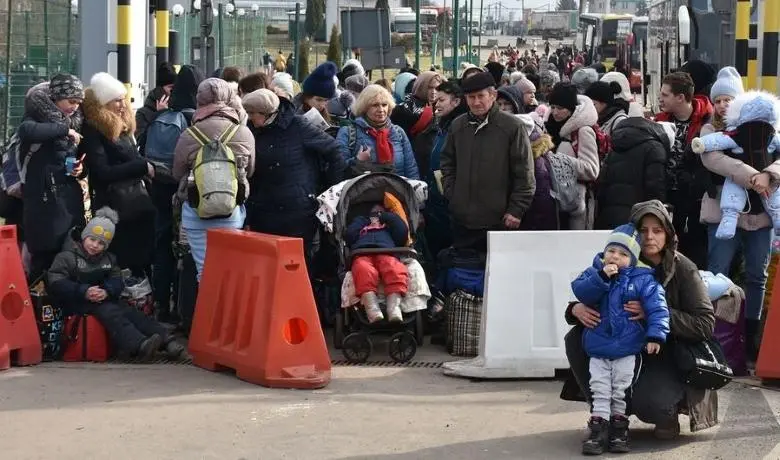
Ukraine has accused Russia of using state institutions and legislation to systematically deport, indoctrinate and militarise Ukrainian children.It warned that the campaign extends beyond the physical transfer of children to efforts to erase their Ukrainian identity and sever family and cultural ties.
The allegations come amid renewed international scrutiny of Russia’s treatment of Ukrainian children, with a July 2026 report by an independent expert mission established under the Organisation for Security and Co-operation in Europe (OSCE) Moscow Mechanism finding evidence of coordinated practices involving indoctrination, militarisation, coercion and repression.
The report, presented on 9th July, examined Russia’s policies affecting Ukrainian children in temporarily occupied territories and those forcibly transferred or unlawfully deported to Russia. It considered whether the practices indicated a coordinated and systematic policy aimed, among other things, at erasing Ukrainian identity and conditioning children for service to the occupying authorities.
According to Ukraine, the alleged system draws on a wide range of state institutions, including education authorities, guardianship bodies, local administrations, transport structures and legislation.
Ukraine said the process is not limited to children who have been physically removed from the country but also affects children living in territories under Russian occupation.
The July OSCE report found that Russia has intertwined education law, youth policy, family law, citizenship regulations and legislation on terrorism and extremism to create what the mission described as a coordinated mechanism of indoctrination and militarisation.
The report also documented the use of military-patriotic youth organisations and re-education camps as part of the broader system extending beyond conventional classroom education.
The findings have heightened concerns that education, which ordinarily serves as a means of developing children’s knowledge and independent identities, is being used in occupied territories as an instrument of political and ideological control.
The United Kingdom, speaking on behalf of countries that invoked the Moscow Mechanism, said the report documented a coordinated mechanism of indoctrination and militarisation enforced through coercion and operating across levels of the school system in occupied Ukrainian territories.
The issue of unlawful transfers has been a major focus of international investigations since Russia’s full-scale invasion of Ukraine in February 2022.
Ukraine said it has recorded 20,610 reports of the unlawful deportation and forced transfer of Ukrainian children, although it said Russia has not provided Ukraine or international organisations with complete information about the children, making it difficult to locate them and verify their circumstances.
The Ukrainian authorities estimate that approximately 1.6 million Ukrainian children remain under Russian control, including children who have allegedly been deported, forcibly transferred or remain in territories temporarily occupied by Russia.
International bodies have separately documented thousands of cases. In March 2026, the UN Independent International Commission of Inquiry on Ukraine concluded that Russian authorities had committed the crimes against humanity of deportation and forcible transfer of children, as well as enforced disappearance. The Commission said it had verified the deportation or transfer of more than 1,200 children from five regions of Ukraine.
The UN Secretary-General has also called for Ukrainian children who have been deported or forcibly transferred to Russia or occupied areas of Ukraine to be returned to their families. His 2026 report noted that more than 740 children had been returned and expressed concern over the whereabouts of children whose locations remain unknown.
Beyond the transfer of children, Ukraine has raised concerns over what it describes as systematic efforts to alter its identity.
The Regional Centre for Human Rights has documented 165 facilities it describes as re-education camps where Ukrainian children are subjected to Russification and militarisation.
The OSCE’s 2026 expert mission similarly examined reports of practices involving the alteration of children’s nationality, illegal adoptions, suppression of Ukrainian identity and conditioning children for service to the occupying power.
The OSCE report concluded that Russia’s policies disregard the best interests of Ukrainian children and recommended an end to indoctrination and militarisation, the cessation of coercive practices against children, parents and teachers, and measures to facilitate the return of deported children and restore their identities.
It also called for humanitarian corridors to facilitate meaningful family contact and the safe reunification of separated children with their parents, relatives or legal guardians.
The international community has increasingly sought mechanisms to document the treatment of Ukrainian children and facilitate their return.
In May 2026, 41 OSCE participating States, following consultations with Ukraine, invoked the Moscow Mechanism over the militarisation and indoctrination of Ukrainian children by Russia. The resulting expert mission was tasked with examining alleged violations of international human rights and humanitarian law, including forced transfers, unlawful deportations, coercion, illegal adoptions, ill-treatment and other forms of violence.
Russia did not participate in the Moscow Mechanism process, according to the UK statement delivered after the report was presented.
The United Nations has also maintained pressure for the return of affected children. In February 2026, UN Secretary-General António Guterres said Ukrainian children deported or forcibly transferred to Russia and occupied areas must be returned to their families without delay and called for returns to be safe, swift and verifiable.
Ukraine and Canada established the International Coalition for the Return of Ukrainian Children as part of the Bring Kids Back UA initiative. According to the Ukrainian position presented in the material, the coalition has expanded to include 46 states, as well as the European Union, the Council of Europe, and the OSCE Parliamentary Assembly.
The coalition is seeking greater international cooperation to press Russia to provide information on Ukrainian children, grant international access to them and facilitate their safe return and reintegration.
For Ukraine, the issue goes beyond humanitarian assistance. It argues that the fate of the children is central to accountability and any sustainable peace settlement.
International investigations have increasingly framed the issue in legal terms. The UN Commission of Inquiry’s March 2026 findings that deportation and forcible transfer of Ukrainian children, as well as enforced disappearances, amounted to crimes against humanity marked a significant international legal finding.
The OSCE’s 2026 investigation has added further evidence concerning militarisation and ideological indoctrination.
The central concern, therefore, is not simply where the children are, but what happens to their identity, family relationships and future while they remain separated from their homes.
Ukraine maintains that children must not be treated as instruments of war, propaganda or population policy. It is calling on Russia to disclose comprehensive information on all deported and forcibly transferred children, allow international access to them and cooperate with efforts aimed at their return and reintegration.
For Kyiv, the return of the children is an essential element of any comprehensive and lasting peace.
“A child cannot be a trophy of war, a tool of propaganda, or material for creating a future soldier,” Ukraine says. “Every child has the right to be with their family, in their homeland, safe and free.”
We’ve got the edge. Get real-time reports, breaking scoops, and exclusive angles delivered straight to your phone. Don’t settle for stale news. Join LEADERSHIP NEWS on WhatsApp for 24/7 updates →
Join Our WhatsApp Channel