
The exit of Uber and a string of multinational companies from Nigeria is a clear warning signal that the country’s business environment requires urgent reforms, the Association of Small Business Owners of Nigeria (ASBON) has said
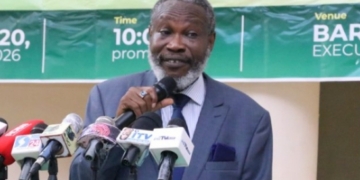
The national president of the ASBON, Dr Femi Egbesola, who spoke against the backdrop of Nigeria’s 66th Independence anniversary, said the growing number of businesses leaving the country reflected the difficulties confronting companies operating in the Nigerian economy.
He argued that rather than viewing the exit of companies such as Uber in isolation, the Federal Government should see it as evidence of the need to urgently improve the ease of doing business and create conditions that enable both local and foreign businesses to survive and expand.
According to him, “The business environment has been very harsh over the years,” adding that recent data indicating a decline in the number of businesses operating in the country was evidence that the environment was not sufficiently supportive of enterprise.
He said, “You also look at the bigger corporations. There is a list of those who have left Nigerian shores, just because the environment is not right. Just recently, Uber too left the nation.”
Egbesola maintained that government’s primary responsibility should be to establish an enabling environment rather than directly engaging in activities that could be better handled by private businesses.
“What we are now telling government is to create an enabling business environment, improve ease of doing business, do policies that support business, and leave us to do business.
We are the ones that should be doing business, not governments doing business, because we create the jobs,” he said.
He identified access to affordable finance as one of the biggest obstacles confronting both SMEs and larger businesses, noting that prevailing interest rates had made borrowing increasingly difficult.
According to him, businesses facing interest rates of between 32 and 40 per cent, coupled with stringent collateral requirements, would struggle to invest, expand and compete.
“Supporting the SMEs and even supporting the multinationals is still about doing business. When SMEs are able to get easy access to affordable finance, it helps them to grow.
Multinationals also need that,” he said.
Egbesola also identified foreign exchange difficulties as another major challenge affecting the competitiveness of Nigerian businesses, particularly manufacturers that depend on imported raw materials and equipment.
He questioned how local businesses could compete with international companies when they were unable to obtain foreign exchange at competitive rates.
“If at the moment it is difficult to access FX from the commercial banks, and you have to go to the black market to access FX at a very high cost, and you need it to manufacture and you also want to sell it to the market, where other international communities are getting FX at a lower rate, how do you compete?” he asked.
The ASBON national president called for stronger government intervention in infrastructure, particularly electricity and roads, arguing that the cost of operating businesses would remain high as long as companies continued to provide basic infrastructure for themselves.
He also criticised what he described as taxation that was disconnected from business realities, saying excessive or unrealistic tax demands could further undermine business survival.
“Most taxes are not reflective. You see a business doing a turnover of N20 million a year, you go and give the business a tax of N64 million, it doesn’t add up,” he said.
Beyond financing and infrastructure, Egbesola urged the government to implement its procurement policy more effectively by patronising local manufacturers and SMEs.
He said Nigeria already had a policy requiring a significant proportion of government procurement to come from SMEs, but alleged that government agencies still sometimes sourced goods and services from overseas.
“If government is intentional about creating certain financial institutions to fill in the gap, you will say Bank of Industry is there. Bank of Industry is only for industrial manufacturers,” he said.
He called for a dedicated financing institution or one-stop-shop bank capable of providing affordable funding to the large number of businesses outside the manufacturing sector, particularly traders and other small enterprises.
The ASBON Boss further advocated policies that would encourage local production of raw materials, machinery and other inputs currently sourced from abroad, arguing that backward integration would reduce businesses’ exposure to foreign exchange volatility.
Looking at the trajectory of Nigerian businesses since independence, Egbesola said the current environment was making it increasingly difficult for small businesses to graduate into larger enterprises.
He said the inability of businesses to scale was undermining the productive capacity of the economy.
“Small companies remain small over time. Micro companies remain micro. Medium remains medium. It is very hard to see a small company within two or three years becoming another Dangote or another Unilever because the environment does not support such growth,” he said.
Egbesola therefore called for a state of emergency in Nigeria’s manufacturing and industrial sectors, alongside stronger support for SMEs.
“In 2026, moving forward, they should declare a state of emergency in the manufacturing or industrial sector. This sector needs to be supported. SMEs too need to be supported if we are really serious about growing our economy,” he said
He also urged the government to ensure that reported improvements in macroeconomic indicators translate into tangible relief for households and businesses, noting that declining inflation figures alone would mean little to citizens if the prices of essential goods remained unaffordable.
For Egbesola, the continued exit or downsizing of businesses, including multinational corporations, should therefore be treated as a broader economic warning: without lower operating costs, reliable infrastructure, affordable finance, predictable taxation, competitive access to foreign exchange and stronger local procurement, Nigeria risks limiting the ability of businesses to create the jobs and productive capacity needed to drive economic growth.
We’ve got the edge. Get real-time reports, breaking scoops, and exclusive angles delivered straight to your phone. Don’t settle for stale news. Join LEADERSHIP NEWS on WhatsApp for 24/7 updates →
Join Our WhatsApp Channel