The Nigerian Supreme Council for Islamic Affairs (NSCIA) has demanded full respect for the rights of Muslim women and girls to wear the hijab in schools, workplaces and public institutions.
It cautioned government agencies and university authorities against actions that undermine court judgments.
The council’s demand was among decisions reached at its recent General Assembly held at the Abuja National Mosque. NSCIA also condemned what it described as attempts by some institutions to circumvent Supreme Court decisions affirming the rights of Muslim students to wear hijab.
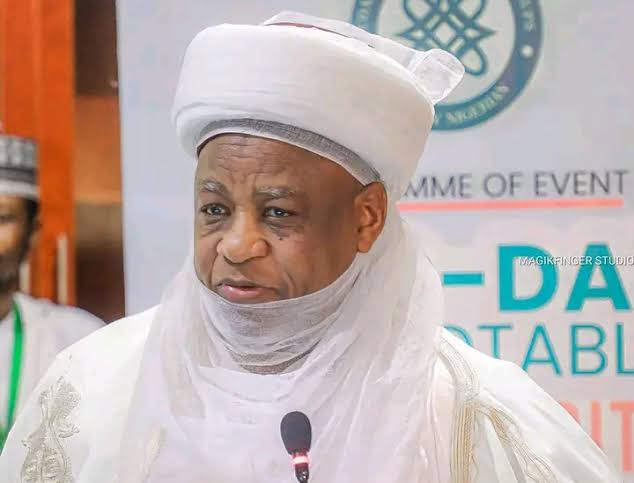
The assembly, presided over by the Sultan of Sokoto and president-general of the NSCIA, Alhaji Muhammad Sa’ad Abubakar 11, brought together Muslim leaders, emirs, obas, chief imams, scholars and delegates from across the country.
In its communiqué, signed by the secretary-general, Prof. Is-haq O. Oloyede, the council specifically faulted the authorities of the University of Ibadan, Obafemi Awolowo University and the University of Lagos over their handling of the hijab issue in their international schools.
The NSCIA accused the institutions of adopting hostile positions towards Supreme Court judgments favouring the use of hijab by willing female students.
It also alleged that attempts were being made to redesignate the schools as private institutions, despite their establishment by public universities, in what it described as an effort to manipulate the effect of court judgments.
The Council urged the affected authorities to “retracе their steps” and comply with the law, stressing that public institutions must uphold inclusiveness and respect judicial decisions.
The NSCIA further called on all government agencies to respect the right of Muslim female students, National Youth Service Corps members, female personnel in security agencies and Muslim women working in other establishments to use hijab.
It described the right as a fundamental human right and urged institutions to ensure that religious identity did not become a basis for discrimination.
The Council also highlighted the recent Supreme Court judgment concerning a mosque proposed by Muslim students at Rivers State University.
It expressed satisfaction with the apex court’s decision upholding the judgment of the appellate court in the case and called on the Rivers State Government and the university management to implement the judgment without further delay.
Beyond the hijab controversy, the assembly used the platform to call for greater attention to the rights and inclusion of vulnerable members of the Muslim community.
It was resolved that Muslims living with physical challenges should receive greater support and be adequately integrated into the Council’s activities.
The NSCIA also placed education at the centre of its agenda, urging Muslim leaders to pursue an educational system that combines sound Islamic knowledge with Science, Technology, Engineering, Arts and Mathematics.
It said such an approach was necessary to equip young Muslims with the skills required to compete effectively and contribute to national development.
The Council also expressed concern about the moral direction of the younger generation, urging parents and community leaders to intensify efforts to guide youths increasingly exposed to foreign influences.
It also called on Muslims to become more active participants in Nigeria’s civic and democratic processes.
The assembly urged Muslims to obtain their National Identification Numbers and Permanent Voter Cards and participate fully in the selection of leaders at all levels.
It stressed that Muslims should contribute to nation-building through responsible citizenship and by making faith a source of good character rather than merely an identity.
On economic empowerment, the Council encouraged Muslim organisations and societies to pursue lawful investments, cooperation and more effective administration of Zakat and Waqf.
It said strengthening these institutions could contribute significantly to sustainable poverty reduction and economic independence within the Muslim community.
The assembly also addressed national security, rejecting claims of religious genocide while acknowledging the widespread insecurity affecting Nigerians regardless of faith.
The NSCIA called for an urgent reform of Nigeria’s security architecture and supported decentralised policing, provided it was based on professionalism, constitutional safeguards, accountability, adequate funding, respect for fundamental rights and effective coordination between federal and state institutions.
The Council also urged the Federal Government to accelerate measures to reduce transportation and food costs, saying ordinary Nigerians were still facing considerable hardship.
At the assembly, the NSCIA recognised Maryam Ibrahim Dan-Azumi for winning the female category of the King Abdulaziz International Qur’anic Competition in Makkah, Saudi Arabia, and recommended her for national recognition.
The Council also adopted the 2026 report of the National Hajj Commission of Nigeria and endorsed recommendations to reposition the Hajj industry.
It further approved the renewal and expansion of its National Executive Committee, with several new officers appointed to strengthen its administrative, development, public relations and family affairs structures.
We’ve got the edge. Get real-time reports, breaking scoops, and exclusive angles delivered straight to your phone. Don’t settle for stale news. Join LEADERSHIP NEWS on WhatsApp for 24/7 updates →
Join Our WhatsApp Channel