The federal government has said it is working towards integrating comprehensive cleft lip and palate care into Nigeria’s existing health system, including exploring health insurance coverage for children with the condition.
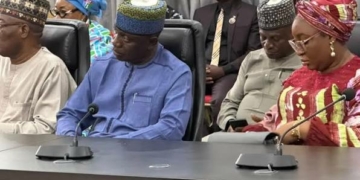
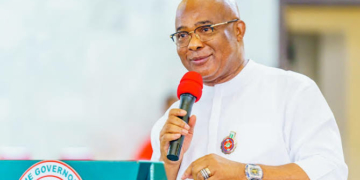
The Minister of State for Health and Social Welfare, Dr Iziaq Adekunle Salako, stated this at the 6th Biennial Conference of the Pan-African Association for Cleft Lip and Palate (PAACLIP) in Abuja.
The conference, with the theme: “Building Resilient and Sustainable Cleft Care in Africa,” brought together cleft-care practitioners, researchers, advocates and health professionals from Nigeria and other African countries.
Salako, represented by the Director of Hospital Services in the ministry, Dr Abisola Adegoke, said the federal government had made investments in interventions aimed at improving access to healthcare, noting that Nigeria had developed a National Surgical, Obstetric, Anaesthesia and Nursing Plan as part of efforts to strengthen surgical care.
According to him, the government, in collaboration with partners, had supported basic life-support training across the six geopolitical zones, telehealth-related training, surgical instrument repair training, media advocacy and the establishment of training registries.
He said the government was determined to ensure that cleft care became part of routine health services rather than being treated as an act of charity.
“Our task is to make cleft care a routine business for the health system, not an act of charity,” he said.
The minister said the government would work with relevant professional associations and the National Health Insurance Authority (NHIA) to examine a comprehensive cleft-care package for children under five years within the vulnerable groups framework.
He said such an arrangement would complement public financing and help reduce the financial burden on families seeking treatment for children born with cleft conditions.
Salako also said the government would strengthen cleft-care services at the primary healthcare level, support team-based training for health workers and integrate cleft-related data into the National Health Management Information System.
He added that the government would also seek to align programmes being implemented by development partners, professional bodies and the private sector with national health priorities to avoid duplication and strengthen sustainability.
Meanwhile, the president of the Pan-African Association for Cleft Lip and Palate, Prof. Adeola Olusanya, said sustainable cleft care required healthcare systems capable of surviving systemic challenges while ensuring that children had access to comprehensive care throughout their lives.
Olusanya said the conference marked a significant milestone as it was the first PAACLIP conference hosted by a national cleft association, describing the development as a step towards stronger African leadership in cleft care.
She called for stronger multidisciplinary teams involving surgeons, nurses, anaesthetists, orthodontists, speech-language pathologists and community advocates to address the complex needs of people living with cleft conditions.
Also speaking, the president and chief executive officer of Smile Train, Dr Susannah Schaefer, said sustainable cleft care went beyond surgery, stressing the need for children to have continuous access to speech, orthodontic, nutrition and other services.
She said Smile Train partners globally delivered more than 131,000 non-surgical interventions in 2025, including speech, orthodontic and nutrition services.
According to Schaefer, sustainable cleft care also requires tackling the cost of transportation, geographical and socioeconomic barriers, fragmented health systems and shortages of skilled health workers.
She called for greater investment in local healthcare professionals and institutions, saying African leadership, experience and priorities should play a central role in shaping the future of cleft care on the continent.
In his remarks, the president of the Nigerian Association for Cleft Lip and Palate (NACLP), Dr Seidu Bello, urged the Federal Government to take concrete steps to integrate oral health into primary healthcare.
Bello called for at least one primary healthcare centre in each of Nigeria’s 774 local government areas to be equipped with a community dental clinic.
He said the clinics could be staffed by dental auxiliaries, including dental therapists, and other trained oral-health personnel to provide preventive services, oral-health education, early detection and referral.
He also called for cleft lip and palate and other major oral diseases to be included under the NHIA framework to enable indigent and low-income Nigerians to access treatment without prohibitive financial barriers.
Bello further urged the Federal Ministry of Health to strengthen the Dentistry Division and, where administratively feasible, restructure or rename it as an Oral Health Division to provide a broader platform for coordinating cleft conditions, dental diseases, noma and other oral-health challenges.
He said sustained investment in cleft care had significantly increased the capacity of Nigerian health professionals and institutions to provide treatment.
Bello acknowledged the contribution of Smile Train to cleft care in Nigeria since it began supporting services in the country in 2002, particularly in professional training, hospital capacity, patient mobilisation and comprehensive care.
He said the progress demonstrated that sustained investment in local capacity could significantly improve access to cleft care.
The conference brought together clinicians, researchers, advocates and partners from across Africa to deliberate on strategies for building resilient and sustainable cleft-care systems on the continent.
We’ve got the edge. Get real-time reports, breaking scoops, and exclusive angles delivered straight to your phone. Don’t settle for stale news. Join LEADERSHIP NEWS on WhatsApp for 24/7 updates →
Join Our WhatsApp Channel