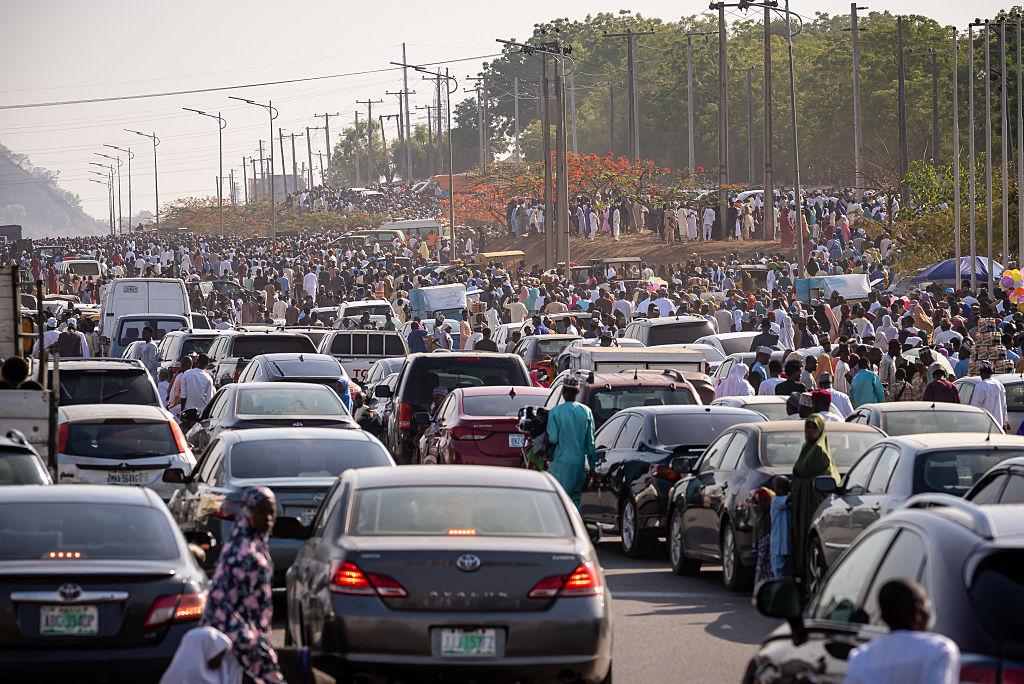
Despite the Federal Government’s announcement of a fuel price reduction at NNPC filling stations, commuters in Abuja say they are yet to experience any meaningful relief, as transport fares remain high. Meanwhile, several commercial drivers appear unaware of the announced reduction, while others who know about it say the development has not improved their earnings enough to warrant lowering their charges.
For many Nigerians already struggling with the rising cost of living, the cost of getting to work, running a business and meeting daily needs remains a major financial burden.
A businessman who also operates a pharmacy, Chinonso Patrick Okenyi, said the rising cost of petrol had forced him to stop using his generator, sell his car and depend on public transportation to get to work.
“I don’t make use of a generator any longer because of the increments in fuel price. I can no longer afford to buy fuel. That is the reason why I am not using generator,” he said.
“Even the generator I bought of recent, I have sold it because fuel is not affordable. I can’t power the generator with the current situation on ground in terms of fuel price. I find it very difficult to sustain this business as long as the issue of power supply is concerned.”
Okenyi said his pharmacy now depends on electricity from the national grid whenever it is available, despite the inconsistent power supply.
“The way we operate is not easy for us. It doesn’t give joy in any way,” he said.
He added that the challenges extend beyond his business to other basic necessities, including access to water.
“In this country, we are finding it very, very, very, very difficult to survive. I must tell you,” he said.
Beyond the cost of running his pharmacy, Okenyi said the rising cost of transportation had also affected his daily expenses.
Having sold his car because he could no longer maintain it, he now relies on public transportation and spends at least N4,000 daily commuting between his residence and workplace.
Asked whether he had noticed any reduction in transport fares following the government’s fuel price announcement, Okenyi said he had experienced no relief.
“Rather, it is increasing. I have not noticed any difference,” he said.
Although he acknowledged the challenges facing commercial drivers, Okenyi argued that they were not solely responsible for the hardship Nigerians were experiencing.
“I don’t blame those people who are in the transport system. I don’t blame any of them at all, expecting them to reduce the transportation price. At the onset, in the first place, they are not the actual cause of the problem. They are not the architects of the problem that we are suffering,” he said.
His experience reflects the concerns of commuters who say that government announcements of fuel price relief have yet to translate into lower transportation costs.
Commercial Drivers Unaware Of Fuel Price Reduction
While commuters are waiting for transport fares to come down, interviews with commercial drivers suggest that awareness of the Federal Government’s announced fuel price reduction may be limited among some operators.
Abubakar Garba, a commercial tricycle, popularly known as keke, driver, said he had not heard about the announced reduction.
Asked whether he was aware of the government’s intervention, Garba responded, “No, they haven’t reduced it.”
His response suggests that some commercial drivers may not have received or understood information about the announced price reduction, raising questions about how widely the intervention has been communicated and its potential impact on transportation costs.
However, not all drivers were unaware of the development.
Olusola Adeniyi, a commercial driver who operates along the Dei-Dei, Madalla and Suleja route in Abuja, acknowledged that petrol prices had reduced.
But the development has not translated into lower transport fares for his passengers.
Asked whether he had reduced his charges following the reduction in fuel prices, Adeniyi questioned how much commuters expected him to cut from his fares.
“How much do you expect me to reduce? How much profit do you expect me to make?” he said.
For Adeniyi, the reduction in fuel prices does not necessarily mean commercial drivers can afford to charge passengers less.
Ahmed, a commercial motorcycle, popularly known as okada, rider, was also aware of the government’s announcement but said he could not reduce his fares because of the limited profit he makes.
Asked whether he would lower his charges following the fuel price reduction, Ahmed said, “No, I can’t reduce how much I charge passengers because there isn’t a lot of gain.”
The responses highlight two challenges facing the government’s intervention: some drivers may be unaware of the announced reduction, while others who know about it say they are unable to pass the relief on to passengers.
For commuters, however, the distinction offers little comfort, as the cost of daily transportation remains high.
‘I Spend N4,000 Daily On Transportation’
For civil servants who depend on public transportation, the cost of commuting continues to consume a substantial portion of their income.
Dennis Koki, a civil servant who lives in Kubwa, Abuja, said the government’s announcement of a 50 per cent price reduction at NNPC filling stations had not translated into meaningful relief for commuters.
“To me, that has no effect on the persons that are travelling or going to work every day. Because the fuel is still very high,” he said.
Koko said many civil servants could no longer afford to commute in their personal vehicles because of the high cost of petrol.
He argued that the government’s intervention was insufficient to ease the burden on workers, particularly those whose salaries had not kept pace with the rising cost of living.
“If government wants to do something, at least do something reasonable to bring down the fuel price to at least maybe N700 or N800,” he said.
Describing the financial pressure on commuters, Koko said he spends between N3,800 and N4,000 daily travelling from Kubwa to the NICON Junction area of Abuja.
He questioned how workers could comfortably meet their transportation expenses while also paying for food, housing and other basic necessities.
“How much is your salary? So the government should do something. We are an oil-producing nation. The government should do this,” he said.
Koko also expressed disappointment over what he described as the limited benefits Nigerians had received from domestic refining.
“I don’t even see the effect of Dangote Refinery. Our refinery, Port Harcourt Refinery, nothing to write home about. So the government should do something,” he added.
He said the temporary nature of the fuel price intervention further limited its potential impact on workers.
“This discount for just a period of one month, I don’t think it will solve the problem,” he said.
Koko’s experience underscores the financial implications of daily commuting for workers who must travel to and from their workplaces throughout the week.
Commuter Calls For More Public Transport Buses
Beyond calling for lower petrol prices, Koki urged the Federal Government and state governments to expand public transportation services to reduce commuting costs.
He proposed the introduction of more buses for intra-city and interstate transportation, arguing that increased access to affordable public transport would ease the burden on commuters.
“One, they should introduce more transport buses, commercial buses, to every state. If it is the whole country, they should liaise with the state governors to provide minibuses for their state capitals, especially in interstate transport,” he said.
He illustrated the cost of interstate travel by citing the amount he pays to travel between Abuja and other parts of the country.
“Imagine if I am going to Bayelsa, I spend N52,000. To and fro is about N104,000. Imagine,” he said.
Koki also recalled paying N45,000 for a trip from Abuja to Ibadan, saying he had not noticed any reduction in the fare when he travelled.
He maintained that transport operators were still charging the same fares despite the government’s announcement.
“The taxi owners, they did not even reduce any price. It is the same thing they are collecting,” he said.
Fuel Discount Yet To Ease Commuters’ Burden
The experiences of commuters, business owners and commercial drivers illustrate the gap between the government’s announced fuel price relief and the realities of daily living.
For Okenyi, the consequences of expensive petrol have gone beyond transportation, forcing him to sell his car and generator while struggling to keep his pharmacy running.
For Koki, the cost of commuting has become a recurring financial burden, leaving him questioning the benefits of the government’s intervention.
Meanwhile, the responses from commercial drivers suggest that awareness of the fuel price reduction is uneven. While some operators have not heard about the announcement, others who are aware of it say the reduction has not sufficiently improved their earnings to justify lowering fares.
The findings also raise questions about how effectively the government’s intervention has been communicated to transport operators and whether the reduction can translate into tangible benefits for commuters.
For Nigerians already grappling with rising living expenses, the concern remains whether the announced fuel discount will eventually bring down transport fares or whether the cost of getting to work and running a business will continue to consume a significant share of household income.
We’ve got the edge. Get real-time reports, breaking scoops, and exclusive angles delivered straight to your phone. Don’t settle for stale news. Join LEADERSHIP NEWS on WhatsApp for 24/7 updates →
Join Our WhatsApp Channel