
Kaduna State has extended the delivery of essential medicines and other health commodities to more than 1,000 health facilities under a supply system designed to reduce distribution costs, prevent stock shortages and ease the burden on patients and healthcare workers.
The initiative, implemented under the Strengthening Integrated Last Mile Delivery and Supply Visibility Project, is also expected to improve access to medicines by ensuring that health facilities receive supplies without their staff having to leave their duty posts to collect them from central warehouses.
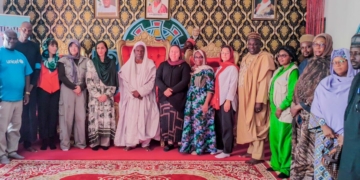
The Executive Secretary of the Kaduna State Health Supply Management Agency, Aisha Isyaku, disclosed this during a sensitisation meeting on the rescoped project in Kaduna, where stakeholders reviewed progress and discussed plans to sustain the initiative.
Isyaku said the project, which had been piloted for some time, represented significant progress in the state’s efforts to strengthen the supply of medicines and other essential health commodities.
She explained that the integrated last-mile delivery model brought supplies for different health programmes together for transportation and distribution, reducing logistics costs, unnecessary trips and environmental pollution.
According to her, the system also improves the timely availability of medicines at health facilities, which could translate into better healthcare services for residents.
She said the agency’s warehouses were operational across the state, bringing essential health commodities closer to communities and enabling facilities to obtain supplies at lower distribution costs.
Isyaku identified the zonal warehouses serving Kafanchan and Kachia in Zone Three, Ikara and Soba-Gari in Zone One, and the central warehouse serving Zone Two as part of the distribution arrangement.
The Programme Director of the Strengthening Integrated Last Mile Delivery and Supply Visibility Project, Pharmacist Kolo Yakubu, said the project had completed its pilot phase and secured an extended three-year grant to consolidate the gains and strengthen the state’s capacity to sustain the system.
Yakubu said the sensitisation meeting was organised to inform stakeholders about the revised grant, jointly identify priorities and discuss commitments needed to maintain the project beyond 2029.
He added that the project was also advancing efforts to track the movement and availability of commodities from central warehouses to the last mile, while integrating the distribution of supplies for different health programmes.
Yakubu, however, identified weaknesses in some governance structures as a challenge, saying discussions were ongoing with the state government to strengthen oversight and protect the gains achieved so far.
According to him, the ultimate objective is to ensure that the state assumes full responsibility for the system and sustains its operations beyond 2029.
For ordinary residents, the initiative is expected to improve the availability of essential medicines at public health facilities, reduce disruptions caused by stock shortages and make the distribution of health commodities more efficient.
Its long-term impact, however, will depend on the state’s ability to fund the system, maintain effective oversight and ensure that medicines delivered to facilities are available to patients when needed.
We’ve got the edge. Get real-time reports, breaking scoops, and exclusive angles delivered straight to your phone. Don’t settle for stale news. Join LEADERSHIP NEWS on WhatsApp for 24/7 updates →