Lagos State Government has intensified efforts to reduce preventable maternal and newborn deaths with the development of a state-owned framework to strengthen emergency obstetric and neonatal care.
The framework will focus on healthcare workers’ competencies, coordinated clinical response, functional facilities and sustainable service delivery.
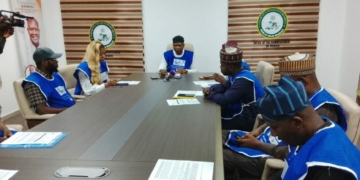
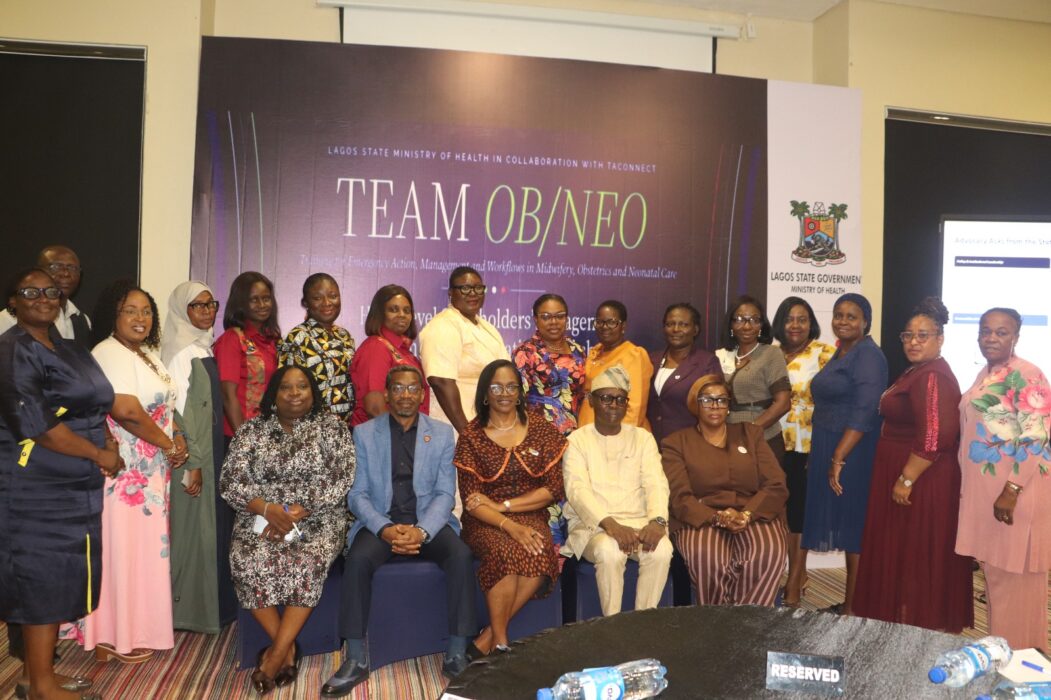
The plan was unveiled at a High-Level Stakeholders’ Engagement and Technical Co-Creation Workshop on designing a state-owned pathway to stronger maternal and newborn emergency care, organised by the Ministry of Health in collaboration with Training for Emergency Action, Management and Workflows in Midwifery, Obstetrics and Neonatal Care, TEAM OB/NEO. The engagement held from November 10 to 12, 2026, at Alausa-Ikeja.
Delivering the keynote address, the Special Adviser to the Governor on Health, Dr Kemi Ogunyemi, said complications such as postpartum haemorrhage, eclampsia and prematurity-related conditions still threaten maternal and newborn survival despite ongoing investments in the sector.
She said Lagos faces additional pressure from its growing population and influx of people from other states, including pregnant women seeking specialised maternity services, making it imperative to strengthen the system.
“The question before us is not simply whether the complications can be recognised, but whether healthcare workers at the point of care can identify them early, communicate effectively, make timely decisions and provide the appropriate interventions,” she said.
Ogunyemi called for an integrated approach that combines competency-based training, simulation exercises, standardised clinical workflows, multidisciplinary teamwork, mentorship and functional emergency response systems.
She listed six priorities for successful implementation to include government ownership and sustainability, practical capacity development, facility readiness, standardised clinical practices, data-driven accountability and stakeholder coordination.
She stressed the need for evidence-based planning in driving reforms and resource allocation.
“When you approach the government to request resources, you must be able to support your request with evidence. You must show what the situation was before, what it is now and what happened in between,” she said, urging stakeholders to ensure that TEAM OB/NEO evolves beyond a training programme into a sustainable, state-owned intervention with measurable improvements in maternal and newborn health outcomes.
In her remarks, the permanent secretary, Ministry of Health, Dr Dayo Lajide, who was represented by the Director, Family Health and Nutrition, Dr Abosede Wellington, said the engagement provides an opportunity to translate existing commitments into a coordinated and sustainable action plan. She said preventing avoidable deaths requires more than access to facilities, but also skilled health workers, clear clinical protocols, teamwork, functional equipment and essential medicines.
Similarly, the Permanent Secretary, Lagos State Health Service Commission, Dr Olufemi Omololu, called for measurable benchmarks to assess progress in reducing maternal mortality and improving emergency care. He identified workforce shortages and high staff attrition as major challenges, stressing the need for continuous training and capacity development. He added that beyond access, the state must ensure that patients receive timely and appropriate care upon arrival through clearly defined emergency response pathways.
Partners at the meeting reaffirmed support for the initiative. The Programme Manager, Health Strategy and Delivery Foundation, Dr Emmanuel Asandobe, said the foundation has maintained a longstanding partnership with Lagos in quality improvement and maternal and newborn health. The Maternal Health and Family Planning Analyst, United Nations Population Fund, Lagos Liaison Office, Dr Akinkunmi Akinbanjo, said the initiative aligns with UNFPA’s maternal health mandate and called for synergy with existing interventions to avoid duplication.
The State Project Manager, Centre for Integrated Health Programme, Dr Oluwabunmi Adesanya, said the AEARI Project is designed to prevent avoidable maternal deaths and ensure access to quality healthcare for mothers and children. She said the project, supported by the Gates Foundation through Technical Advice Connect, with additional European Union support for selected facilities, has collaborated with the Lagos State Government and relevant health institutions to promote proven maternal and newborn health innovations.
Also speaking, the project manager, MDOC Healthcare, Solomon Chinedu, reaffirmed the organisation’s commitment to its partnership with the state.
The workshop brought together representatives of government ministries and agencies, health districts, professional associations, development partners and healthcare institutions to examine existing gaps and co-create an implementation pathway suited to Lagos State’s health system. Deliberations focused on priority interventions, institutional responsibilities, workforce capacity gaps, facility readiness, mentorship, referral systems and mechanisms for monitoring implementation and measuring improvements in the quality of emergency maternal and newborn care.
We’ve got the edge. Get real-time reports, breaking scoops, and exclusive angles delivered straight to your phone. Don’t settle for stale news. Join LEADERSHIP NEWS on WhatsApp for 24/7 updates →
Join Our WhatsApp Channel