

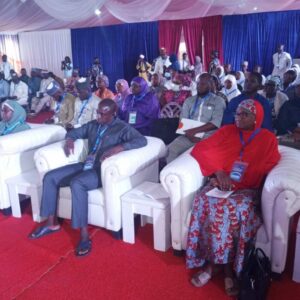
The Kaduna State Government has reaffirmed its commitment to tackling healthcare workforce shortages through Task Shifting and Task Sharing (TSTS), an approach aimed at strengthening frontline health workers’ capacity to provide essential maternal, newborn and child healthcare services.
The Deputy Governor of Kaduna State, Dr Hadiza Sabuwa Balarabe, disclosed this at the close-out ceremony of the TSTS implementation programme in Kaduna, saying the initiative had supported interventions across 77 primary healthcare facilities in nine local government areas.
Balarabe, a public health physician, said the state could not address its healthcare workforce shortage through recruitment alone because of the financial cost and time required to employ and train additional personnel.
She explained that task shifting and task sharing offered a complementary approach by equipping existing healthcare workers with additional skills, supported by clinical mentorship, coaching and supervision.
According to her, the strategy was particularly important at the primary healthcare level, where frontline workers are often the first to attend to pregnant women, newborns and children requiring essential medical services.
She urged the Ministry of Health and the State Primary Health Care Board to strengthen clinical mentorship within existing structures and explore opportunities to extend the programme to more facilities.
Balarabe commended Pathfinder International, the Gates Foundation, Impact Catalyst and other partners for supporting the initiative, stressing that sustained government ownership, adequate funding, planning and performance monitoring would be critical to maintaining its gains.
In her keynote address, the Commissioner for Health, Hajia Umma Ahmed, described task shifting and task sharing as a strategic response to workforce constraints and an opportunity to improve access to essential healthcare services in underserved communities.
Ahmed stressed that the approach must not compromise professional standards or require healthcare workers to perform duties beyond their competence and approved scope of practice.
She identified five priorities for sustaining the initiative: integrating TSTS into government policies and plans, incorporating it into workforce planning and budgeting, maintaining clinical mentorship, using evidence to guide expansion, and strengthening monitoring and accountability.
The representative of the Gates Foundation, Dr Anthony Shamang, commended the state government for its reported commitment to recruiting 1,800 healthcare workers annually for primary healthcare facilities.
Shamang recalled that an assessment conducted in 2016 identified a significant shortage of personnel in the state’s primary healthcare system.
According to him, the system required more than 16,000 healthcare workers to function optimally but had fewer than 5,000 at the time of the assessment.
He said the shortage had constrained service delivery despite the efforts of existing personnel, adding that recruitment needed to be complemented by strategies to improve the use of available human resources.
Shamang described TSTS as an important intervention for strengthening frontline workers’ capacity and expanding access to essential healthcare services.
The Emir of Zazzau, Ambassador Ahmed Nuhu Bamalli, also commended the state government, development partners and healthcare professionals for their contributions to strengthening primary healthcare services.
Bamalli said the programme had broadened his understanding of how task sharing could help organisations make better use of available personnel through appropriate training and the distribution of responsibilities.
The initiative enables appropriately trained healthcare workers to perform designated tasks within their competencies, training and approved scope of practice, while promoting collaboration among different categories of health professionals.
We’ve got the edge. Get real-time reports, breaking scoops, and exclusive angles delivered straight to your phone. Don’t settle for stale news. Join LEADERSHIP NEWS on WhatsApp for 24/7 updates →
Join Our WhatsApp Channel