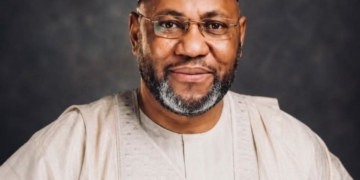
Lagos State Governor Babajide Sanwo-Olu has given residents, employers and workers until December 31, 2026, to obtain health insurance, warning that enforcement of mandatory coverage will begin in January 2027.
The governor announced the deadline on Tuesday while launching the Lagos Private Health Plans (LPHP), an initiative designed to extend health insurance to salary earners and corporate organisations, complementing the existing Ilera Eko scheme for vulnerable residents and workers in the informal sector.
The policy, introduced under Executive Order EO/BOS/01/2024, aims to reduce dependence on out-of-pocket payments for medical treatment and protect households from financial hardship arising from illness.
The launch, attended by healthcare practitioners, health maintenance organisations (HMOs), government officials and other stakeholders, marks a renewed effort by the state government to expand insurance coverage and ensure residents can access healthcare without bearing the full cost of treatment when they need it.
Sanwo-Olu said the mandatory scheme placed responsibilities on individuals, employers and the government, stressing that every resident should have access to a health insurance plan.
He lamented that many families struggled to pay hospital bills from the same income needed for rent, school fees and other essential expenses.
“When that mother walks into the hospital in Lagos State next year, she will show her card. She will receive care, and she will keep her money for her journey back home,” the governor said.
He said the scheme would enable parents to seek medical attention for their children without worrying about how to pay hospital bills.
The governor explained that while Ilera Eko catered for vulnerable residents and those in the informal sector, the new private health plans would cover formal-sector workers and corporate organisations.
“Ilera Eko serves the informal sector and the vulnerable. The Lagos Private Health Plans will serve the formal sector. There is now a plan offered by the state for every Lagosian, be it formal, be it informal, be it vulnerable,” he said.
According to Sanwo-Olu, licensed actuaries reviewed nearly two million claims and enrolment records to determine the cost of providing health insurance for formal-sector workers.
He disclosed that 21 HMOs had endorsed participation in the new plans, describing the initiative as a partnership between the government and private operators to expand coverage and improve healthcare delivery.
The governor said the government had granted a moratorium until December 31, 2026, to give residents and employers sufficient time to enrol before enforcement begins in January.
“I truly, truly want compliance. I don’t want a horse whip for anybody. I want people to go out there and let us have free compliance,” he said.
To coordinate implementation, Sanwo-Olu announced the establishment of an implementation steering committee and an enforcement task force to oversee the rollout and ensure compliance across the state.
He also said the government would monitor participating HMOs to ensure hospitals were paid promptly, claims were properly settled and the medical services covered by insurance plans were delivered.
“At least 70 kobo of every naira of premium paid that you collect must be spent on care,” Sanwo-Olu said, adding that the state would publish quarterly monitoring results.
The governor further disclosed that contributions from the private health plans would support the Lagos State Health Equity Fund, which assists residents unable to afford insurance premiums.
Other contributions would support the provision of drugs, medical equipment and personnel in public health facilities.
He pledged that the government would promote transparency in the management of insurance funds and ensure healthcare providers received payments promptly.
“Every hospital should be paid on time. Every naira that enters the system should be accounted for in public,” he said.
Sanwo-Olu also appealed to Nigerian doctors who had emigrated to reconsider returning home, arguing that improved healthcare financing could make the sector more sustainable for medical professionals.
“We’re restoring dignity, viability, and credibility in the health sector,” he said.
The Commissioner for Health, Prof. Akin Abayomi, described the initiative as a major shift in healthcare financing in Lagos, saying the prevailing dependence on direct payments placed excessive pressure on households and healthcare facilities.
“Today, we are going to witness the most important policy shift in the health sector of Lagos State. Lagos, I believe, will never be the same again,” Abayomi said.
He warned that paying for treatment only when illness occurred could wipe out household savings, force families to sell assets and push them into debt.
“A single admission can deplete all our savings, and you may even have to liquidate your assets and even plunge yourself into debt,” he said.
Abayomi explained that health insurance spreads treatment costs across a pool of contributors, reducing the financial burden on individuals while providing hospitals with a more predictable source of revenue.
“Insurance answers that. It moves the payment away from the moment of illness and spreads the cost across the community who stay well,” he said.
He said mandatory enrolment was necessary to ensure that healthy people, as well as those already requiring medical attention, contributed to the insurance pool.
According to the commissioner, Lagos currently has about two million insured residents, while the government is targeting at least 10 million enrollees.
“The target is at least 10 million. This is a five-fold increase in business,” he said, highlighting the potential for expanded opportunities for HMOs and healthcare providers.
Abayomi added that predictable revenue from insurance would enable hospitals to plan their operations, invest in equipment, improve services and place greater emphasis on preventive healthcare.
Earlier, the Chairman of the Board of the Lagos State Health Management Agency (LASHMA), Dr Adebayo Adedewe, said the agency would intensify enrolment, public awareness and community engagement to ensure the policy translated into accessible healthcare.
He said the agency had stepped up awareness campaigns through radio, billboards, digital advocacy and partnerships with traditional rulers, market associations, transport unions and grassroots organisations to reach residents across the state.
The campaign, he added, would focus particularly on traders, artisans, transport operators and small-business owners who might otherwise remain outside the insurance system.
Adedewe also disclosed that the Lagos State Health Equity Fund had been increased from N1 billion to N3 billion to strengthen support for vulnerable residents.
“Particular attention remains on vulnerable residents among us who may not be able to afford insurance premiums,” he said.
We’ve got the edge. Get real-time reports, breaking scoops, and exclusive angles delivered straight to your phone. Don’t settle for stale news. Join LEADERSHIP NEWS on WhatsApp for 24/7 updates →
Join Our WhatsApp Channel