
Sugar producers operating existing facilities in Nigeria have committed to raising annual output to 1.22 million metric tonnes by 2030, two years ahead of the national target, as government reforms improve the investment climate for local production.
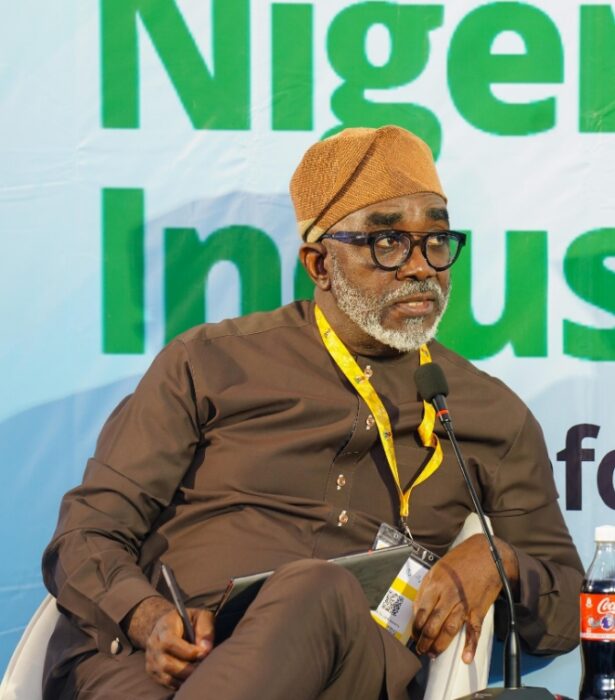
The Executive Secretary and Chief Executive Officer of the National Sugar Development Council (NSDC), Kamar Bakrin, disclosed this at the 32nd Nigerian Economic Summit in Abuja, where he called for policy consistency to sustain investor confidence and accelerate the country’s drive towards sugar self-sufficiency.
Bakrin, who spoke during a panel session on “Strengthening Policy Coordination for the Non-alcoholic Drink Sector Competitiveness,” said the macroeconomic reforms introduced by President Bola Ahmed Tinubu had made local sugar production more attractive to investors.
He said investors operating existing sugar facilities had committed to delivering 1.22 million metric tonnes annually by 2030, ahead of the 2032 timeline under the Nigeria Sugar Master Plan (NSMP) 2.0.
He added that a pipeline of new, or greenfield, projects was expected to contribute another 830,000 metric tonnes of annual production capacity by 2030.
According to Bakrin, achieving sugar self-sufficiency would save Nigeria about $1 billion in foreign exchange annually and create approximately 110,000 direct jobs, particularly in rural communities.
He said the benefits would extend beyond sugar factories to rural livelihoods, infrastructure development and related industries, including bioelectricity, fuel ethanol and biodegradable packaging.
Bakrin, however, warned that sustaining investment would depend on predictable government policies, noting that developing a sugar estate takes at least four years from land clearing to full production, with investors committing substantial capital long before production begins.
“An investor making that decision looks at two things: will there be stable demand for this sugar, and will the policy environment be predictable over the life of the investment,” he said.
He urged the government to assess the implications of fiscal and regulatory decisions on employment, investment and the Sugar Master Plan before introducing measures affecting the sugar and beverage value chain.
He also called for reasonable transition periods for new policies, arguing that abrupt changes could undermine investment decisions and the expansion of domestic production.
The NSDC boss described sugar and beverages as parts of a single value chain, noting that the beverage industry is Nigeria’s largest industrial consumer of sugar.
He said beverage manufacturers could support local production through domestic purchasing commitments, assistance for outgrower farmers, market data and investment in the Backward Integration Programme (BIP).
“When Government protects the conditions for demand, and industry commits to local supply, the whole value chain grows, and the jobs stay in Nigeria,” Bakrin said.
He added that sugar estates could support rural development through roads, schools, clinics and electricity generated from bagasse, the fibrous residue left after sugarcane processing.
Bakrin also acknowledged the government’s public-health objective of tackling non-communicable diseases, insisting that health priorities and industrial development should not be treated as competing objectives.
He recommended that the Nigeria Industrial Policy Sectoral Competitiveness and Growth Initiative (NSCGI) adopt alignment with the Sugar Master Plan as one of its measures of success.
“When the sugar sector and the beverage sector grow together, Nigeria wins: on jobs, on foreign exchange, and on rural prosperity,” he added.
We’ve got the edge. Get real-time reports, breaking scoops, and exclusive angles delivered straight to your phone. Don’t settle for stale news. Join LEADERSHIP NEWS on WhatsApp for 24/7 updates →
Join Our WhatsApp Channel