The growing number of reports of child sexual exploitation facilitated by parents and guardians in Nigeria is a disturbing indictment of the very people entrusted with protecting children.
Rather than providing safety, guidance and care, some parents are allegedly exposing their children to sexual abuse in exchange for money.
This betrayal of parental responsibility demands urgent and decisive action from the authorities and society.
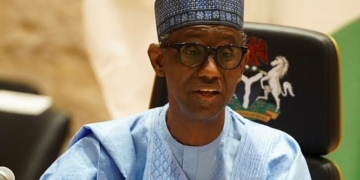
Recently, the National Agency for the Prohibition of Trafficking in Persons (NAPTIP) raised the alarm over the rising incidence of child sexual exploitation involving parents and guardians.
The Director-General of the agency, Hajia Binta Adamu-Bello, disclosed that NAPTIP had been inundated with reports of adults offering their children and wards for sexual exploitation in return for financial rewards.
According to her, some parents and guardians have reduced innocent children to objects of sexual gratification without regard for the devastating physical, psychological and emotional consequences or the lasting damage to their future.
NAPTIP cited the arrest of a middle-aged woman, whose identity was withheld, over allegations that she offered her teenage daughter for sexual exploitation in exchange for money.
LEADERSHIP also recalls the reported arrest of a 36-year-old woman, Anulika Onyeanusia, in Onitsha, Anambra State, over allegations that she sexually exploited her underage daughter, reportedly aged eight or nine, during a livestream video.
The woman was reported to have admitted sending explicit material involving the child to a foreign national through WhatsApp and receiving between $300 and $700 in payment.
These cases, which attracted public attention partly because of the circulation of videos, may represent only a fraction of a much wider and largely concealed problem.
NAPTIP’s reported experiences across its headquarters and state commands suggest that the practice warrants urgent investigation and a more robust child-protection response.
The figures emerging from other institutions are equally troubling.
The National Human Rights Commission ( NHRC) reportedly recorded nearly 355,000 complaints in July 2026, including allegations of physical and sexual violence against children.
In Edo State, the government reported 72 cases of child defilement between January and July 2026, with fathers allegedly responsible for about half of the cases.
These figures underscore the vulnerability of children, particularly within their own homes.
However, reported complaints and recorded cases must not be mistaken for the full extent of the problem, as many victims remain silent because of threats, shame, fear of stigma or dependence on their abusers.
Child sexual exploitation occurs when an individual or group takes advantage of a child’s vulnerability or an imbalance of power to manipulate, coerce or deceive the child into sexual activity for the perpetrator’s benefit, including financial gain.
It may involve prostitution, trafficking, the production and distribution of child sexual abuse material, livestreamed abuse and other forms of online exploitation.
Whatever form it takes, the consequences can be profound and enduring. Victims may suffer physical injuries, trauma, depression, loss of self-esteem, disrupted education and difficulties forming healthy relationships.
The circulation of explicit images online compounds the harm, as such material may continue to resurface long after the initial abuse.
The United Nations Children’s Fund (UNICEF) has highlighted the alarming global scale of technology-facilitated sexual exploitation and abuse.
Its research has estimated that millions of children in several countries experience such abuse within a single year.
In Nigeria, figures cited by the agency indicate that one in four girls and one in 10 boys experience sexual violence, with many subjected to repeated abuse.
For us, these figures demand sustained attention rather than occasional outrage when particularly shocking cases emerge.
Nigeria is not without legal safeguards. The Child Rights Act 2003 provides for the protection of children from sexual exploitation, trafficking and pornography, while the Violence Against Persons (Prohibition) Act 2015 strengthens the legal framework for addressing violence and abuse.
The Child Rights Act prohibits sexual exploitation and prescribes penalties for offences under its provisions.
Nevertheless, legislation alone cannot protect children unless it is effectively implemented.
Although all 36 states and the Federal Capital Territory (FCT) have reportedly domesticated the Child Rights Act, significant differences remain in enforcement, institutional capacity, funding and access to justice.
Some states have developed family courts, child-protection units and welfare services, while others continue to grapple with limited resources, low public awareness and cultural practices that discourage the reporting of abuse.
More troubling is the lack of effective coordination among institutions responsible for child welfare, including the police, schools, healthcare providers, social workers and the justice system.
When these agencies operate in isolation, warning signs may be missed, reports mishandled and vulnerable children left exposed to further abuse.
We urge NAPTIP, the police and relevant state agencies to investigate reported cases thoroughly, identify other perpetrators and ensure that those found guilty face the full weight of the law.
Investigations must also extend to individuals who facilitate, finance or distribute child sexual abuse material, including those who exploit digital platforms to prey on vulnerable children.
Technology companies and financial service providers should cooperate with lawful investigations and strengthen mechanisms for detecting and reporting online child exploitation.
Equally important are confidential reporting channels, child-friendly investigative procedures, emergency protection and access to medical care, counselling and legal assistance. Children must never be blamed, shamed or further traumatised for reporting abuse.
Parents and guardians must also be reminded that poverty or financial hardship cannot justify the sexual exploitation of a child.
Government should strengthen social welfare support for vulnerable households while intensifying public education on children’s rights and the warning signs of abuse.
Ultimately, a society’s commitment to its children is measured not by the laws it enacts but by how effectively it protects them.
Children depend on adults for safety, yet the reports of parental complicity reveal a grave breach of that trust.
Nigeria must move beyond condemnation and sporadic arrests to a coordinated, adequately funded and uncompromising response.
No child should have to fear the very person meant to provide protection for them. The safety, dignity and future of every Nigerian child must remain non-negotiable.
We’ve got the edge. Get real-time reports, breaking scoops, and exclusive angles delivered straight to your phone. Don’t settle for stale news. Join LEADERSHIP NEWS on WhatsApp for 24/7 updates →
Join Our WhatsApp Channel