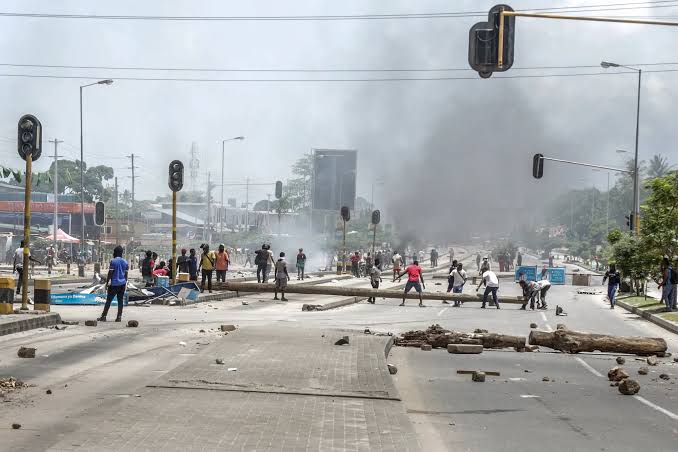
When the Independent National Electoral Commission (INEC) lifted the ban on campaigns for the 2027 general elections on August 19, 2026, Nigerians expected a battle of ideas. What they have witnessed in the past 70 days, however, is a battle of fists and thuggery, with less emphasis on ideas.
From Sokoto to Oyo and from Edo to Enugu, the campaign season has shifted from slogans to slaps, with the ruling All Progressives Congress (APC) and opposition parties, notably the African Democratic Congress (ADC) and the Nigeria Democratic Congress (NDC), trading accusations over who is attacking whom.
The pattern is no longer isolated; it is national and growing.
Reports compiled since May show a steady escalation of violence long before the official campaign season began. On May 21, violence disrupted the APC House of Assembly primary at Ikosi Senior High School in Kosofe, Lagos, where supporters of aspirant Femi Saheed alleged that armed hoodlums attacked members, leaving several injured.
On May 26, vehicles belonging to Peoples Democratic Party (PDP) members were vandalised in Bauchi during a governorship affirmation event.
On June 9, a campaign walk for APC governorship candidate Bola Oyebamiji in Ile-Ife, Osun State, degenerated into violence around Sabo, leaving about three people injured.
On July 31, a PDP rally in Ezza South, Ebonyi State, was attacked, leaving about 10 members injured and resulting in the destruction of canopies and public address systems.
The tempo of violence increased after INEC officially lifted the campaign ban.
On August 30, an Accord Party gathering in Kuje, in the Federal Capital Territory, was attacked by suspected hoodlums armed with machetes.
On September 9, ADC supporters participating in a solidarity walk for governorship candidate Isa Ashiru in Kaduna were attacked.
On September 12, gunmen allegedly disrupted an NDC ward meeting at Ndiuno-Obuoffia, Nkanu West, Enugu State, leaving two attendees injured.
By mid-September, the ADC alleged that one of its members, identified as Kamadiyoi, had been killed while preparing for a meeting in Emilaghan community, Abua/Odual, Rivers State.
The most recent clashes illustrate how quickly political rallies can turn bloody.
In Sokoto on Tuesday, the ADC governorship candidate, Hon. Manir Muhammad Dan’iya, alleged that about 5,000 women and youths participating in a peaceful procession from Old Savannah Bank towards the party’s state secretariat were attacked.
According to a statement by his media aide, Aminu Abdullahi, several women sustained injuries, their veils were torn, vehicles were smashed, and valuables were stolen.
Dan’iya condemned the incident as an assault on democratic values and citizens’ rights to participate in political activities without intimidation or violence. He called on security agencies to investigate the incident impartially and prosecute anyone found culpable.
However, the APC in the state denied the allegation. The Special Adviser to Governor Ahmed Aliyu Sokoto on Rural Roads, Hon. Malami Muhammad Galadanchi Bajare, accused ADC supporters of provoking the confrontation and attacking APC youths.
A similar blame game played out in Edo State, where the NDC on Tuesday raised the alarm over what it described as the systematic intimidation of its members and those of the ADC.
Speaking in Benin City, the Director-General of the Obi/Kwankwaso Campaign Organisation, John Yakubu, said the party had documented cases of unlawful arrests, disruption of meetings, attacks on campaign premises, and destruction of billboards across Edo North, Central, and South.
“Our position is unequivocal: public office confers a duty to serve and never a licence to intimidate,” Yakubu said.
The NDC also alleged that gunfire directed at ADC members in Igueben left some of them seriously injured. It also cited a viral video in which APC Chairman Jarrett Tenebe allegedly warned ADC and NDC presidential candidates Atiku Abubakar and Peter Obi not to enter the state without the governor’s permission. Civil society groups said the statement could incite violence.
Oyo State has become a case study in both inter-party and intra-party violence. On October 5, a reconciliation meeting intended to unite two APC factions in Oluyole Federal Constituency—supporters of incumbent Tolulope Akande-Sadipe and challenger Abiodun Gbolagade—ended in a brawl at Olomi School II.
Some individuals were reportedly injured. Both camps denied responsibility, underscoring the depth of the crisis surrounding the Oluyole House of Representatives ticket.
Days later, the Senator Sharafadeen Alli Campaign Organisation alleged that APC candidates and supporters had been attacked in Ibadan. The alleged victims included an APC chieftain, Alhaja Tawakalitu Alli, who was attacked during a medical outreach at Ayeye, as well as the campaign teams of Aderemi Oseni and Folake Olunloyo-Oshinowo at Agbaje Market and Idi-Arere.
The Oyo State Government, which is controlled by Governor Seyi Makinde’s Allied Peoples Movement, rejected the allegations outright. In a statement issued on October 9, it described them as false and reckless, adding that the violence within the APC camp stemmed from internal party conflicts rather than any action by Governor Makinde.
The government described the APC as a sinking party attempting to exploit the allegations for political advantage and advised it to manage its internal crisis more responsibly.
For democracy watchers, the danger lies not only in the violence itself but also in the fear it creates.
Yiaga Africa’s recent National Voting Intentions Survey shows that 84 per cent of Nigerians are keen to vote in 2027, but 61 per cent are concerned about their safety because of the risk of election-related violence.
In a joint memorandum, six civil society organisations, including Yiaga Africa, the Centre for Democracy and Development, and the Kukah Centre, warned that gaps in operational preparedness, inflammatory campaign rhetoric, insecurity, and declining confidence in public institutions could weaken voter participation and public acceptance of the election results.
They urged the Department of State Services (DSS) and the Nigeria Police Force to arrest and prosecute political actors whose statements could cause a breach of public peace. They noted that references to firearms in the context of electoral competition required particular caution, as such language could be interpreted as a threat regardless of any subsequent explanation by the speaker.
According to the organisations, such rhetoric was negatively affecting voters.
INEC itself was explicit when lifting the campaign ban. Citing Sections 92 and 93 of the Electoral Act 2022, it reminded political parties that using abusive language, physically attacking opponents during rallies, processions, and meetings, or destroying campaign materials was unlawful.
Section 95(2) also prohibits the use of incumbency to advantage or disadvantage any political party or candidate. Yet, 10 weeks into the campaign season, there has been no high-profile prosecution arising from any of the reported incidents from Lagos to Enugu and Sokoto.
On the streets of Abuja and Nasarawa, frustration is palpable. A trader at Wuse Market said voters wanted to hear how politicians planned to reduce the price of rice, not how they intended to beat their opponents.
Another Nasarawa resident, who asked not to be named, blamed desperation, saying that everyone knew Nigeria would become a battleground between the APC and opposition parties, making even a minor clash a major story.
An opposition woman leader in Enugu said that following the attack in Nkanu West, women were now afraid to attend ward meetings at night.
“Until security agencies move from statements to sanctions, the 2027 ballot risks being written not in ink but in blood,” she said.
We’ve got the edge. Get real-time reports, breaking scoops, and exclusive angles delivered straight to your phone. Don’t settle for stale news. Join LEADERSHIP NEWS on WhatsApp for 24/7 updates →
Join Our WhatsApp Channel