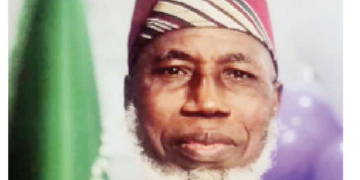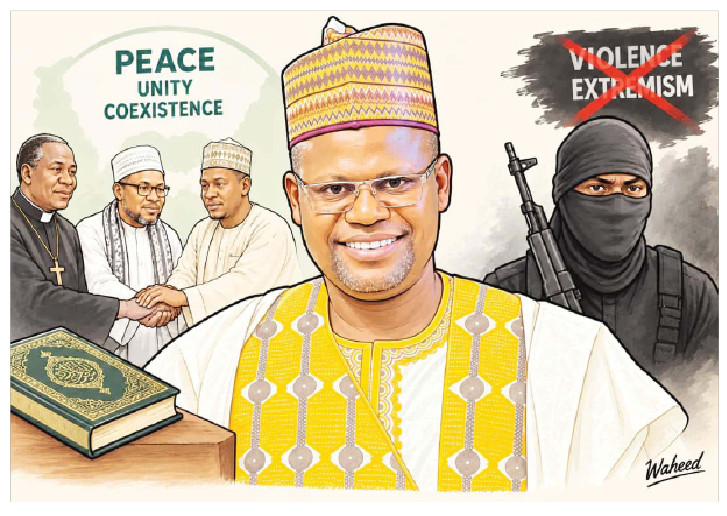
The murder of Sheikh Yahaya Ibrahim Masussuka last Monday introduced a frightening point for many Nigerians who have grown to appreciate his intra-faith and inter-faith activism and the consistent message to Nigerians, especially Northerners, to embrace peace and eschew violence in the practice of their religion. His death signalled the cessation of a strong voice that spoke out against forces committed to deploying religion to frustrate peaceful living among Muslim and Christian faithful.
Masussuka, who was killed with his friend, Adamu Abubakar, by motorcycle-riding gunmen outside his residence in Dutsin-Ma, Katsina State, just hours before a major national peace gathering, was noted for his progressive work in promoting inter-communal unity, peace-building, and theological moderation. Within the heterogeneous Islamic landscape in Nigeria and West Africa, Sheikh Masussuka was not only a distinct cleric; some saw him as a polarising preacher who practised the ‘Tafseerul Qur’ani bil Qur’an’ method. Some recognise this form of Islamic scholarship as the most authoritative and purest methodology of Tafsir (exegesis), anchored in using only the holy book for sermons and not relying primarily on outside sources.
Masussuka’s reliance on the Holy Qur’an for interpretation led him to reject or strongly criticise certain Hadith traditions. His preaching style regularly put him in theological conflict with groups opposed to his approach. The Ansaru – an Al-Qaeda affiliate operating in West Africa- claimed responsibility for the murder, labelling the 47-year-old Islamic cleric an ‘infidel’. With the group claiming responsibility for his killing, intra-faith conflict served as a major cause for his murder.
Globally Recognised
Beyond internal doctrinal debates, the cleric stood as nationally and globally recognised as a tireless champion of religious harmony. He was not only decorated as a Peace Ambassador by the Network for Good Governance and Transparency in 2025, but also used his media channels, including his dedicated Qur’an TV and Radio stations, to de-radicalise youths and advocate for friendly, peaceful coexistence between Nigeria’s Muslim and Christian populations.
Masussuka’s killing has introduced frightening uncertainty and leaves behind multi-layered consequences for interfaith relations and religious freedom. His murder has left a yawning hole of threat for the survival of moderate voices in the North, which is facing the peril of religious conflagration. With Masussuka’s death, one of the strongest bridges for both Nigeria’s intra-faith and inter-faith relations has been destroyed. Above all, the cleric recognised the need for intra-faith work, and he worked assiduously to tackle issues that threaten peaceful coexistence among sects within Islam.
The murder of the Sheikh by the Ansaru group clearly points to a dilemma facing intra-faith work. Within fractured societies bedevilled by violence and bloodshed, peace does not occur organically; clerics like Masussuka build it through deliberate, courageous labour. By establishing schools, the late cleric deployed integrated conventional and Islamic curricula and, using mass media to spread counter-extremism messages, supplied a platform to de-radicalise youths from the dangers of extremist positions.
Life Of Courage
The killing of the Katsina State-born cleric is a big loss to current efforts in realising peaceful coexistence in Nigeria, especially in the North. It is troubling that when rogue politicians weaponise religion for political relevance, the death of Masussuka amounts to a yawning hole in the dream of rallying both Muslims and Christians in achieving the common objectives in standing up for peace. It is a kind of paradox that the cleric, who cherished peace and was famous for preaching unity among Muslims and non-Muslims, had his life terminated by violent men.
The life of Masussuka epitomises the courage to stand up for one’s belief, no matter the threats. He knew the implications of defending what he believed and never shrank from doing what he felt was in the best interest of not only Islam but humanity. The death of this prominent voice may create an immediate vacuum, but those whose lives were touched by Masussuka may take up his mantle of leadership, committed to broadening the space for interfaith engagement and never leaving vulnerable communities exposed to polarised rhetoric.
The assassination of Masussuka has thrown a cloud of uncertainty over the religious intelligentsia striving to retrieve people from polarising sermons that preach hatred and death to those outside of their fold. Masussuka joins other prominent clerics murdered over the last two decades by terror groups for refusing to bow to violent extremism. We must never allow the killing of clerics for being moderates and promoting religious freedom. The killings and intimidation of moderate scholars who might otherwise speak out against hate speech or participate in cross-religious alliances may lead them to choose self-censorship to protect their families. Allowing moderate voices to fall silent out of fear will automatically mean that the narrative space is completely conceded to violent extremists, therefore making prospects for sustainable interfaith peace increasingly unattainable.
State Protection
Following the killing of the cleric, the Katsina State Governor, Dr Dikko Umaru Radda, has condemned the attack and applauded Sheikh Masussuka’s devotion to peace. With Ansaru claiming responsibility for the murder, the government should focus on encouraging the emergence of more Sheikhs who will follow in the footsteps of Masussuka to realise the structural reform the cleric paid the supreme price for. To avoid future killings of moderate voices, the government must become an active protector, instead of a tireless mourner. Clerics engaged in de-radicalisation and interfaith work should not be left to the whims and caprices of terror groups. Now that arrangements have been concluded to pass legislation on State Police, governors of the North must step up to the occasion and protect high-risk peace-builders from enemies of peace.
Masussuka’s death has brought home the lesson that the protection of intra-faith and inter-faith workers must never be relegated but must be considered a core national security imperative. The most fitting tribute to Masussuka’s legacy must be one anchored on Christian and Muslim leaders’ resolve not to bow to terror groups. Nigerians can only honour the Sheikh’s ultimate sacrifice by refusing to cave in to terrorism.
We’ve got the edge. Get real-time reports, breaking scoops, and exclusive angles delivered straight to your phone. Don’t settle for stale news. Join LEADERSHIP NEWS on WhatsApp for 24/7 updates →
Join Our WhatsApp Channel