A note to readers. I had promised to continue this week with The Makkah Mission and the Preference Form, and to tell you what to expect when the Ministry of Hajj and Umrah at last releases its guidelines for Hajj 2027 — the fixing of the unified rates, the allocation of facilities, and the final selection of a service provider. That promise stands, but it must wait. A matter has arisen here at home of such urgency to the future of our associat2ion, and to the integrity of the whole industry, that it cannot be deferred even by a week. I therefore hold that series over until this present subject is fully laid out, and I ask the reader’s patience. And because the matter is too grave to be left hanging for a week, both parts of this present piece appear together, today.
For five weeks this column has followed a delegation of Nigerian tour operators through the holy cities. In The Makkah Notebook I narrated how our National Executive Council dispatched a team of the Board of Trustees, the NEC and the lead companies to Saudi Arabia to negotiate — not to ratify — the choice of service providers for Hajj 2027; how four companies were examined and one, Jabal Omar, dropped for want of commitment; and how Ithraa Al-Jood, Manasek Al Mashaer and Rawaf Mina were adopted, with the final choice deferred until the Ministry should publish its unified rates. In The Makkah Mission and the Night Encounter I took you into my room at the Address Hotel, where, being the last man left in the holy city, I summoned two of those companies to me by night and put hard questions to them. And in The Makkah Mission and the Preference Form I described the emergency meeting our Board convened when the Ministry released its Preference Form with forty-eight hours’ notice, and the haste with which nearly all the lead companies had settled upon a provider before the house was properly called.
This week the scene shifts from Makkah to Nigeria, and from choosing a Saudi provider to a matter much closer to home: allocating ninety-five Hajj seats to a company belonging to the President of our own association—a company that, on his own admission, never applied for them.
For readers outside this industry, I must first explain how the trade works, because the gravity of the matter cannot be felt without it.
How the Seats Are Won
Each year the Saudi Ministry of Hajj and Umrah allocates Nigeria a national quota of pilgrims. Our regulator, the National Hajj Commission of Nigeria, then licenses tour operators and divides that quota among those who qualify. The process is not a formality. An operator must apply within a fixed window, file its papers, and lodge a bank guarantee — money deposited as a pledge that it will not abandon its pilgrims mid-season. Only those who apply in time and satisfy the published criteria are meant to receive seats. In our corner of the trade, operators work what is called the B2B2C model: a lead company stands behind a wide network of sub-agents, and many families’ livelihoods depend on that network.
Now, the fact. Ninety-five seats were allocated to Al-Firdaus Hajj and Umrah Services Ltd, a company owned by our association’s President. The President himself, in an informal text to the Secretary General, has admitted the essentials: that the company did not apply for Hajj 2027; that it missed the bank guarantee deadline while he was in his village, where the network is poor, and afterwards travelled away for reasons of health; and that the company had written only to request a refund of its pre-registration and deposit. Meanwhile, members who duly applied and lodged their guarantees were turned away for minor errors.
It should also be recorded that our association had, before all this, written to the Commission asking for the criteria by which operators are qualified, and the Commission had declined to supply them, citing confidentiality.
The Question That Will Not Go Away
If a company that did not apply receives ninety-five seats, while companies that applied are refused for a misplaced signature, then whatever the intention, the appearance before the public is one of favouritism. And in public life, appearances are not trifles. A regulator’s authority rests not only on doing right but on being seen to do right; the moment operators suspect that the game is rigged, the rules lose their power to bind anyone.
This is why so many of us felt that the honourable course was plain, and it was not complicated: the seats should have been relinquished, and the leadership should have been seen to fight for seats for those members who were refused, rather than to receive a benefit while they went without. Our members do not ask their leaders to be poor; they ask them not to profit from a process that has wounded the people they lead.
Six Days of Silence
The NEC wrote to the President on 14 and again on 16 October, asking for a formal clarification. For six days there was no formal reply — only an informal text message. There followed a written response asserting a right to decline to answer any query at all, on the ground that he had committed no crime under the constitution of our association or of the Federal Republic of Nigeria, and inviting the NEC to carry its objection to the Commission.
Here I must be precise, because a confusion has run through this affair from the beginning. The question was never whether the President had committed a crime. The question was whether a leader should be seen to take a benefit his own members were denied. Those are two different questions, and the second is the older and the sterner. The criminal law sets the floor of human conduct; leadership asks for the ceiling. A director may break no law and still be unfit for the boardroom; a trustee may be innocent of fraud and yet be in plain breach of his duty. That is the settled view of every serious governance code in the world, and it is the view our Board was right to take. To answer a question of propriety with a plea of innocence is to answer a question nobody asked.
The Defence, and Why It Misses the Point
The President’s answer was that the whole affair is a gang-up, led by his Deputy, who is said to have coveted the presidency since last year; and that he became unpopular in the NEC because he refused to be used to fight our regulator and preferred dialogue.
Even if every word of that were true, it leaves the central question untouched. A charge of conspiracy is an answer to an accuser; it is no answer to a principle. Whether or not a deputy is ambitious, the operator who applied and was refused, and the non-applicant who was given ninety-five seats, remain exactly where they were. And it is a dangerous habit in any institution to meet a question of conduct with a question of motive, for by that road no institution can ever correct itself. Every reform in history has been resisted by somebody who called it a plot.
I say this, though, in fairness: no man was condemned unheard. He was written to twice and given days to reply. He was invited to put his defence on paper. The machinery of the association did not fall upon him by ambush; it knocked, and knocked again, before it broke down the door.
Natural Justice
Two rules of law, older than any of our constitutions, govern this sort of matter. The first is audi alteram partem — hear the other side. The second is nemo judex in causa sua — no man may be judge in his own cause.
It was in fidelity to those rules that the Board proposed a virtual emergency session rather than a hasty verdict: a session at which the President would be invited to make a formal defence on official letterhead, at which the NEC, through the Deputy President (Hajj) and the Secretary General, would lay out its facts, and at which the Board would also write to the Commission — not to fight it, but to establish the truth — asking how a company that never applied came by ninety-five seats.
In the same spirit, the proposition was that even if the President were found to have acted in good faith under a discretionary power, the seats should still be returned and reallocated to deserving members who had duly applied, and the President formally cautioned against conflict of interest. That is the language of a body determined to be just rather than merely strong, and it deserves to be recorded in his favour as much as in ours.
A Chairman Resigns — and Returns
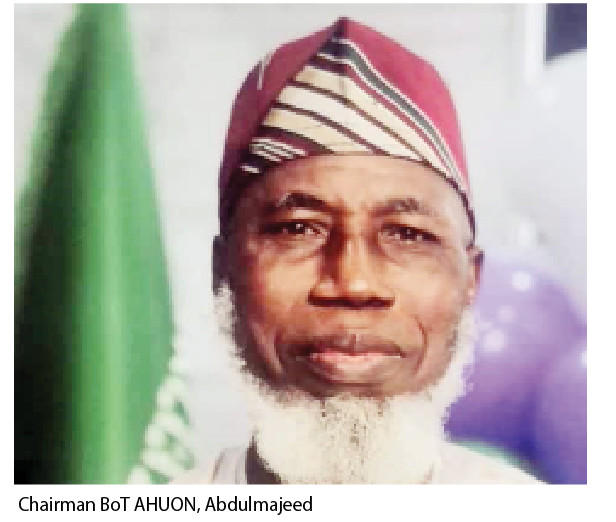
On 25 October, the Chairman of our Board of Trustees tendered his resignation, on personal grounds. He had stood with the members who were denied; his position had always been that leadership must advocate for the weak among us and not profit while others went without. That he should have been worn down by the affair is a measure of how much it cost the men who tried to do it rightly.
The appeal to him was not mine alone, though I made it too. It came from his fellow members of the Board of Trustees, from the National Executive Council itself, and from among his numberless friends in the industry — calls, messages and admonitions, all pressing the same entreaty. Patience under hurt from one’s own people is a hard virtue, and a virtue only by the help of Allah. We remembered the Prophet, peace be upon him, at Taif, harmed by the very people he had come to help yet not abandoning them; and Abu Bakr, may Allah be pleased with him, standing firm at the most dangerous hour of the community’s history, when lesser men might have walked away. The believer who mixes with people and bears their harm, we are taught, is better than he who withdraws. And we are commanded to hold fast together to the rope of Allah and not to be divided.
On 26 October he withdrew his resignation. It was, as I told him, the decision of a true leader — one who listens, forgives and puts the interest of the association above personal hurt. In a season when others were reaching for advantage, our Chairman let go of office rather than see the house break; and then, when it was safe to return, he returned. Nothing in this affair reflects better upon us than that.
The Regulator Acts
Then came the letter that settled it. By its reference NAHCON/AN/66/IV dated 23 October 2026, the National Hajj Commission formally withdrew the 2027 Hajj slots allocated to Al-Firdaus for failure to apply within the stipulated window, and directed that the slots be redistributed to qualifying operators who had duly applied and met the criteria. The joint meeting of the Board and the NEC had, in the meantime, affirmed the necessary disciplinary measure, and our Deputy President (Hajj) assumed the duties of Acting President.
That single letter did more to restore confidence in our industry than a hundred circulars could have done. It vindicated the position the Board had held from the first — that the wrong was not merely internal to us but had a source, and that the source could be reached by dialogue and evidence rather than by noise.
And the credit for it belongs, plainly, to the Chairman of the Commission, His Excellency Ambassador Ismail Abba Yusuf. Until his coming, such matters were not handled so transparently; but for his personal intervention this case would not have ended as it did. He is owed our appreciation, and he has it.
Yet candour requires one distinction. The complaint our members have carried for years is not against the Chairman but against a culture in the operations arm of the Commission — a culture in which, it is said, the operator who is used as a pawn is rewarded with an allocation, and the operator who stands in the way has a hundred and one infractions invented against him. It is said, and I repeat it as a report and not as a verdict, because the remedy for such a culture is precisely what the Chairman is attempting: transparency, published criteria, and a record that can be audited.
What the World Teaches
Readers may wonder whether we have been too hard on one of our own. Let them weigh the matter against what serious institutions everywhere demand of those who lead them.
Conflicts of interest must be declared, not merely regretted. Under Nigeria’s Companies and Allied Matters Act 2020, as under the United Kingdom’s Companies Act 2006, a director or trustee who has an interest in a transaction must disclose it and, where the conflict is material, stand aside from the decision altogether. The OECD Principles of Corporate Governance say the same in plainer terms: related-party dealings must be conducted at arm’s length and on terms no worse than those available to anyone else. A leader who is both applicant and beneficiary, without disclosure, offends the first principle of fiduciary life.
The regulator must not be the operator. The UN Convention against Corruption, in its article on public procurement, requires objective criteria, published rules and an effective right of review. A system that refuses to publish its criteria and then allocates to a non-applicant has failed every one of those tests — and that failure belongs to the system, which is why our quarrel was always with a process and never with a person’s skin.
The fiduciary standard stands higher than the criminal law. No governance code on earth asks only whether a trustee has committed a crime. The UK Charity Commission, the Nigerian corporate statutes, and the ministerial codes of most democracies all ask a different question: has trust been compromised? A conflict, once known, is resolved by recusal or by relinquishment — not by pleading that nothing was technically illegal.
Fair hearing precedes sanction. The same conventions of administrative justice that govern courts govern associations: notice of the charge, an opportunity to answer, a decision on the evidence, and a penalty proportionate to the finding. Our Board asked for exactly this, and asked for it in writing, before any hand was raised.
Comparators in Hajj administration. Malaysia’s Tabung Haji and Indonesia’s BPKH are held to independent governance with published rules precisely because the pilgrim’s money is sacred and the pilgrim cannot audit it himself. The Saudi Ministry licenses every operator and allocates by rule, not by favour. Nigeria can aspire to no less, and under this Chairman is beginning to.
Those who raise concerns in good faith must be protected. A house that punishes the whistle-blower and rewards the pawn has no future, however many seats it distributes.
What Was Done Right
It would be a poor column that dwelt only on fault. In this affair our association did several things that deserve to be commended.
The NEC acted with patience and procedure — two letters, a reasonable interval, evidence, and escalation only when silence became defiance. The Board insisted on a hearing rather than a hanging, and urged that even a good-faith error should end in restitution rather than vengeance. The Chairman of the Board of Trustees put the association above his own hurt, resigned rather than divide it, and returned when unity was possible. The Commission’s Chairman chose transparency where the easier path was silence. And members, for the most part, kept their counsel and let the process work.
Even the President, in fairness, stayed within the house. He argued, he protested, he wrote; he did not take his case to the streets or seek to burn the building down about our ears. For that, at least, he deserves our acknowledgment.
Not a Question of Region
I am told there are whispers in certain quarters that our President was singled out in this affair because of the region he comes from or the language he speaks. Let me address that plainly, and let me be the first to say it: it is far from the truth, and it is a distraction from it.
If anything, the charge runs the other way. Charity begins at home, and what is good for the goose must be good for the gander. We cannot be seen on the national stage fighting for fairness and justice in the allocation of Hajj seats while forgetting to practise those same virtues within our own house, which is this Association. To demand equity of NAHCON and to wink at inequity among ourselves would be the rankest hypocrisy, and the public would be right to despise us for it. The principle we pressed upon the Commission is the principle by which we are bound. A leader of this Association is not entitled to a seat he did not earn simply because he leads it; neither is any member, from whatever region or tongue.
And so I turn the matter round, and I do so in earnest. If anyone in this industry knows of a similar case involving any member of AHUON — whether in the NEC or the Board of Trustees — whose company was given an allocation of Hajj 2027 seats without a proper application as stipulated by NAHCON, I urge that person to bring out the name of such a company. Let us fear Allah and speak out. This is not a time to protect a friend or shield a kinsman; it is a time to be clean.
Silence on such matters is not golden. When a wrong is done and the one who knows it holds his peace, that silence is not discretion — it is complicity, and Allah will take the silent one to task for it as surely as the one who did the deed. We who lead cannot benefit at the expense of the people we lead. If there be more cases, let them come into the light and be dealt with by the same measure. Only so shall anyone be able to say with a straight face that what we did to our President we would do to any man or woman among us.
Conclusion
The lesson of all this is contained in a sentence I have repeated to our President in my capacity as his SPOC: unity without discipline is anarchy. We may forgive one another; we may not abolish the rules by which we live together, for the rules are the only reason a thousand operators can be a body rather than a crowd. The seats were returned, and they will go to members who earned them — and in that fact lies the whole argument for what we did.
We go now to the Hajj Conference and Exhibition in Jeddah in November, and to the Nusuk Masar camp selection that presses upon us, and we must go as a united and a credible bloc. Credibility is not a thing we can claim; it is a thing others must be able to see. This week, by the grace of Allah, they saw a house that corrected itself — and there is no stronger recommendation for an association than that.
Nothing is hidden today. We mean no harm to any person’s interest, and least of all to the reputation of one who has led us. But Hajj must not be made to suffer for the caprice of any entity, and the best must be given to the Nigerian pilgrim. May Allah reward those who stood for justice, console those who were hurt, forgive those who erred out of emotion, and keep our hearts united as one. Ameen.
We’ve got the edge. Get real-time reports, breaking scoops, and exclusive angles delivered straight to your phone. Don’t settle for stale news. Join LEADERSHIP NEWS on WhatsApp for 24/7 updates →
Join Our WhatsApp Channel