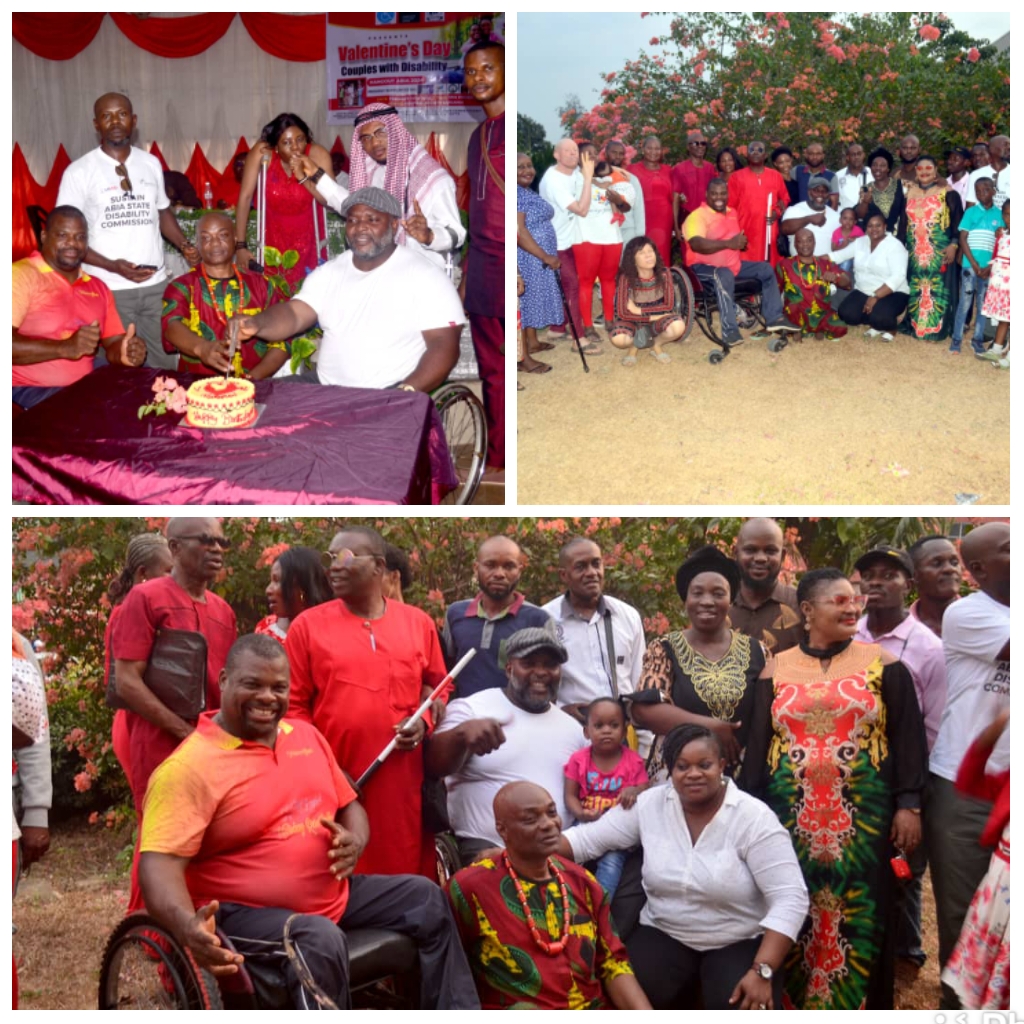
Persons with Disabilities (PWDs), Civil Society Organisations and Sign Language Interpreters in Abia State have been urged to move from legal recognition to demand their rights within the justice system.
Chairman, Abia State Commission for the Welfare of Persons With Disabilities, David Anyaele stated this at a one-day capacity-building workshop in Umuahia, the state capital.
Anyaele described the theme of the workshop “Access to Justice, Leadership, Advocacy Campaigns, and Inclusive Governance,” as very timely and necessary for the demand to succeed.
He said although the state had recorded significant milestones—such as the enactment of the State Disability Law and the establishment of the commission PWDs still face severe barriers in accessing justice.
”Imagine a deaf woman who approaches a police station to report a case of violence but cannot communicate effectively because there is no sign language Interpreter.
”Also Imagine a wheelchair user who is unable to access a courtroom because the building has no ramp,” the chairman inquired.
He stressed that these are not mere accessibility issues but fundamental barriers to human dignity and the protection of fundamental human rights.
According to him, it is common knowledge that when persons with disabilities are excluded from the justice system, justice is not accessible.
”When PWDs are excluded from governance, governance is not inclusive. And when PWDs are excluded from development, that development is unsustainable,”
Contributing the commissioner for Poverty Alleviation and Social Protection, Ngozi Felix, commended Anyaele, the commission, and its partners for their inclusive approach.
She stressed the intersection between social protection, poverty reduction, and access to justice, pledging her ministry’s commitment to ensuring that PWDs are not left behind in the state’s development agenda.
Similarly, the State coordinator of International IDEA, Peter Omenka, said the RoLAC Phase II programme operates in seven states to ensure that PWDs, women, children, and survivors of violence can access justice without discrimination.
He noted that the workshop aimed to close the gaps in rights awareness and professional interpretation, and expressed the hope that participants would be quipped to drive disability inclusion in government budgets and community-level governance.
The lead facilitator at the workshop, Godwin Unumeri, outlined the principles of effective advocacy, emphasizing that campaigns must be PWD-led, evidence-based, inclusive, accessible, and accountable.
Unumeri took the participants through the step-by-step process of problem identification and strategic campaign planning.
Reacting to the training, some of the participants described the workshop as a turning point in their advocacy journey and thanked the commission for its concern.
A disability cluster leader,Chioma Okafor, said: “For years, we have been advocating based on emotions. Today, we have learned how to build evidence-based cases that institutions cannot ignore. This is a game-changer for our communities.
We’ve got the edge. Get real-time reports, breaking scoops, and exclusive angles delivered straight to your phone. Don’t settle for stale news. Join LEADERSHIP NEWS on WhatsApp for 24/7 updates →
Join Our WhatsApp Channel