The $5 billion Africa Energy Bank (AEB) has formally begun operations, four years after African petroleum ministers first approved its creation, with Egyptian banker Helmy Ghazi appointed as its pioneer president. The launch was announced in Abuja on Saturday, October 31, 2026, by the African Export-Import Bank (Afreximbank) and the African Petroleum Producers’ Organisation (APPO).
The bank’s establishment marks a major step in Africa’s effort to build an indigenous financing institution for its energy sector at a time when global lenders and investors are increasingly withdrawing from fossil-fuel projects. Its backers say the AEB will help African countries fund energy infrastructure, strengthen energy security and support industrial growth without relying wholly on external financiers.
The idea for the Africa Energy Bank emerged as international banks, development finance institutions and asset managers scaled back funding for oil and gas under climate-related pressure. African producers argued that the shift threatened their ability to develop energy resources, expand electricity access and finance critical infrastructure.
In May 2022, APPO ministers meeting in Luanda, Angola, adopted a resolution directing the organisation and the Africa Energy Investment Corporation to work toward establishing the bank. The decision followed growing concern among member states that Africa needed a dedicated institution to finance hydrocarbon projects and broader energy development.
Afreximbank subsequently joined the initiative as a strategic partner. In June 2024, the two institutions signed the Establishment Agreement and Charter, creating the legal and institutional framework for the bank and setting the stage for shareholder mobilisation.
The formal launch in Abuja came approximately four years and five months after the 2022 ministerial resolution. The delay reflected the complexity of establishing a new supranational lender, including securing capital commitments, agreeing governance arrangements and completing the processes required for the bank to begin operations.
What the bank will finance
The AEB is structured as an independent, supranational, pan-African financial institution with $5 billion in authorised capital. It is expected to mobilise funding from African governments, national oil companies, commercial banks, development finance institutions and private investors.
The bank will support investment across the energy value chain, including oil and gas production, refining, storage and distribution, as well as power generation and transmission infrastructure. It is also expected to finance projects linked to emerging technologies, particularly artificial intelligence, which requires reliable and scalable energy supply.
According to its promoters, Africa’s energy investment needs are estimated at about $200 billion. The AEB is intended to help close that gap, especially as traditional short- and long-term financiers retreat from fossil fuels even though oil and gas remain central to many African economies.
Just energy transition
Although the bank is rooted in the oil and gas sector, its mandate includes supporting a “just energy transition” for African countries. That positioning reflects arguments by African governments that the continent should not be forced to abandon hydrocarbons while hundreds of millions of people still lack reliable electricity.
The AEB is expected to help countries develop their resources in a way that supports both energy security and long-term economic transformation. Its backers argue that African nations should have greater control over how their energy resources are financed, developed and used.
The pioneer president
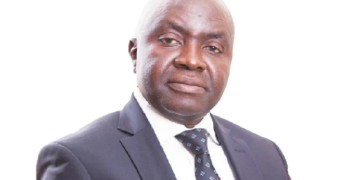
Ghazi, the bank’s first president, previously served as Deputy CEO and Managing Director, Head of Global Banking, at HSBC Bank Egypt. He is regarded as one of Egypt’s leading bankers, with more than 25 years of experience across customer growth, team development, risk management and international markets.
His appointment places him at the head of an institution expected to play a central role in Africa’s energy financing landscape. His immediate priorities will include operationalising the bank, strengthening its governance and investment framework, attracting additional capital, and beginning to deploy financing to viable energy projects across the continent.
What it means for Africa
The launch gives African oil- and gas-producing countries a dedicated financial platform at a time when access to conventional energy financing is becoming more difficult. For Nigeria, which hosted the inaugural General Assembly in Abuja, the development reinforces its role as a key player in continental energy policy and finance.
APPO has 18 member countries, all of which produce oil, gas or both. Afreximbank had earlier approved $1.7 billion as an investment in the bank, making it one of the institution’s major backers and signalling strong multilateral support for the project.
If successfully implemented, the AEB could reduce Africa’s dependence on foreign lenders for energy projects, accelerate investment in power and petroleum infrastructure, and give member states more influence over the pace and direction of their energy transition.
We’ve got the edge. Get real-time reports, breaking scoops, and exclusive angles delivered straight to your phone. Don’t settle for stale news. Join LEADERSHIP NEWS on WhatsApp for 24/7 updates →
Join Our WhatsApp Channel