
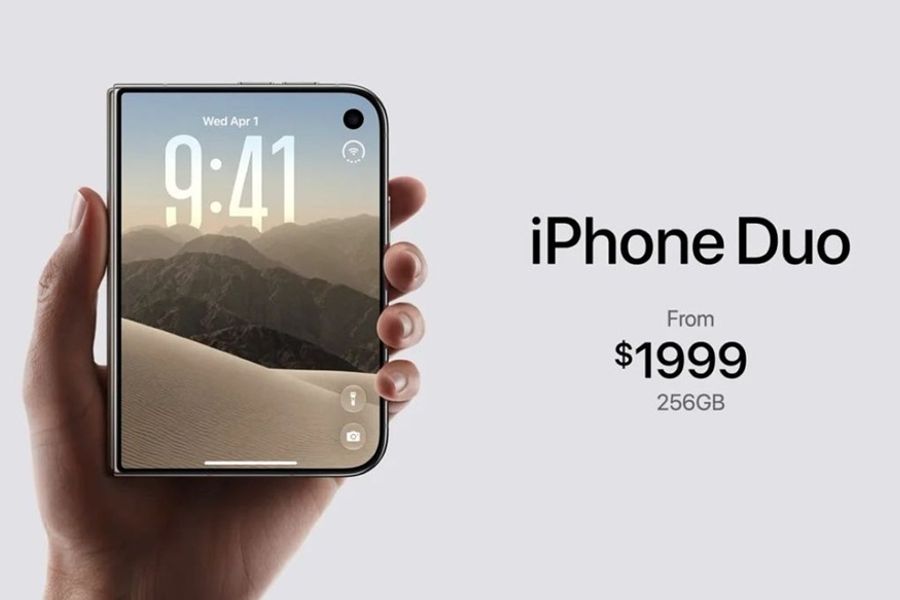
Cybercriminals have launched fraudulent online sales campaigns targeting buyers seeking Apple’s new iPhone Duo, using fake discounts, bogus preorders and misleading websites to harvest personal information and potentially expose consumers to financial fraud.
The cybersecurity firm, Kaspersky, said it had detected multiple scam attempts across different regions following the launch of Apple’s first foldable smartphone, with fraudsters exploiting the demand for early access to the premium device.
According to the firm, one fraudulent English-language website advertised a 25 per cent discount on the iPhone Duo, using a design that closely imitated Apple’s visual identity to convince prospective buyers that the offer was legitimate.
The website also displayed a countdown timer claiming that the promotion would expire in 30 minutes, a tactic designed to create urgency and pressure buyers into completing transactions without verifying the seller.
At checkout, the platform requested customers’ contact details and shipping addresses but did not immediately ask for their bank card information. Instead, it claimed that a representative would contact buyers later to confirm delivery arrangements and payment details.
Kaspersky warned that the approach could be the opening stage of a broader fraud scheme, allowing criminals to obtain personal information before making targeted attempts to extract money or sensitive financial details.
The firm also identified multilingual fraudulent websites offering preorders for the device, allowing visitors to select their preferred language and, in some cases, currency.
One of the websites claimed that customers would be redirected to Apple’s official platform to complete their purchase. However, the promised redirection did not take place, further exposing the deceptive nature of the offer.
In another campaign targeting Portuguese-speaking consumers, a fraudulent website requested email addresses and mobile phone numbers under the guise of checking product availability, with the aim of moving prospective buyers into private messaging conversations.
A report by Kaspersky on the Brazilian campaign indicated that the WhatsApp channel was used to initiate direct contact with victims, where scammers could manipulate them into making financial transfers to fraudulent accounts.
Olga Altukhova, Senior Web Content Analyst at Kaspersky, said the excitement surrounding flagship device launches often provided cybercriminals with an opportunity to exploit consumers’ willingness to spend heavily on new products.
“Scammers move fast when a flagship device hits the market, because hype creates urgency and urgency lowers caution,” she said.
Altukhova added that the campaigns were designed to appear credible before pushing targets into private exchanges where verification becomes more difficult.
She warned that buyers of premium devices were particularly attractive to fraudsters because their willingness to spend substantial amounts could make them more susceptible to sharing personal or payment-related information.
The latest campaign follows similar fraudulent activities reported during the launch of Apple’s iPhone 17 in September 2025, when Kaspersky identified fake websites, bogus lotteries and fraudulent product-tester recruitment schemes designed to obtain users personal and financial information.
In some of the earlier schemes, victims were offered the opportunity to preorder devices before they sold out, while others were promised free smartphones through online lotteries that required participants to provide personal details and pay supposed delivery or service charges.
The recurring scams highlight how cybercriminals exploit consumer demand for newly launched technology, using familiar brand identities and attractive offers to disguise fraudulent transactions.
Kaspersky advised consumers to purchase new devices only through official stores and reputable retailers, while carefully checking website addresses and spelling variations in domain names before submitting personal information.
The firm also urged buyers to avoid suspicious discounts and preorder offers, use security solutions capable of detecting fraudulent websites, and consider virtual cards or dedicated payment services for online transactions.
It further recommended enabling multi-factor authentication on financial applications and online accounts, as well as regularly monitoring bank statements for unauthorised transactions.
We’ve got the edge. Get real-time reports, breaking scoops, and exclusive angles delivered straight to your phone. Don’t settle for stale news. Join LEADERSHIP NEWS on WhatsApp for 24/7 updates →
Join Our WhatsApp Channel