Why Africa’s newest financial institution must turn energy resources into energy access, industrial growth and lasting prosperity.
By Ambassador Gabriel Aduda
Chief Insight Officer, World Energy Council Nigeria
Former Federal Permanent Secretary and Former OPEC Governor for Nigeria
2 November 2026
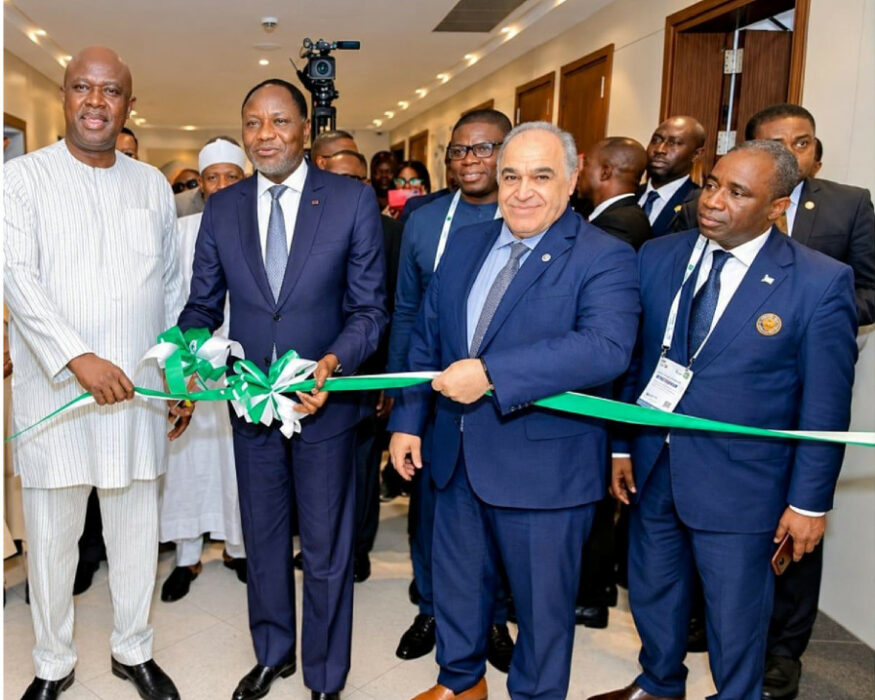
The formal establishment of the Africa Energy Bank (AEB) by the African Petroleum Producers’ Organisation (APPO) and the African Export-Import Bank (Afreximbank), announced in Abuja on 31 October 2026, marks an important step towards African-led energy finance. The Bank has authorised capital of US$5 billion and is intended to finance projects across the energy value chain. Its establishment comes as traditional lenders reassess fossil fuel exposure, while African countries face urgent needs for electricity, clean cooking, infrastructure and industrial investment (APPO, 31 October 2026).
The scale of the challenge is clear. The International Energy Agency (IEA) estimates that about 600 million people in Africa lack electricity and more than one billion lack access to clean cooking (IEA, 2025). It also estimates that meeting Africa’s energy and climate goals will require annual investment exceeding US$200 billion by 2030 (IEA, 2024).
The central question is whether the AEB can help meet these needs while strengthening energy security, affordability and sustainability. Its success will depend not only on the capital it mobilises, but on the quality of its governance, investments and development outcomes.
Beyond Financing Extraction
The AEB can help address financing constraints facing African energy projects. But its lasting relevance should not be measured only by how much oil and gas production it finances. A bank focused narrowly on extraction would risk repeating a long-standing pattern: exporting raw resources while importing refined products, equipment, technology and manufactured goods.
Africa’s challenge is to convert energy resources into reliable power, competitive industries, jobs, local expertise and improved living standards. The AEB should therefore support integrated energy ecosystems, not isolated projects.
A gas project, for example, should be assessed not only by production and export revenues, but also by its potential contribution to electricity, fertiliser, petrochemicals and industrial development. Renewable generation should be considered alongside the transmission, storage and distribution systems needed to deliver power reliably and affordably. Financing supply without the infrastructure and productive demand that make it useful will limit its impact.
Financing the Energy Trilemma
Africa must balance three related goals: energy security, energy equity and environmental sustainability. The priorities differ across countries and communities. An industrial centre may need dependable power; an underserved community may need affordable electricity and clean cooking; a petroleum-dependent economy may need to protect jobs and public revenue while diversifying.
The AEB should respond to these different needs with a diversified portfolio. This could include responsible petroleum and gas development, renewables, transmission and distribution, storage, regional interconnections, energy efficiency and clean cooking. Grid infrastructure deserves particular attention: adding generation capacity alone will not solve reliability or access problems if electricity cannot reach users.
The Bank’s task is therefore broader than financing energy supply. It must help finance the systems that make energy accessible, dependable and economically productive.
A Just Transition Grounded in African Realities
A just transition in Africa must reflect the continent’s development starting point. Many countries face large gaps in electricity access, infrastructure, industrial capacity and finance, while contributing a relatively small share of historical global emissions and facing serious climate risks.
Justice therefore includes the right to development, modern energy, decent work, industrial competitiveness, fair access to finance and nationally determined transition pathways consistent with climate commitments.
This requires careful choices. In some markets, gas may help replace diesel generation, support power reliability or provide feedstock for industry. But gas projects are capital intensive and depend on credible demand, competitive pricing, methane control and realistic long-term utilisation. Projects that cannot meet these tests may become stranded assets, leaving costs with governments and future generations.
Renewables should be a substantial part of the AEB’s portfolio. Solar, wind, hydropower, geothermal power, storage, decentralised systems and clean cooking can diversify energy supply and expand access. Their deployment, however, also requires stronger grids, affordable finance and predictable regulation.
Africa’s transition should be sequenced to deliver reliable energy, economic diversification, environmental responsibility and social inclusion. It should neither assume that all fossil-fuel expansion is justified nor rule out resources that may serve a credible development purpose.
Mobilising Capital Responsibly
The AEB’s US$5 billion authorised capital is a foundation, not the same as funds already paid in and available to lend. Given the scale of Africa’s investment needs, the Bank will have to mobilise additional capital from governments, national oil companies, pension and insurance funds, development finance institutions, commercial banks and private investors.
Potential instruments include infrastructure bonds, syndicated loans, guarantees, blended-finance facilities, local-currency lending and carefully structured equity investments. Concessional finance and targeted guarantees may be needed for projects with high social value but limited immediate commercial returns, including rural electrification and clean cooking.
Currency risk also needs attention. When project revenues are earned in local currency but debt is denominated in foreign currency, depreciation can weaken project economics, increase tariffs and create fiscal pressure. Local-currency financing, suitable hedging and regional risk-sharing can help reduce this exposure.
The objective should be to make sound energy investments more affordable and resilient, not simply to increase lending.
Governance and Project Preparation
The AEB’s credibility will depend on professional independence, transparency and sound financial management. Its investment choices should balance commercial viability, development impact, environmental responsibility and risk, with safeguards against political interference.
Strong practice should include independent credit decisions, transparent procurement, external audits, conflict-of-interest controls and clear environmental and social requirements. Governance must also extend to project preparation. Many African projects fail to attract finance because they lack bankable feasibility studies, reliable offtake arrangements, robust financial models or necessary approvals.
A dedicated project-preparation facility could support feasibility studies, transaction structuring and technical assessments. A stronger pipeline of investment-ready projects would help the Bank attract co-financiers and reduce the risk of committing capital to poorly prepared proposals.
African ownership and internationally credible financial discipline should reinforce each other.
Turning Energy Investment into Industrial Growth
The AEB can help link energy investment to manufacturing, technology and regional trade. Gas may support fertiliser, ammonia and petrochemical production. Petroleum infrastructure can support refining and related industries. Renewables can create opportunities to manufacture or assemble solar panels, batteries, inverters, transformers and other equipment.
Energy projects should be connected, where commercially and technically viable, with industrial parks, transport corridors, logistics and mineral processing. This would help ensure that investment creates local suppliers, skills, jobs and productive capacity.
The African Continental Free Trade Area provides an opportunity to build regional value chains. Cross-border power links, gas infrastructure, storage and industrial corridors could help connect markets and reduce fragmentation. The AEB should coordinate with the African Development Bank, Africa Finance Corporation, regional development banks and African Union institutions to develop such opportunities and share expertise and risk.
Nigeria’s Strategic Opportunity
Hosting the AEB gives Nigeria an opportunity to strengthen its role in African energy finance and diplomacy. Nigeria has significant oil and gas resources, renewable potential and a large domestic market. The key challenge is converting these strengths into reliable electricity, industrial competitiveness, local capabilities and economic diversification.
Potential priorities include domestic gas utilisation, electricity transmission, renewable energy, clean cooking, refining, petrochemicals and energy-equipment manufacturing. There is also an opportunity to develop regional projects that support power trade and industrial demand across West Africa.
But hosting the Bank does not guarantee financing. Nigeria must present credible, competitive and investment-ready projects, supported by clear policies, sound coordination and a dependable investment environment.
Measuring Success
The AEB should be assessed through both financial performance and measurable development outcomes. It will need prudent lending, adequate capital, effective risk management and sustainable returns. It should also report on whether its investments improve electricity access, affordability and reliability; strengthen industry; mobilise private capital; create jobs and local manufacturing; expand regional energy trade; and reduce energy poverty and harmful emissions.
A transparent monitoring and evaluation framework would allow the Bank to demonstrate results, strengthen accountability and build investor confidence.
From Ambition to Implementation
Five practical priorities should guide the Bank’s next steps.
First, establish transparent governance from the outset. The AEB should publish clear investment eligibility criteria, maintain independent credit appraisal, disclose audited financial statements and enforce conflict-of-interest rules. Shareholder commitments should be translated into a credible capitalisation timetable, with clear reporting on authorised, subscribed and paid-in capital.
Second, build a dedicated project-preparation facility. Working with development partners, the Bank should help promising projects complete feasibility studies, environmental and social assessments, financial modelling and offtake arrangements. Support should follow transparent selection criteria and defined milestones, enabling viable proposals to progress towards financing.
Third, adopt a diversified investment strategy. The portfolio should connect energy production with transmission, distribution, storage, clean cooking and productive demand. Each project should demonstrate its contribution to energy security, equity and sustainability, with explicit consideration of affordability, local employment, community benefits and long-term climate risks.
Fourth, address currency and financing risks through partnerships. The Bank should explore local-currency facilities, appropriate hedging, guarantees and co-financing arrangements where feasible. Concessional resources should be targeted at clearly identified development needs, while maintaining sound credit standards and transparent allocation of risks.
Fifth, publish a development-results framework. Alongside financial performance, the Bank should track new connections, improvements in reliability, affordability, jobs, local procurement, private capital mobilised and emissions outcomes. Baselines and measurable targets should be agreed at appraisal and monitored throughout implementation.
For Nigeria, implementation should begin with a small, carefully screened pipeline of three to five candidate projects covering priorities such as grid reliability, renewable power for productive use, clean cooking and industrial energy supply. Each proposal should identify a
credible sponsor, demonstrated demand, its preparation status, required approvals, financing needs and expected development benefits. Selection should reflect project quality and the Bank’s confirmed eligibility requirements.
World Energy Council Nigeria could contribute by convening a focused technical dialogue among the AEB, public institutions, financiers and project developers. The immediate purpose would be to clarify project-readiness requirements, identify preparation gaps and agree responsibilities for follow-up. Subject to institutional agreement, WEC Nigeria could also support independent energy insights and stakeholder engagement to help translate the energy trilemma into practical appraisal questions. Lending decisions and due diligence would remain the responsibility of the Bank and its financing partners.
Conclusion
The Africa Energy Bank is an important step towards greater African agency in energy finance. Its success will depend on combining African ownership with professional governance, credible project appraisal and international cooperation.
The Bank should resist measuring its contribution solely by the volume or value of petroleum projects financed. Its greater promise lies in connecting energy investment to reliable power, energy access, industrialisation, regional integration and climate resilience.
Africa needs a financial institution that can turn energy resources into lasting economic opportunity. The AEB’s inauguration begins that work; it does not complete it. The standard for success should be whether the Bank helps move the continent from resource abundance to energy security, from energy poverty to productive prosperity, and from fragmented markets to a resilient and integrated energy economy.
About the Author
Ambassador Gabriel Tanimu Aduda is Chief Insight Officer at the World Energy Council Nigeria and a former Federal Permanent Secretary and OPEC Governor for Nigeria. He has more than 25 years of experience in public policy, governance, energy and international diplomacy. He holds a master’s degree in Urban and Regional Planning from the University of Ibadan and a bachelor’s degree in Geography and Planning from the University of Jos, as well as a postgraduate certificate in anti-corruption from the University of Hong Kong. He has undertaken executive education at Harvard Kennedy School and other international institutions.
The views expressed in this article are those of the author.
We’ve got the edge. Get real-time reports, breaking scoops, and exclusive angles delivered straight to your phone. Don’t settle for stale news. Join LEADERSHIP NEWS on WhatsApp for 24/7 updates →
Join Our WhatsApp Channel