
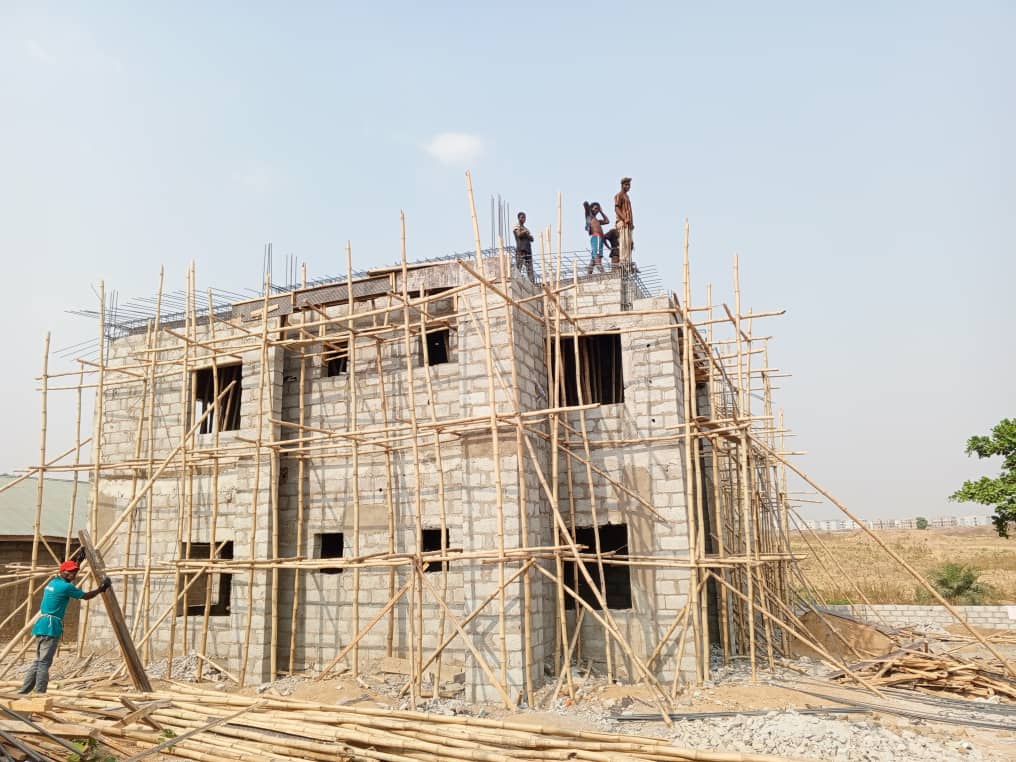
Nigeria’s construction sector is facing weakening demand and new orders, despite strong output growth, a new Nigerian Economic Summit Group (NESG) report has shown.
This is as stakeholders in the sector attributed the slow demand to high Interest rates, saying they are borrowing from commercial banks at rates of 20 to 46 per cent.
In its Construction Sector Report, titled “From Cyclical Growth to Durable Investment,” the NESG said the sector has the strongest business conditions of the sectors it assessed.
It added, however, that current demand and new orders have softened.
The report said the Demand Condition Index fell from 106.8 in the first half of 2025 to 97.3 in the first half of 2026.
This moved it slightly below the 100 benchmark that separates expansion from contraction. The Supply Order Index also fell to 97.4.
The NESG said the weak demand contrasted with the sector’s strong output.
It said the Overall Business Conditions Index stood at 117.7 in the first half of 2026, after rising from 93.7 in 2024 and 122.5 in 2025.
The General Business Situation Index was 166.2, while the Production Index was 142.7.
Reacting to the report, the Federation of Construction Industry (FOCI), said the high lending rates were adding to the cost of delivering housing projects.
Developers are also contending with rising construction costs, which have forced some to reduce apartment sizes, modify building specifications, renegotiate project terms or build in phases.
The president of the Real Estate Developers Association of Nigeria (REDAN), Oba Akintoye Adeoye, had raised concerns about mortgage interest rates, which he said typically exceed 20 per cent, putting home loans beyond the reach of many low-income earners.
He said REDAN was advocating mortgage rates of between two and six per cent.
Adeoye also called for the recapitalisation of the Federal Mortgage Bank of Nigeria (FMBN), policy reforms and increased government support for developers. In August, REDAN called for reforms to the land titling system and government-backed housing subsidies.
He argued that Nigeria’s housing and infrastructure needs could not be met through conventional financing alone and advocated blended financing models to attract more investment.
Property analyst and Chairman of the Association of Capital Market and Valuers (ACMV), Mr. Chudi Ubosi, pointed to a widening gap between construction costs and the purchasing power of prospective buyers. He said rising property prices were reducing the number of Nigerians able to buy newly developed homes, making it harder for developers to predict market viability.
Strong output, weak orders
The NESG said the weak demand contrasts with the sector’s strong output. The Overall Business Conditions Index stood at 117.7 in the first half of 2026, after rising from 93.7 in 2024 and 122.5 in 2025. The General Business Situation Index was 166.2, while the Production Index was 142.7.
Construction grew by 6.4 per cent in the first half of 2026, up from 5.5 per cent in 2025 and 4.2 per cent in 2024, making the sector a more important source of overall economic growth.
The NESG said construction is the only sector where current investment has moved into expansion. Its Investment Index rose from 85.0 to 113.9 within a year, while investment remains below the 100 benchmark in agriculture and manufacturing. It said the improvement is backed by strong profitability and liquidity, with the Operating Profit Index at 126.7, Cash Flow at 156.3 and Employment at 123.4.
Warning on growth
The NESG said the key issue to watch is the gap between strong supply-side activity and weak demand and new orders. It warned that if current demand stays weak despite high expectations, growth “could become increasingly dependent on existing projects rather than a sustained pipeline.”
On the other hand, it said, if demand and supply orders recover above 100 while investment stays in expansion, the sector would have stronger evidence of a durable expansion.
Firms expect demand to stay flat. The Future Demand Condition Index stood at 100.00 in the first half of 2026, even though expectations for production, profit and cash flow were far higher. The overall Future Business Expectation Index was 158.8.
Power, tax, financing top constraints
The report said inadequate power supply remains the biggest constraint for construction firms, with a score of 10. It was followed by the multiplicity of tax regulations and regulatory requirements, which each scored 9. Limited access to financing and unclear economic policies each scored 8.
The NESG said insecurity and foreign exchange availability, which featured in earlier periods, are no longer among the top five constraints, which it described as encouraging. The Cost of Doing Business Index stood at 79.5, still below the 100 benchmark, though up from 60.7 a year earlier.
Contractors face payment delays
Contractors face a different but equally damaging problem: inadequate project funding and delayed payment for completed work.
FOCI warned that several public infrastructure projects are awarded without adequate multi-year funding arrangements, resulting in delayed payments, accumulated certified debts and, in some cases, suspended or abandoned projects.
Its President, High Chief Vincent Barrah, said the construction industry had lost about 41,000 workers in two years, attributing this partly to funding uncertainties and financial pressure on contractors. He said contractors were often forced to finance large portions of projects from their own resources while waiting for government payments, incurring additional borrowing costs. He also warned that prolonged delays in approving contract variations could force contractors to execute projects at prices significantly below market rates.
The All-Indigenous Contractors Association of Nigeria (AICAN) has raised similar concerns. Its National President, Jackson Nwosu, said in July that many members were still being owed for projects executed between 2024 and 2026. He attributed the delays partly to the centralised payment system run through the Federal Ministry of Finance, arguing that the earlier arrangement, in which ministries, departments and agencies paid directly, was more efficient. In September, the association renewed its appeal to the Federal Government to prioritise the settlement of verified debts owed to indigenous contractors.
Tax concerns
The NESG’s finding that multiple tax regulations are a major constraint reflects concerns raised by property professionals. In August, the Nigerian Institution of Estate Surveyors and Valuers (NIESV) warned that rising tax burdens and fiscal policies could undermine property values and weaken investor confidence. It noted that developers were already grappling with expensive land, building materials, labour, financing and infrastructure.
The Federal Government has also issued the Nigeria Tax Administration (Interest on Late Payment of Tax) Order, 2026, which introduces a new formula for calculating interest on overdue tax liabilities from October 1, 2026.
Local sourcing urged
To turn the current momentum into lasting gains, the NESG urged stakeholders to scale up investment in line with Nigeria’s infrastructure and urbanisation needs. It also called for stronger links between construction companies and local manufacturers of cement, steel and fabricated building materials, arguing that deeper domestic sourcing could strengthen the sector’s contribution to the wider economy.
It said converting firms’ strong expectations into sustained project delivery will depend on long-term finance, fewer regulatory delays and more reliable payment systems.
The report noted that available data do not cover employment or productivity, which limits any assessment of whether the expansion is producing lasting capital formation.
The report showed that the construction industry is at a critical point. Production and investment are gathering pace, but whether that lasts will depend on whether households can afford new properties, developers can get affordable financing and contractors are paid on time for completed work.
We’ve got the edge. Get real-time reports, breaking scoops, and exclusive angles delivered straight to your phone. Don’t settle for stale news. Join LEADERSHIP NEWS on WhatsApp for 24/7 updates →
Join Our WhatsApp Channel