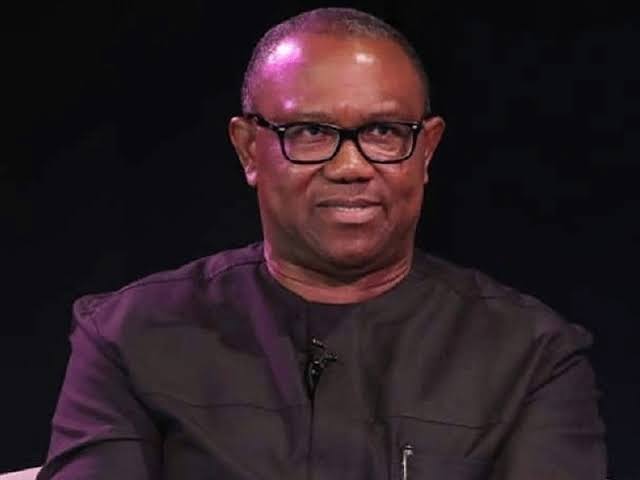
With the 2027 presidential election approaching, the recent political activities and campaign appearances of the presidential candidate of the Nigeria Democratic Congress (NDC), Mr Peter Obi, across the South-East have renewed questions about his political influence and capacity to consolidate his support base in the region.
Findings by LEADERSHIP Weekend across Enugu, Imo, Abia and Anambra states indicate that Peter Obi continues to enjoy considerable political influence in the South-East, particularly among young people, traders and residents dissatisfied with the country’s economic situation.
However, while his supporters are optimistic that he could secure overwhelming votes across the region, some political stakeholders have cautioned that popularity alone may not translate into electoral victory, especially in the face of competing political interests, party structures and concerns about the credibility of the electoral process.
In Enugu, investigations by our correspondent revealed that Obi’s influence remains considerably strong, with many residents expressing confidence in his chances of defeating other presidential contenders in the state.
Interviews conducted in different parts of the state showed that several residents had already indicated their intention to vote for him in the January 2027 presidential election.
His level of acceptability, it was gathered, has remained high since the 2023 general election, with his name becoming familiar across different communities and social groups in the state.
A former governorship candidate in Enugu State, Prince Uche Agbo, told LEADERSHIP Weekend that Obi enjoys widespread acceptance and could defeat other presidential candidates by a wide margin.
“I don’t want to mention names, but all I know is that Obi is too popular in Enugu State and pulls surprises as usual. He has a better chance of winning than other candidates,” he said.
Similarly, a political scientist, Mr Ignatius Mbaeri, rated Obi’s political influence highly, arguing that his growing popularity gives him an advantage over other presidential contenders.
“My brother, honestly, the fear of Obi appears to be everywhere. He pulls crowds each time he comes to Enugu, and so he has a better chance of defeating other presidential candidates,” he said.
In Imo State, Obi’s political appeal has also been described as phenomenal, with supporters expressing confidence in his capacity to address the country’s economic challenges.
Since his emergence as a major presidential contender in 2023, his followership in the state has reportedly continued to grow, driven largely by his promises of economic recovery, prudent management of public resources and investment in critical sectors.
A political analyst, Uche Onwuchekwe, told LEADERSHIP Weekend that Nigeria needed a technocrat with the capacity to translate policy ideas into practical solutions.
He identified insecurity, healthcare and infrastructure as some of the critical areas requiring urgent attention.
“We have overgrown this stage of trial and error. What we need now is a man with the capability to translate words into action,” he said.
Onwuchekwe argued that the prevailing economic difficulties had made Nigerians more conscious of the need to elect a president capable of transforming the country.
He also suggested that some residents who support Obi might be reluctant to openly declare their political preferences for fear of victimisation.
Obi’s recent visit to Imo State further demonstrated the enthusiasm among his supporters.
The presidential candidate, who arrived in Owerri from Yenagoa, Bayelsa State, as part of his nationwide town hall series, visited a popular market where he interacted with traders, some of whom presented him with gifts.
His subsequent town hall meeting, attended by town union leaders from the 27 local government areas, market women, students, NDC candidates and Obidient Movement organisers, attracted considerable enthusiasm.
During the meeting, Obi criticised the administration of President Bola Tinubu, arguing that the South-East had not received adequate attention from the Federal Government.
He also raised concerns about insecurity, poverty and the state of the economy, while promising that an NDC administration would prioritise national unity, security, healthcare, education and poverty reduction.
Participants also raised concerns about the protection of their votes in 2027, to which Obi assured them that his party would work to ensure that votes counted.
However, not all political stakeholders in Imo State believe his growing popularity constitutes a threat to their political interests.
The Publicity Secretary of the All Progressives Congress (APC) in the state, Onwuasanya FCC Jones, dismissed suggestions that Obi posed a threat to the party, saying it had already mapped out strategies to win the election.
He maintained that Imo voters would support APC candidates, including President Bola Tinubu.
Similarly, an NDC stakeholder, Hon. Udubueze Uwaezuoke, said the party was determined to win the presidential election and consolidate its presence across the South-East.
Meanwhile, an APGA executive, Dr George Nworji, said his party had adopted President Tinubu as its presidential candidate and would work towards delivering him in the region through grassroots mobilisation.
In Abia State, findings indicate that Obi’s political influence remains strong despite his yet-to-be-reported campaign visit to the state since the flag-off of his presidential campaign activities.
According to our correspondent, his supporters appear eager to receive him, with his popularity being driven largely by youths and residents dissatisfied with the prevailing economic situation.
Reliable findings indicated that even some members of other political parties in the state had made up their minds to vote for Obi for president while supporting their respective parties’ candidates for other elective positions.
The support, it was gathered, is influenced by ethnic considerations, political expectations, economic concerns, his persistent criticism of the Tinubu administration and his perceived commitment to transparency and prudent management of public funds.
In Anambra State, however, reactions to the chances of Obi and his running mate, former Kano State Governor, Alhaji Rabiu Kwankwaso, have been mixed, although many respondents expressed confidence in the ticket.
With about 72 days to the January 16, 2027 general election, political party leaders, analysts, business operators and ordinary voters who spoke to LEADERSHIP Weekend agreed that the performance of the APC-led Federal Government could work against President Tinubu’s re-election.
They, however, expressed concerns that electoral manipulation, vote-buying and the influence of political structures could affect the outcome.
The Senator representing Anambra Central Senatorial District, Senator Victor Umeh, expressed confidence that Obi and Kwankwaso would secure overwhelming support, predicting that the ticket could win more than 70 per cent of the votes nationwide.
Similarly, the NDC Chairman in Anambra State, Hon. Ikem Uzoezie, and the State Coordinator of the party’s Presidential Campaign Council, Hon. Ifeanyi Ibezi, expressed optimism that Obi would record between 70 and 95 per cent of the votes in the state.
Uzoezie recalled that Obi polled more than 500,000 votes in Anambra during the 2023 presidential election as the Labour Party candidate, expressing confidence that he could secure at least 1.5 million votes in the state in 2027.
Umeh argued that Obi had demonstrated his political strength in 2023 despite lacking the political structures enjoyed by established political parties.
He also said the NDC was making arrangements to protect its votes, including plans to deploy three party agents to each polling unit nationwide.
A lawyer and public affairs analyst, Mr Maxwell Ezeude, also expressed optimism about Obi’s chances, citing his alliance with Kwankwaso and the prevailing economic hardship.
He argued that the alliance had strengthened Obi’s political prospects by giving him access to a wider political constituency, particularly in the North.
However, Ezeude warned that the influence of money in Nigerian politics, the alignment of state governors with the ruling party and possible electoral manipulation could constitute major obstacles.
A community leader, Mr Tony Okafor, predicted that Obi could win overwhelmingly in the South-East and secure significant support nationally if the election was free and fair.
He said many Nigerians were looking for a leader who could reduce the cost of governance and redirect public resources towards improving their welfare.
But the optimism was not shared by everybody.
The factional Chairman of the African Democratic Congress (ADC) in Anambra State, Comrade Patrick Obianyo, said winning the 2027 presidential election would be difficult for Obi because his political strength was now better understood by his opponents.
He argued that vote-buying, financial inducements and the influence of state governors could affect the outcome.
Similarly, a media consultant, Mr Titus Eleweke, acknowledged that Obi could secure considerable votes in the South-East but expressed doubts about his ability to replicate the same level of support in the North.
Other respondents, however, maintained that the prevailing economic hardship could influence voters to reject the ruling party.
A real estate operator, Mr Ekene Thomas, expressed confidence that young people would resist attempts to manipulate the election, while a bar attendant, Miss Uchechukwu Chukwubuike, said she would vote for Obi because of the economic difficulties confronting Nigerians.
Across the four states, the findings suggest that Obi continues to enjoy considerable goodwill, with his political appeal extending beyond party membership and attracting residents who believe that the country needs a change in leadership.
Nevertheless, the extent to which this enthusiasm will translate into actual votes remains a major question.
While his popularity appears particularly strong in Anambra, his home state, and extends to Enugu, Imo and Abia, the positions of APGA, APC and other political stakeholders demonstrate that the South-East is not without competing political interests.
The January 16, 2027 presidential election will therefore provide a clearer test of whether Obi can convert his grassroots appeal, political alliances and growing support base into electoral support across the South-East.
For now, the findings point to sustained political enthusiasm around Obi in the four states covered by this investigation, although the absence of findings from Ebonyi means the assessment does not yet represent the entire South-East region.
We’ve got the edge. Get real-time reports, breaking scoops, and exclusive angles delivered straight to your phone. Don’t settle for stale news. Join LEADERSHIP NEWS on WhatsApp for 24/7 updates →
Join Our WhatsApp Channel