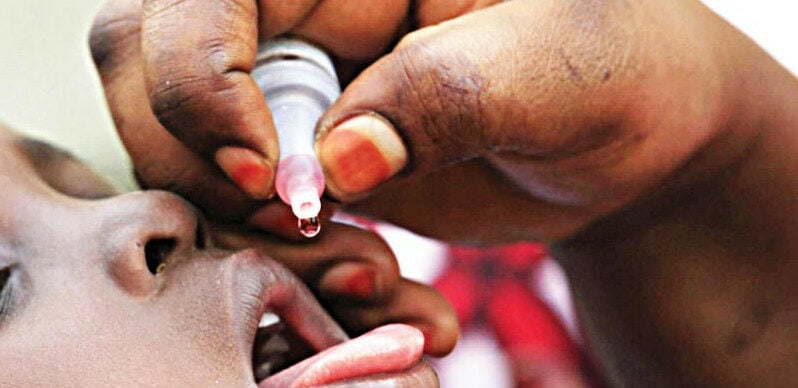
Vaccination remains one of the most effective and cost-efficient public health interventions in the world. Yet, despite its proven capacity to prevent diseases, save lives and protect future generations, Nigeria continues to struggle with the challenge of achieving adequate immunisation coverage.
This year’s November 10 Immunisation Day comes after World Immunisation Week, observed from April 24 to 30, is marked under the theme, “For Every Generation, Vaccines Work”.
The campaign, led by the World Health Organisation (WHO), seeks to strengthen public confidence in vaccines, promote accurate information and address persistent gaps in immunisation coverage.
Its message is particularly relevant to Nigeria, where millions of children remain inadequately protected against vaccine-preventable diseases.
This newspaper notes that the global impact of vaccination over the past five decades has been remarkable.
According to the WHO, immunisation has saved more than 150 million lives since 1974, including millions of infants and young children who would otherwise have died from preventable diseases. It has also contributed significantly to reducing infant mortality and improving life expectancy.
However, Nigeria’s immunisation record presents a troubling contrast. Although the country has recorded notable achievements, particularly in the fight against wild poliovirus, its routine immunisation programme continues to face serious challenges, including inadequate access, weak primary healthcare infrastructure, vaccine hesitancy, insecurity and poor logistics.
The country’s performance remains below the global immunisation targets. Available 2025 estimates from Gavi, the Vaccine Alliance, indicate that approximately 2.17 million Nigerian children are zero-dose, meaning they have not received even their first routine vaccine. The country’s third-dose coverage for diphtheria, tetanus and pertussis (DTP3) stands at 62 per cent, while coverage for the first dose of the measles-containing vaccine is about 56 per cent.
These figures are particularly disturbing given Nigeria’s large population and the number of children born annually. They also expose the inadequacy of existing interventions in reaching vulnerable communities, especially in rural and conflict-affected areas.
Indeed, the consequences of poor immunisation coverage are evident in the recurring outbreaks of vaccine-preventable diseases, including measles, diphtheria and circulating variant poliovirus type 2. Such outbreaks place additional pressure on an already overstretched healthcare system, increase household expenditure and expose children to disabilities and avoidable deaths.
This newspaper acknowledges the efforts of the federal government, particularly through the National Primary Health Care Development Agency (NPHCDA), to improve access to vaccines and strengthen routine immunisation.
The introduction of newer vaccines, including the Human Papillomavirus (HPV) vaccine, is also commendable. The HPV vaccination programme offers an important opportunity to protect girls against infections that can lead to cervical cancer later in life.
Nevertheless, these interventions must translate into measurable improvements in coverage across all states and communities. The disparity between urban and rural populations, as well as between the different geopolitical zones, remains a major concern. Children in remote settlements and communities affected by insecurity are often missed because of difficult terrain, inadequate health facilities, shortage of health workers and disrupted vaccine distribution.
Another challenge is the growing influence of misinformation and vaccine hesitancy. Misconceptions about vaccine safety, religious and cultural prejudices, and distrust of government health programmes have continued to discourage some parents from presenting their children for immunisation.
Government campaigns alone cannot adequately address this problem. Traditional rulers, religious leaders, community associations and civil society organisations must be actively involved in promoting vaccine confidence. Public enlightenment should be continuous, culturally sensitive and conducted in local languages. Health workers must also be equipped to address parents’ concerns with patience, transparency and scientifically accurate information.
More importantly, Nigeria must strengthen its primary healthcare system. Immunisation cannot succeed where health centres lack trained personnel, functional cold-chain equipment, reliable electricity and adequate vaccine supplies. Government must prioritise the rehabilitation and equipping of primary healthcare centres, particularly at ward level, to ensure that vaccines reach households in underserved communities.
There is also an urgent need to improve immunisation data management. Aggregate national figures can conceal communities with dangerously low coverage. Digital health records, electronic immunisation registries and regular monitoring should be deployed to identify children who have missed scheduled doses and ensure that they are reached through targeted interventions.
Furthermore, overdependence on donor assistance is not sustainable. The Federal and state governments must increase domestic funding for immunisation, provide timely counterpart funding and strengthen accountability in the procurement and distribution of vaccines. Nigeria must demonstrate greater ownership of its immunisation programme rather than rely excessively on international partners to sustain essential public health interventions.
We also urge the government to strengthen collaboration among the relevant ministries, agencies, development partners and local communities to ensure that immunisation is treated as a national priority rather than an occasional campaign.
Ultimately, prevention remains cheaper and more effective than treatment. The cost of managing complications from measles, diphtheria, polio and other vaccine-preventable diseases far exceeds the investment required to protect children through timely vaccination. Beyond saving lives, immunisation preserves family incomes, reduces pressure on hospitals and gives children a better opportunity to grow, learn and contribute meaningfully to society.
Nigeria is therefore at a critical point where rhetoric must give way to sustained action. The objective should not merely be to increase the number of vaccines administered, but to build an equitable and resilient immunisation system that leaves no child behind.
Protecting children against preventable diseases is both a public health responsibility and a moral obligation. The government must rise to this challenge because no Nigerian child should have to suffer or die from a disease that a simple, safe and effective vaccine could have prevented.
We’ve got the edge. Get real-time reports, breaking scoops, and exclusive angles delivered straight to your phone. Don’t settle for stale news. Join LEADERSHIP NEWS on WhatsApp for 24/7 updates →
Join Our WhatsApp Channel