

The Lagos State Government has reaffirmed its ambition to grow the state’s economy to between $800 billion and $1 trillion by 2052, urging businesses to focus more on manufacturing, value addition, exports and job creation.
The government also disclosed that it had trained more than 2,000 Lagos-based Micro, Small and Medium Enterprises (MSMEs) on export readiness and market access to prepare them for opportunities under the African Continental Free Trade Area (AfCFTA).
The commissioner for commerce, cooperatives, trade and investment, Mrs Folashade Bada-Ambrose-Medebem, disclosed this at the closing ceremony of the 40th Lagos International Trade Fair, organised by the Lagos Chamber of Commerce and Industry (LCCI).
She said the 10-day fair attracted more than 50,000 participants, thousands of exhibitors and business delegations from over 20 countries, reinforcing Lagos’ position as a major commercial destination in Africa.
According to her, the 40th edition marked four decades of commercial relationships, enterprise development and international business connections. However, she stressed that the achievements must translate into increased productive capacity and economic prosperity.
“Forty years is more than an anniversary. It represents four decades of commitment to Nigerian enterprise, commercial relationships built across borders, and Lagos State’s enduring position as a meeting point for ideas, products, capital and ambition,” she said.
The commissioner said the state government was determined to make Lagos a competitive manufacturing and export hub. rather than allow Nigeria to remain on the margins of global commerce.
She explained that the state’s T.H.E.M.E.S+ development agenda, particularly its 21st Century Economy pillar, was designed to improve infrastructure, attract investment, support businesses and create employment opportunities.
Bada-Ambrose-Medebem identified the Lekki Deep Sea Port, Lekki Free Zone, Blue and Red rail lines, and expanding road networks as strategic infrastructure expected to improve connectivity, reduce operating costs, and support manufacturing, logistics and international trade.
On investment, she said Lagos attracted more than N1 trillion in the preceding year, with significant commitments in technology, healthcare, logistics and port operations.
However, she said the government would assess investment performance by its impact on productive activities rather than announcements and financial commitments.
“Our ambition goes beyond attracting investment. We want investment to translate into productive capacity, skills transfer, decent employment and stronger local value chains,” she said.
The commissioner said the government’s MSME support initiatives were aimed at addressing challenges relating to access to finance, technology, product standards and markets.
She added that the ministry, in collaboration with Afreximbank and other partners, had trained more than 2,000 businesses to prepare them for the continental market, which offers access to an estimated 1.4 billion people.
She urged Nigerian businesses to improve product quality, obtain appropriate certification, adopt competitive pricing and establish reliable supply chains to benefit from the agreement.
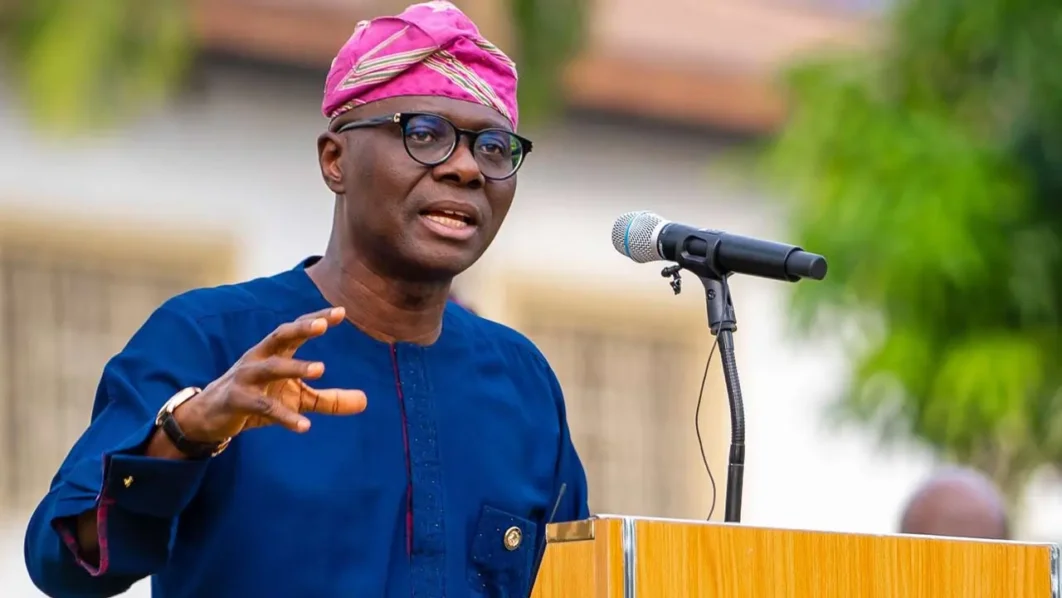
In his address, Governor Babajide Sanwo-Olu, represented by the Secretary to the State Government, Barrister Bimbola Salu-Hundeyin, said the trade fair’s 40-year history reflected Lagos’ commitment to enterprise, innovation and commercial partnerships.
He said the fair had consistently provided opportunities for producers, consumers, investors and businesses to establish relationships and explore new markets.
Sanwo-Olu said Lagos was committed to creating an enabling environment for businesses, attracting investment and helping local enterprises compete internationally.
He added that the state intended to move beyond being a centre for commerce and financial activities to becoming a stronger destination for manufacturing, value addition and exports.
The governor also highlighted the contribution of MSMEs in agriculture, fashion, manufacturing and other sectors, noting that the fair had enabled businesses to showcase their products and connect with prospective customers and investors.
He said the government was supporting enterprise development through its industrial policy and access-to-finance initiatives, including arrangements to expand affordable capital for cooperative groups and businesses.
Sanwo-Olu identified infrastructure development, electricity reforms and improvements to the business environment as critical to strengthening the competitiveness of local enterprises.
He urged the LCCI to sustain its role in promoting exports, industrial partnerships and investment in local production.
Also speaking, ECOWAS Trade Director, Kola Shofola, commended the LCCI and the Lagos State Government for sustaining the fair over four decades, describing it as an important platform for regional economic integration and business expansion.
He said feedback from participating West African SMEs, some of which secured buyers, investors and sales during the event, demonstrated the fair’s economic value.
Shofola called for stronger regional trade through the removal of non-tariff barriers, simplified and paperless procedures, and the effective implementation of the ECOWAS Trade Liberalisation Scheme.
He said West Africa’s market of more than 400 million people offered significant opportunities if cross-border trade was made easier.
The LCCI President, Engr. Leye Kupoluyi, represented by the Deputy President, Prince Abimbola Olashore, described the 40th edition as a successful platform for business engagement and commercial opportunities.
He called for sustained public-private sector collaboration to strengthen fairness and improve the business environment.
We’ve got the edge. Get real-time reports, breaking scoops, and exclusive angles delivered straight to your phone. Don’t settle for stale news. Join LEADERSHIP NEWS on WhatsApp for 24/7 updates →
Join Our WhatsApp Channel


