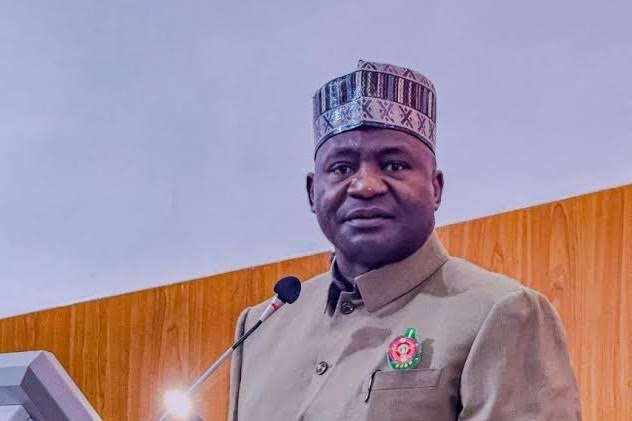
By Christopher Gwabin Musa
The security challenge in the North Central is a dynamic one, emanating from conflicting interests that have eroded trust over time. The region — comprising Benue, Plateau, Kogi, Niger, Nasarawa, Kwara, and the FCT — is one of the most ethnically diverse in the country, and that diversity sits at the heart of the security picture. This was evident at the recent North Central Zonal Security Summit, held in Makurdi, Benue State.
The summit was well attended by political leaders, religious and traditional rulers, and other concerned stakeholders. My takeaway was that the people of the North Central were indeed desirous and ready to address those issues that have fractured the socioeconomic fibre in the region, going by the quality of the attendance. I also noticed that those present were attentive to every statement made by the keynote speakers and the robust discussions by the panellists. The presence of three governors (Plateau, Benue, and Nasarawa), and the representatives of Kogi and Kwara, indeed made the occasion more of a soul-reflecting session, devoid of rancour or trading of blame.
The unity of purpose
Midway into the event, I reminisced about the trigger that is disrupting peace and tranquillity in the North Central and came to the conclusion that the most potent strategy needed to bring about peace in the region is not military might. It is not communiqués or peace pacts. It is ultimately unity of purpose — the kind that happens when trust among the various actors is restored and institutionalised. My friend and brother, Engr. Abdullahi Sule, the Governor of Nasarawa State, hit a very vital point in his contribution during the panel session. He said: “Separate governance and politics, and specifically build trust between Benue and Nasarawa States.”
He went further to say that Tiv populations are indigenously settled and established across at least six of the 13 local government areas in Nasarawa State, and that in the event of conflict in these areas, he, as governor of Nasarawa State, should be informed first before the governor of Benue State. He said that when this is not done, it breeds distrust, and that is when the politicisation of issues takes centre stage and breeds conflict. This really got me thinking deeply as I reflected on some of the past issues that threatened the peace of the North Central region. With the benefit of hindsight, the issues were not complicated, but were made complicated unintentionally — drawing from the statement of the governor of Nasarawa State, which of course was not contested by others present.
A soldier in every village
This touched on an aspect of my presentation where I stated that “our objective must therefore go beyond responding to threats as they arise. We must also address the conditions that allow insecurity to take root and persist.” What are those conditions? The restoration of confidence, the return of legitimate economic activity, and the ability of citizens to live their lives without fear. And how can this be achieved?
My boss and mentor, Air Vice Marshal Monday Riku Morgan (Rtd), the former Chief of Defence Intelligence, in his keynote address, provided a hint. He said: “The ultimate objective is not to put a soldier in every village.” And I agreed. This cannot restore the confidence that would lead to the return of economic activities, which would result in the ability of citizens to live their lives without fear. This is one of the takeaways of the North Central Zonal Security Summit. It was indeed a strong message, and I give my assurance that future security strategies will be built on restoring trust, with the active cooperation of all the stakeholders in the region.
His Royal Majesty, the Tor Tiv, Begha U Tiv, Orchivirigh Prof. James Ortese Iorzua Ayatse, in his presentation, also highlighted that the drivers of insecurity in the North Central had been mishandled and misinterpreted along political lines. He warned political leaders and other actors who politicise security emergencies or pass blame for political gain of the consequences of their actions on the general wellbeing of the people of the region. The ethnic diversity in the North Central should serve as a source of strength and unity, not weakness and division. The relationship between the goose and the gander provides us with a clear example of how to build trust and live in peace. Theirs is a regime of shared responsibility and mutual protection.
The weight of trust
The deliberations indeed inspired something in me. My thought is that trust is golden, and it can be achieved through an all-of-people, whole-of-society approach. There is a value chain in security and insecurity. That farmer and herder on the fringes between Benue, Nasarawa, and Plateau, and the miners along the Kogi and Kwara borderlands, constitute a delicate dynamic in the North Central region. This is why trust among communities matters, regardless of ethnic or religious affiliation.
Trust is a psychological expectation that another person will act in good faith, keep commitments, and protect mutual interests without intentionally causing harm. This is the breaking point between security and insecurity, and what is responsible for the pattern of conflict in the North Central region. Building trust is a deep psychological endeavour, and it is achievable if all the stakeholders work with a common goal in mind.
I left Makurdi fulfilled by the outcome of the summit. I thank the governor of Benue State, Rev. Fr. Dr. Hyacinth Iormem Alia, for being such a wonderful host and for working assiduously to make the summit a huge success. His contributions during the plenary session were invaluable. I took special notes and will expatiate on them at a policy level at the Ministry of Defence.
I was also delighted by the presence of Senator George Akume, Secretary to the Government of the Federation. His position that no single tier of government, agency, or community can address the situation in the region alone was apt. It reinforced the all-of-people, whole-of-society approach that has been on the front burner in addressing the security situation in the country. The contributions from my good friend and brother, Governor Caleb Mutfwang of Plateau State, were also instructive — all he said was reflective of those knotty issues that had been dismissed as ordinary but are potentially harmful to communities. The Special Adviser to the President on Homeland Security, Major General Adeyinka Famadewa (Rtd), was outstanding in his presentation. He advocated for a joint institutional mechanism to address cross-border infiltration across the North Central corridor, especially the Sokoto-Kebbi-Niger-Kogi axis.
A-M-A-N-A
A-M-A-N-A in Hausa means trust. But for the North Central, it is beyond trust — it is a framework:
A — Accountability: political and community leaders take responsibility for preventing escalation.
M — Mutual respect: ethnic, religious, and communal differences must not become security fault lines.
A — Active cooperation: governors, traditional rulers, communities, and security agencies share information and coordinate responses.
N — Non-politicisation: security incidents are not used as instruments of political mobilisation.
A — Assurance: citizens have confidence that government will protect lives, livelihoods, and legitimate economic activity.
This is the new thinking for the North Central.
I say thank you to the people of the North Central for their invaluable participation and contributions. I give my assurance that when A-M-A-N-A is operationalised, it will translate our hopes and aspirations into tangible realities in the security of lives and property in the North Central region.
– General Christopher Gwabin Musa (Rtd) OFR is the Honourable Minister of Defence of the Federal Republic of Nigeria.
We’ve got the edge. Get real-time reports, breaking scoops, and exclusive angles delivered straight to your phone. Don’t settle for stale news. Join LEADERSHIP NEWS on WhatsApp for 24/7 updates →
Join Our WhatsApp Channel