
Every few years Nigeria returns to the same conversation, electricity. A new policy is announced. A reform is proposed. A committee is formed. And Nigerians listen carefully, hoping that maybe this time something will finally change.
Last week President Bola Tinubu proposed the establishment of a Grid Asset Management Company, GAMCO, as part of efforts to strengthen Nigeria’s electricity transmission system. The idea, according to government officials, is to focus attention on what many experts have long described as the weakest part of the power sector;the national grid.
For many Nigerians, the announcement was greeted with cautious optimism. Electricity has been Nigeria’s most stubborn economic challenge for decades. Businesses complain about it. Manufacturers blame it for rising production costs. Households deal with it daily through generators, inverters, and rechargeable lamps. It is difficult to talk about economic growth in Nigeria without talking about power.
Successive governments have tried different reforms. The sector was unbundled years ago into three components;generation, transmission, and distribution with the hope that private investment and improved management would gradually stabilise electricity supply.
Generation companies were expected to produce power. Distribution companies would deliver electricity to homes and businesses. Transmission infrastructure would carry the power across the country.
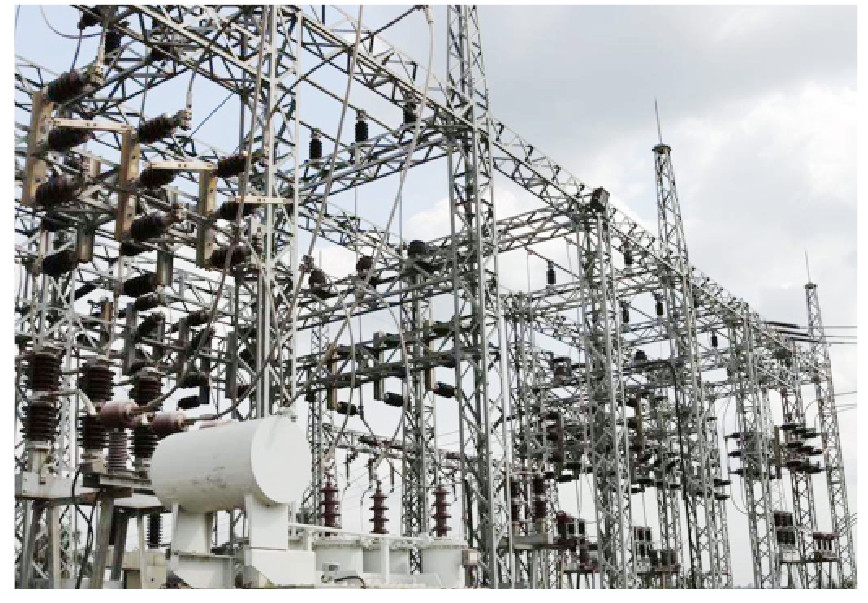
On paper the model made sense. But in practice, one segment of the chain has struggled more than the others.Transmission.For years, experts have argued that the national grid does not have enough capacity to move electricity efficiently from power plants to consumers. This bottleneck often results in a situation where electricity produced by generating companies cannot be fully transmitted through the network.
In simple terms, power is available but cannot reach the people who need it. That is why the proposed GAMCO initiative is attracting attention. The government believes that a dedicated company focused on managing and strengthening grid assets could improve the efficiency of the transmission network.
If the grid becomes stronger and more reliable, electricity generated across the country can move more smoothly to distribution companies and ultimately to homes and industries.
The pilot phase of the initiative will focus on the Benin–Lagos transmission corridor, one of the most critical electricity routes in Nigeria. This corridor supplies power to Lagos and Ogun states, two of the country’s largest industrial and commercial centres.
Any improvement in power supply within this axis could have noticeable economic benefits.
Lagos alone hosts thousands of factories, manufacturing plants, and small businesses that depend heavily on electricity. Many of them rely on diesel generators to remain operational.
Stable electricity supply in such a region would reduce operating costs for businesses and potentially improve productivity across several sectors of the economy.
The government also indicated that the pilot project would involve optimising output from three National Integrated Power Plants Omotosho, Olorunsogo, and Ihovbor. Together, these plants already possess significant installed capacity.
However, operational constraints and transmission limitations have prevented them from delivering their full output to the grid.
Officials say GAMCO aims to recover about 1,600 megawatts of stranded capacity within the next two years by addressing these bottlenecks and strengthening transmission infrastructure along the corridor.
If successful, the model could be expanded to other parts of the country.
Nigeria’s electricity challenge has never been simple. It involves infrastructure, financing, regulation, and coordination among multiple institutions within the power market.
Over the years, reforms have attempted to address these issues from different angles. Some progress has been made, but significant challenges remain. Distribution companies have raised concerns about the cost of delivering electricity and the difficulties of collecting payments from customers. Generation companies have highlighted outstanding payments within the market. Transmission infrastructure has required continuous upgrades to keep pace with growing demand.
Each part of the value chain affects the other. That is why any initiative aimed at strengthening the sector must consider the entire ecosystem.
The Federal Executive Council has approved the formation of an inter-ministerial committee to examine the regulatory, legal, and financial framework needed to establish GAMCO. The committee includes key government officials responsible for power, finance, infrastructure, and legal matters.
Their task is to ensure that the proposed company fits properly within Nigeria’s existing electricity laws and market structure. The committee will also review the implications of electricity reform legislation and determine how the new company would interact with existing institutions such as the Nigeria Electricity Regulatory Commission and the Transmission Company of Nigeria.
These details may sound technical, but they are important. Nigeria’s power sector already involves a complex network of stakeholders—government agencies, private investors, regulatory bodies, and infrastructure operators.
Any new initiative must fit carefully into that system to avoid overlapping responsibilities or policy conflicts.
The broader objective behind the proposal remains clear. Reliable electricity is essential for economic development. Industrialisation, job creation, and technological advancement all depend heavily on a stable power supply. When electricity becomes unpredictable, businesses struggle to plan, investors hesitate and productivity slows down.
Nigeria has enormous economic potential, but energy reliability remains one of the country’s most significant constraints. This is why many observers believe that reforms within the power sector will continue to be a central focus of government policy.
Alongside the power sector developments, the presidency also announced the resolution of the long-standing dispute surrounding Oil Prospecting Licence 245. That agreement, reached with international energy companies, brings closure to a legal issue that had lasted more than fifteen years.
The settlement clears the path for new deepwater investment expected to add about 150,000 barrels per day to Nigeria’s oil production capacity once development begins.
For investors monitoring Nigeria’s energy landscape, these steps suggest a broader effort to address longstanding challenges within the sector.
Resolving disputes, improving regulatory clarity, and strengthening infrastructure are all factors that influence investor confidence.
But for many Nigerians, the most immediate concern remains electricity. The ability to switch on the lights, run a business without constant generator noise, or power a factory without relying on diesel would represent a major improvement in daily life and economic activity.
This is why initiatives like GAMCO attract attention. They represent another attempt to address one of the country’s most persistent challenges. Of course, establishing a new company alone will not solve every issue within the electricity sector. Infrastructure projects take time. Institutional reforms require coordination. Regulatory frameworks must evolve alongside market realities.
Progress in the power sector often happens gradually. Yet each step toward strengthening the grid, improving efficiency, and unlocking existing capacity moves the country closer to a more reliable electricity system.
For Nigeria’s economy, that progress matters. The success of the proposed Grid Asset Management Company will depend largely on careful planning, effective coordination, and consistent implementation of policy decisions.
If those elements come together, the initiative could contribute to improving electricity transmission and supporting broader economic activity across the country.
Nigeria has pursued power sector reforms for many years.GAMCO represents another chapter in that continuing effort. The expectation across the country is straightforward. Steady electricity.For homes.For businesses.For industry.
We’ve got the edge. Get real-time reports, breaking scoops, and exclusive angles delivered straight to your phone. Don’t settle for stale news. Join LEADERSHIP NEWS on WhatsApp for 24/7 updates →
Join Our WhatsApp Channel