
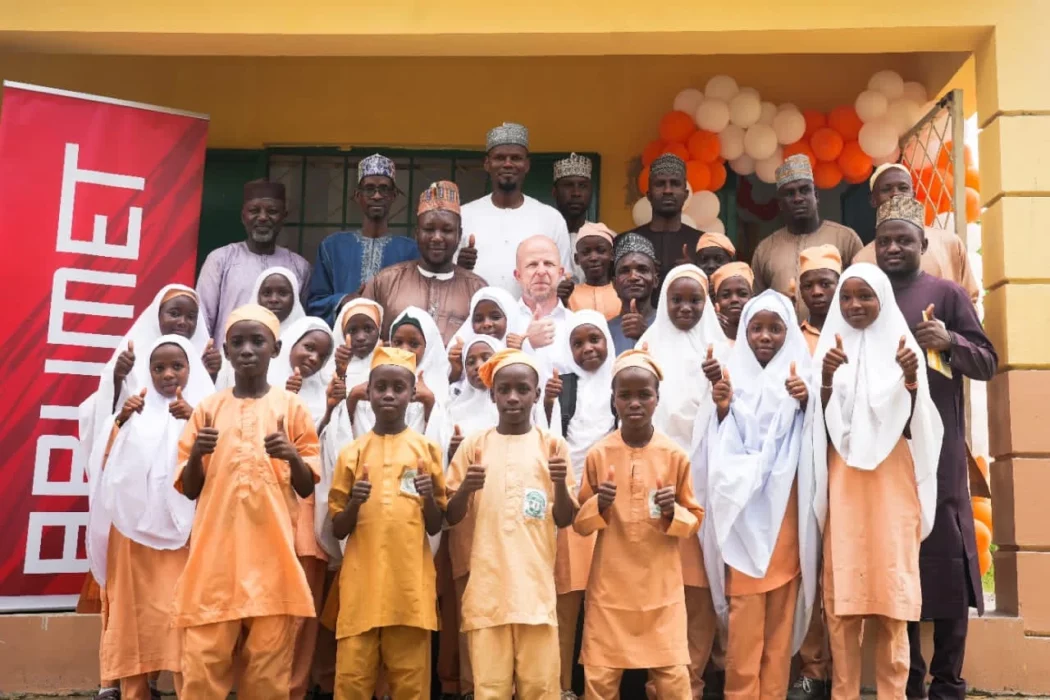
A glass and aluminium solutions company, ABUMET, has equipped Race Course Model Primary School, Kano, with a modern information and communication technology (ICT) centre to improve the learners’ access to digital education.
The centre, which is part of the company’s corporate social responsibility (CSR) programme, has 24 desktop computers, solar-powered electricity infrastructure and new classroom furniture for pupils and teachers.
During the presentation of the facility to the school over the weekend, the general manager of ABUMET, Diemo Schillack, said the project was aimed at bridging the digital divide and equipping children with skills needed to thrive in an increasingly technology-driven society.
Schillack said early exposure to technology could influence learners’ educational development, build their confidence and open up opportunities for future careers.
“We believe every child deserves access to quality learning tools and the opportunity to develop skills that will prepare them for the future.
“Technology is now part of everyday life and introducing these young learners to digital tools early gives them a stronger foundation for their education and future careers,” he said.
He expressed satisfaction with the reception by the pupils and teachers, adding that the company would return within a year to assess the progress of the pupils and the impact of the ICT centre.
In is remarks, the Head Teacher of the school, Salisu Alhassan, described the intervention as a major boost to teaching and learning, particularly in digital literacy.
While thanking the organisation for the donation, Alhassan, said the ICT centre and other infrastructures would enhance the school’s capacity to provide practical computer education.
He explained that the school had introduced a structured programme to ensure that pupils had access to the computers despite its large enrolment.
“We organise the pupils into smaller groups so that everyone has the opportunity to participate and learn.
“This initiative goes beyond simply teaching children how to use computers. We want them to understand how technology can support learning, problem-solving and everyday life,” he said.
The head teacher added that pupils were already being taught applications such as Microsoft Office, alongside practical skills in writing, calculations, record-keeping and information management.
He said computer education became more advanced from Primary Four to Primary Six, enabling pupils to progressively develop their skills.
We’ve got the edge. Get real-time reports, breaking scoops, and exclusive angles delivered straight to your phone. Don’t settle for stale news. Join LEADERSHIP NEWS on WhatsApp for 24/7 updates →
Join Our WhatsApp Channel