

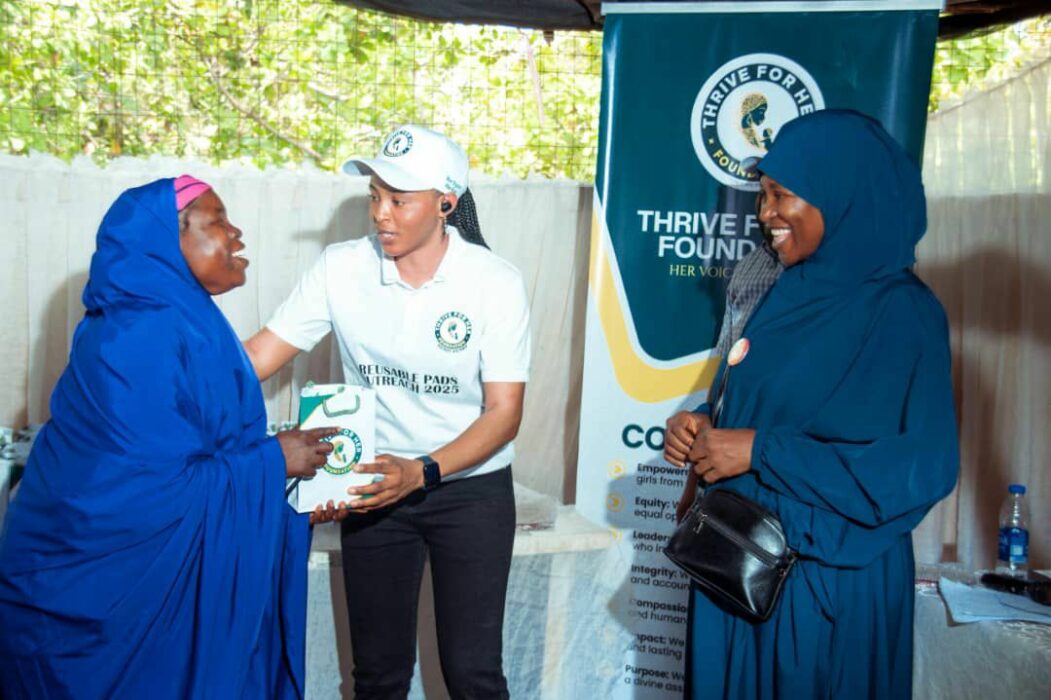
Gender activists and women’s health advocates, including Freda Irabor, Aisha Yesufu, and Lemmy Ughegbe, have called for increased awareness and education on menstrual hygiene among women and girls, particularly those living in internally displaced persons (IDP) camps.
The activists made the call during a Reusable Sanitary Pads Outreach organised by the Thrive for Her Foundation at the Durumi IDP Camp in Abuja.
The outreach focused on educating women and adolescent girls on proper menstrual hygiene practices while distributing reusable sanitary pads to reduce health risks associated with unsafe menstrual alternatives.
Freda Irabor, founder of the Thrive For Her Foundation, urged the Federal Government to include menstrual hygiene education in the national school curriculum to help young girls better understand and manage their menstrual cycles.
Irabor, who led the distribution of more than 100 reusable sanitary pads at the camp, stated that the rising cost of disposable pads had made menstrual products increasingly inaccessible to many families, thereby deepening the vulnerability of displaced women and girls.
“We found out that many girls can no longer afford regular sanitary pads,” she said. “So we introduced reusable pads that can last for a year. After use, the girls can wash, dry, and reuse them safely. This initiative helps reduce cost and keeps them protected.”
She emphasised that menstrual hygiene was central to women’s health, describing women as “the vessels through which life comes into the world.”
Irabor added that, beyond distributing pads, the foundation continually educated beneficiaries on the proper use and maintenance of the pads. She appealed to donors, partners, and stakeholders to support the foundation’s ongoing menstrual health campaigns.
Human rights activist and Co-convener of the #BringBackOurGirls Movement, Aisha Yesufu, commended the foundation for its commitment to improving menstrual hygiene among vulnerable groups. She described the intervention as life-changing for women and girls in IDP camps.
“Pads may seem insignificant to some, but the lack of access has far-reaching effects,” Yesufu said. “We’ve seen young girls missing school because they are unable to afford pads during their menstruation.”
She stressed that menstrual hygiene is a key component of national development, noting that a healthy woman contributes positively to the well-being of her family and society.
For his part, gender rights advocate and Executive Director of the Men Against Rape Foundation (MARF), Dr. Lemmy Ughegbe, lamented that many displaced women resort to unsafe menstrual materials due to poverty.
According to him, some women “use all sorts of rags, tissue paper where they can afford it, and you know the danger it causes to their system. In fact, research has even shown that some women from impoverished backgrounds use cow dung in place of menstrual pads.”
Ughegbe commended the Thrive For Her Foundation for collaborating with partner organisations to educate women on proper menstrual hygiene and safe use of reusable pads.
We’ve got the edge. Get real-time reports, breaking scoops, and exclusive angles delivered straight to your phone. Don’t settle for stale news. Join LEADERSHIP NEWS on WhatsApp for 24/7 updates →
Join Our WhatsApp Channel
