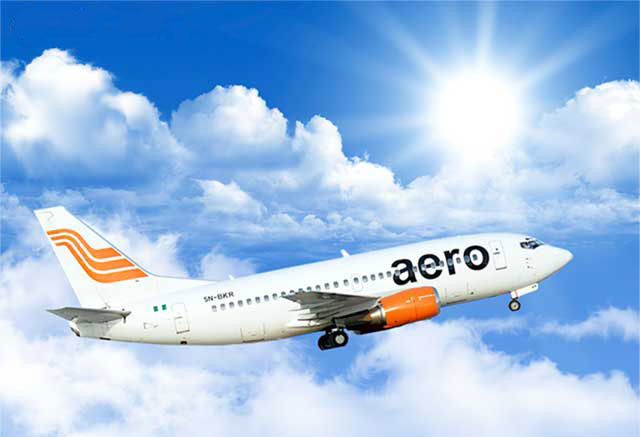
Nigeria risks losing aviation jobs, investments and billions of naira in business opportunities to a new aviation hub emerging just across its border, Aero Contractors has warned.
The airline’s chief executive officer and accountable manager, Captain Ado Sanusi, said the planned mega-airport and major maintenance, repair and overhaul (MRO) facility were being developed within minutes of Lagos and could draw Nigerian passengers, airlines and aviation-related investments out of the country.
Speaking at Aero Contractors’ 67th anniversary celebration, Sanusi urged the federal government to urgently place aviation at the heart of its Renewed Hope agenda, warning that failure to act could leave Nigerian airports underutilised, hangars idle and local aviation jobs and capital flowing across the border.
Sanusi said a new mega-airport and major maintenance, repair and overhaul (MRO) hub were being developed just across Nigeria’s border, describing the development as a deliberate attempt to tap into the Nigerian market.
He warned that failure by Nigeria to respond strategically and urgently could result in Nigerian passengers, airlines, aviation-related businesses, jobs and investments migrating to neighbouring countries.
According to him, the development poses a significant threat to Nigeria’s aviation ecosystem, particularly at a time when the country is seeking to attract investment, create jobs and strengthen its foreign exchange position.
“Even now, a new mega-airport and a major maintenance hub are rising just across our border, a few minutes’ flight from Lagos, built, quite deliberately, to serve the Nigerian market,” he said.
“If we do not respond strategically and soon, we risk our airports becoming ghost airports, our hangars falling silent, and our jobs and investment flying quietly across the border, using our own population as the prize.”
Sanusi therefore called on President Bola Ahmed Tinubu and the Minister of Aviation and Aerospace Development to give aviation a deliberate place in the Federal Government’s Renewed Hope agenda, alongside roads, rail and power.
He said aviation had been deliberately deployed by several countries, including those in the Gulf, East Africa and other parts of Africa, as a catalyst for tourism, trade, employment and foreign investment.
“Aviation is not simply a mode of transport; in nation after nation, in the Gulf, in East Africa, across our own continent, it has been used deliberately as a catalyst for economic growth: tourism, trade, jobs, foreign investment,” he said.
“Mr. President, Honourable Minister: we are respectfully asking for a Renewed Hope for Aviation, a deliberate, strategic national focus on this sector, alongside roads, rail and power, so that Nigeria’s skies remain ours to command.”
The Aero Contractors boss also urged the government to protect indigenous aviation investments and position the airline as a strategic national asset, arguing that the company’s 67-year history and contribution to the development of Nigeria’s aviation industry justified such recognition.
“Aero Contractors is not merely an Airline. It is a National Treasure. I humbly appeal that it be recognised, protected, and positioned as such, to serve this nation for the next sixty-seven years, and beyond,” he said.
Sanusi’s warning came against the backdrop of what he described as Aero Contractors’ long history of survival, resilience and transformation.
Established in 1959 as a charter and crop-spraying company, Aero Contractors subsequently became a major aviation service provider to Nigeria’s oil and gas industry before commencing scheduled passenger operations in 2000.
The airline later expanded into rotary-wing operations, pilot training and aircraft maintenance, repair and overhaul, with its MRO facility now serving other airlines across West Africa.
Sanusi recalled that on January 4, 2018, Aero Contractors’ engineers completed Nigeria’s first indigenous C-check on a Boeing 737 after 14 years without a Nigerian airline carrying out such a heavy maintenance check locally.
He said the feat, achieved at the airline’s hangar, was also the first of its kind in West and Central Africa.
The CEO said the airline had since evolved into an integrated aviation enterprise with scheduled passenger operations, charter and rotary-wing services, MRO and pilot training.
He also acknowledged the role played by the Asset Management Corporation of Nigeria (AMCON), which took a majority stake in the airline in 2016 when its financial position was at its lowest ebb.
According to him, AMCON’s intervention gave the airline a second chance and helped sustain its operations through some of its most difficult years.
He particularly commended the Receiver/Manager, Senator Adeniyi Ayodele Adegbonmire, SAN, for his leadership and contribution to the airline’s recovery.
Sanusi disclosed that Aero Contractors’ financial performance had also improved significantly, with its operating margin moving from minus 134 per cent in 2022 to a positive operating margin by 2025.
He described the improvement as evidence of the airline’s resilience and the determination of its workforce to keep the company alive despite prolonged operational and financial difficulties.
Reflecting on the airline’s difficult years, Sanusi said Aero Contractors had continued to operate despite grounded fleets, empty hangars, prolonged periods without aircraft in the sky, deaths of colleagues and periods when workers went without salaries.
“We have grounded fleets and empty hangars and still, we flew.
“We have gone months without a single aircraft in the sky, and still, we flew.
“We have buried colleagues, gone without pay, and watched the world write us off, and still, we flew,” he said.
He attributed the airline’s survival to the commitment of its engineers, pilots, cabin crew, ground staff and other employees who remained committed to keeping the airline alive.
Sanusi said the sacrifices of the workforce must not be taken for granted, stressing that the airline’s next phase should be built on sustainable growth and strategic national support.
He appealed to the Federal Government to recognise the wider economic value of indigenous airlines and aviation infrastructure, warning that failure to strengthen the sector could undermine Nigeria’s ability to retain aviation-related economic activities within the country.
As Aero Contractors marked 67 years of operations, Sanusi said the airline remained committed to the Nigerian aviation industry and was prepared to partner with the government in achieving its economic development objectives.
“Aero Contractors has flown through storms before. God willing, we will keep flying,” he said.
We’ve got the edge. Get real-time reports, breaking scoops, and exclusive angles delivered straight to your phone. Don’t settle for stale news. Join LEADERSHIP NEWS on WhatsApp for 24/7 updates →
Join Our WhatsApp Channel