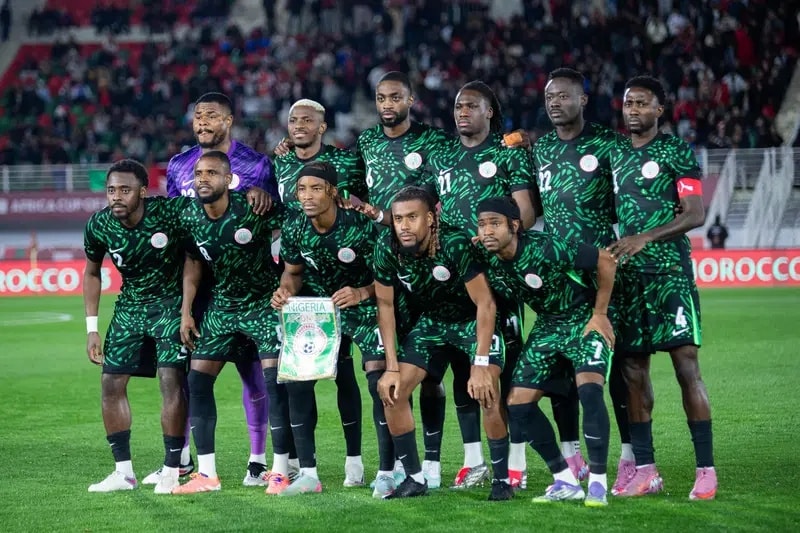
Wednesday’s 2025 Africa Cup of Nations (AFCON) semifinal clash between hosts nation Morocco and Nigeria promised to be a titanic battle between two undefeated titans in the continental soccer showpiece.
Both sides enter this crucial encounter with aspirations of reaching Sunday’s final, and the historical context offers intriguing insights into past encounters and potential psychological advantages.
Nigeria’s Super Eagles are looking more and more like the team to beat at the ongoing AFCON, as the Eagles soared into the semifinals as the only side to maintain a perfect winning record at the tournament.
Standing between them and a place in the final are hosts Morocco, Africa’s top-ranked nation and 2022 World Cup semifinalists, buoyed by home support and expectation.
For Nigeria, this AFCON campaign carries the weight of redemption after the heartbreak of missing out on this year’s World Cup tournament. For Morocco, the pressure is even heavier – to win the trophy in front of their own fans, 50 years after their last continental triumph.
Historical Context and Psychological Edge:
Rabat being a “happy hunting ground” for Nigeria is a significant psychological play. The 1983 AFCON qualifier, where Nigeria secured a 0-0 draw and won a penalty shootout in Rabat to qualify for the AFCON, will undoubtedly be a talking point in the Super Eagles’ camp. This historical precedent, coupled with the assertion that Nigeria has “never lost a match to the Lions in Rabat,” aims to instill confidence and perhaps sow a seed of doubt in the Moroccan psyche. While past results don’t guarantee future outcomes, the memory of overcoming Morocco on their home soil in a high-pressure qualification scenario could provide a mental boost for the Super Eagles.
However, Morocco, as the host nation, will be buoyed by a fervent home crowd and the momentum of an undefeated tournament run. The pressure will be immense, but the support from their fans can be a powerful eleventh-man. The Atlas Lions will be keen to rewrite this particular piece of history and assert their dominance on home turf.
Nigeria’s Tactical Blueprint: Leveraging Osimhen and the Midfield Engine
Victor Osimhen’s pace, power, and predatory instincts in the box will be central to Nigeria’s offensive strategy. Morocco’s central defenders will need to be at their absolute best to contain him. Expect Nigeria to try and exploit spaces behind Morocco’s defensive line with through balls and crosses aimed at Osimhen.
Alongside Ademola Lookman, Nigeria’s talisman Victor Osimhen remains a lethal threat, scoring four goals, including back-to-back strikes in the round of 16 and quarterfinals. With 35 international goals in 51 appearances for Nigeria, Osimhen is now just two goals away from equalling the national team record of 37 goals held by the late Rashidi Yekini, a member of the Nigerian side that won the 1994 AFCON and also played at two World Cups.
Striker Akor Adams has emerged as an unsung hero, contributing two goals and two assists in the last two matches, while Alex Iwobi has been pulling the strings in midfield, though the team will captain Wilfried Ndidi who has been equally influential in anchoring the middle of the park in today’s match .
Lookman and Adams, presumably operating on the wings or in a withdrawn striker role, will be tasked with providing width, stretching the Moroccan defense, and delivering crosses into the box. Nigeria’s tactical approach will likely involve quick transitions, utilizing Osimhen’s speed, and intricate passing movements in the final third.
While Osimhen provides a potent attacking threat, Nigeria’s coach will likely prioritize defensive solidity, especially against a strong Moroccan side playing at home. A compact midfield, quick to press and break up play, will be essential to deny Morocco space and stifle their creative midfielders.
Morocco’s Tactical Response: Home Advantage and Defensive Resilience
As the host nation, Morocco will likely aim to control possession and dictate the tempo of the game. Their undefeated run suggests a well-organized and defensively sound unit. The historical data also shows a pattern of tight matches between these two nations, with many low-scoring affairs. Morocco’s coach will be acutely aware of Osimhen’s threat and will likely devise a strategy to limit his impact. This could involve deploying a deep-lying midfielder to screen the defense, tight man-marking on Osimhen, and double-teaming him whenever he receives the ball.
Morocco’s attacking strategy will likely involve patient build-up play, utilising their wide players to stretch Nigeria’s defense and create crossing opportunities. They will aim to exploit any defensive vulnerabilities Nigeria might have, particularly on the flanks. The home crowd will provide an undeniable energy boost, and Morocco will look to leverage this by starting strong and maintaining high intensity throughout the match. Set pieces could also be a significant weapon for the Atlas Lions, given the pressure and atmosphere of a semifinal.
The historical results indicate that Morocco has had some strong performances against Nigeria, particularly in recent years (e.g., 4-0 in CHAN Final 2018). While the CHAN tournament involves home-based players, it still reflects a certain level of tactical superiority in those specific encounters. Morocco will draw confidence from these more recent victories, even if they are not directly comparable to a full international AFCON semifinal.
Key Match-ups and Deciding Factors:
Central Defense: This will be the most critical individual battle. If Morocco can neutralize Osimhen, they significantly reduce Nigeria’s primary goal threat.
Midfield Battle: The control of the midfield will be paramount. The team that wins this battle will likely dictate the flow of the game and create more scoring opportunities. Iwobi’s performance for Nigeria will be key in this regard.
Wing Play: Both teams will look to exploit the flanks. The effectiveness of Nigeria’s Lookman and Adams, against Morocco’s fullbacks and wingers, will be crucial in creating chances and stretching the opposition.
Set Pieces: In a tightly contested match, set pieces can often be the difference. Both teams will need to be disciplined in defense and clinical in attack from corners and free kicks.
Goalkeepers: With both teams having strong defensive records, the goalkeepers will need to be focused
We’ve got the edge. Get real-time reports, breaking scoops, and exclusive angles delivered straight to your phone. Don’t settle for stale news. Join LEADERSHIP NEWS on WhatsApp for 24/7 updates →
Join Our WhatsApp Channel