Nigeria’s N58.18 trillion proposed 2026 budget is anchored on a set of oil market assumptions that leave little room for error at a time of heightened global uncertainty.
While the federal government projects that crude oil production will improve and prices will remain stable, the appropriation bill contains no clearly defined contingency measures should oil output underperform again or international prices slide sharply.
Under the 2026 fiscal framework, the government benchmarked crude oil at $64.85 per barrel, with daily production projected at 1.84 million barrels, and an exchange rate of N1,400 to the dollar.
The assumptions underpin projected revenues of approximately N34.33 trillion, against a total expenditure of N58.18 trillion, resulting in a deficit of roughly N23.85 trillion, and equivalent to about 4.28 per cent of GDP, to be mainly financed through borrowing.
Price of oil dropped to $60 below the budget benchmark last week. In the domestic front, Nigeria’s oil output fell by 5.9 per cent year-on-year to 1.599 million barrels per day (bpd) in November 2025.
Sector watchers predict oil prices could fall below $60 per barrel before the end of 2026 and potentially slip into the mid-$50s in 2027 due to an anticipated market oversupply and the United States’ intervention in Venezuela.
Oil revenue remains a critical pillar of the budget. Although the government has consistently emphasised diversification, crude oil receipts remain central to funding capital expenditure, estimated at ₦26.08 trillion, and sustaining foreign exchange inflows needed to stabilise the economy.
Analysts note that any major deviation from oil assumptions would quickly reverberate across the fiscal plan.
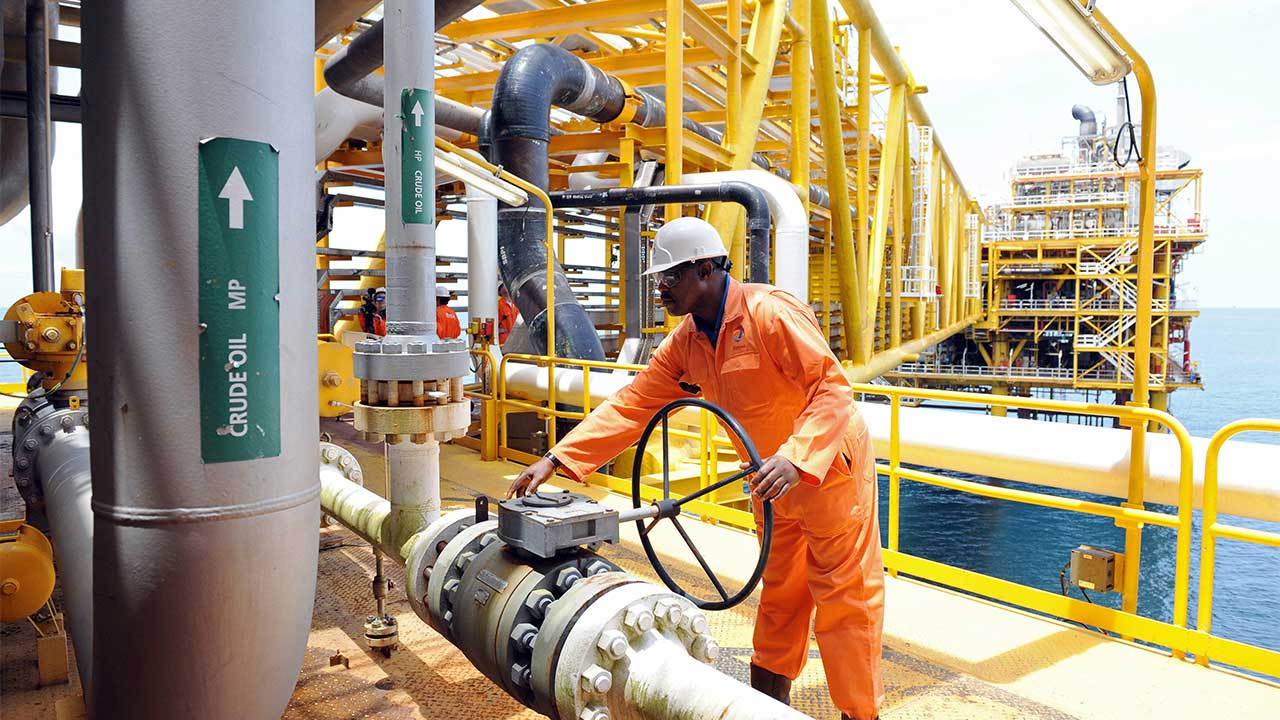
Nigeria’s recent experience underscores the risk. Over the past several years, actual oil production has frequently fallen below budget benchmarks due to crude theft, pipeline vandalism, operational disruptions and ageing infrastructure.
Average output in parts of 2024 and 2025 hovered below projected levels, forcing the government to manage cash shortfalls through additional borrowing and delayed capital releases. Despite renewed security interventions in oil-producing areas, structural vulnerabilities persist.
Beyond domestic challenges, global oil market conditions present additional risks that could undermine the 2026 budget’s revenue outlook. The international oil market is facing a confluence of factors that could exert downward pressure on prices.
Slowing global economic growth, particularly in major consuming economies such as China and parts of Europe, has dampened demand projections. Manufacturing slowdowns and weaker trade flows have raised concerns about reduced energy consumption in 2026.
At the same time, global supply dynamics remain fluid. Increased output from non-OPEC producers, including the United States, Brazil and Guyana, continues to add barrels to the market.
Even within OPEC+, compliance with production cuts has been uneven, raising the possibility of oversupply if members prioritise market share over price discipline. Any breakdown in coordination could trigger a renewed slide in prices.
Geopolitical developments also pose mixed risks. While conflicts in key regions have at times supported oil prices, prolonged geopolitical tensions can weaken global growth and suppress demand.
Additionally, accelerating investments in renewable energy and energy efficiency in advanced economies are gradually reshaping long-term oil demand, adding to price volatility.
If oil prices fall significantly below the $64.85 benchmark or production fails to meet the 1.84 million barrels per day target, the fiscal consequences for Nigeria would be immediate. Historically, when revenues underperform, capital expenditures bear the brunt of the adjustment. The 2026 budget’s extensive infrastructure programme would therefore be exposed.
Major ongoing projects such as the Lagos–Ibadan Expressway, the Abuja–Kaduna–Zaria–Kano Road, and the East–West Road linking the Niger Delta states depend on consistent funding flows.
Rail projects, including the Ibadan–Kano Standard Gauge Railway and the Port Harcourt–Maiduguri Eastern Rail Line, are particularly vulnerable due to their high capital intensity and reliance on stable financing. Disruptions in funding could lead to work stoppages, contract variations and further delays.
Oil revenue shortfalls would also affect the broader macroeconomic environment. Reduced dollar inflows from crude exports could weaken external reserves and place renewed pressure on the naira.
A depreciating exchange rate would raise the cost of imported inputs for government projects, eroding the real value of budgeted allocations and increasing the likelihood of stalled contracts.
Debt dynamics add another layer of vulnerability. The 2026 budget allocates about ₦15.52 trillion to debt servicing, a substantial share of projected revenues. Should oil receipts fall short, the government may be forced to increase borrowing to meet its obligations.
That would further constrain fiscal space, potentially crowding out spending on development priorities and increasing future debt service costs.
Despite these risks, the budget does not explicitly outline a structured response to a downside oil scenario. There are no clearly articulated triggers for expenditure reprioritisation if oil production or prices fall below projections.
While non-oil revenue measures, including tax administration reforms and compliance-driven collections, are highlighted, analysts note that these streams may not scale quickly enough within a single fiscal year to offset a sudden decline in oil revenue.
The absence of explicit contingency buffers or stabilisation mechanisms has drawn attention to the budget’s exposure. Unlike some fiscal frameworks that embed automatic adjustment clauses or conservative stress-tested assumptions, Nigeria’s 2026 budget essentially assumes that oil sector improvements will hold.
For oil-producing communities, another production or price shock could also have local consequences. Lower revenues may limit funding for security operations, environmental remediation and host community development programmes, potentially heightening tensions in the Niger Delta and further disrupting output.
As the National Assembly begins detailed scrutiny of the appropriation bill, fiscal analysts argue that the credibility of the 2026 budget would be strengthened by incorporating explicit downside scenarios and clearer fallback strategies. These could include more conservative oil assumptions, clearly prioritised capital projects and defined measures for managing revenue shocks.
Ultimately, the question confronting policymakers is not whether oil production and prices can meet expectations, but how prepared the fiscal framework is if they do not.
With global oil markets facing increasing volatility and Nigeria’s production challenges unresolved, the absence of a clear Plan B leaves the 2026 budget walking a narrow path between optimism and vulnerability.
We’ve got the edge. Get real-time reports, breaking scoops, and exclusive angles delivered straight to your phone. Don’t settle for stale news. Join LEADERSHIP NEWS on WhatsApp for 24/7 updates →
Join Our WhatsApp Channel