
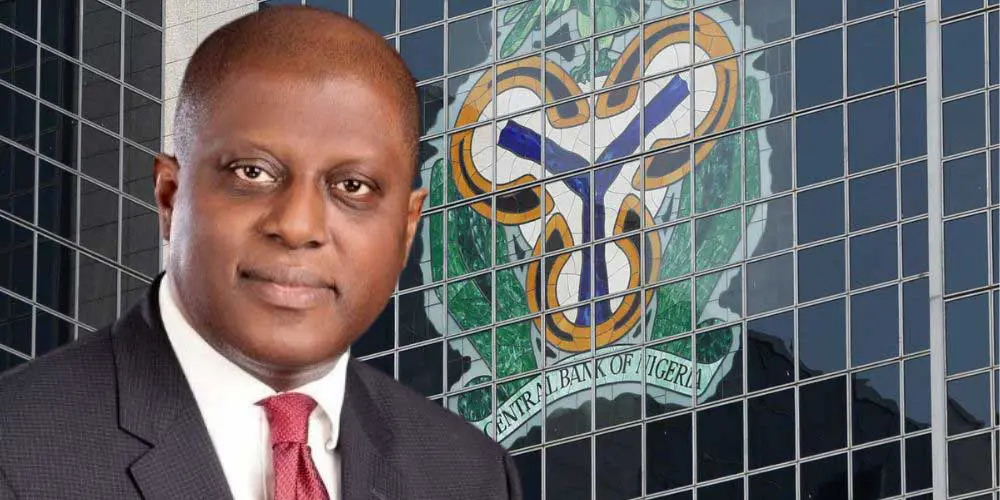
Ahead of the Central Bank of Nigeria (CBN) Monetary Policy Committee (MPC) meeting next month, the International Monetary Fund (IMF) has urged Central Banks worldwide to adopt a cautious “wait and see” approach as the ongoing Middle East conflict continues to tighten global financial conditions.
Speaking at the launch of the April 2026 World Economic Outlook in Washington, D.C. on Tuesday, IMF Economic Counsellor and Director of the Research Department, Pierre-Olivier Gourinchas, said while policymakers may hold rates for now, they must remain vigilant and ready to act swiftly if inflationary pressures spiral.
The MPC had at its last meeting in February this year cut benchmark interest rate from 27 per cent ot 26.5 per cent, even as market watchers say they expect the apex bank to maintain status quo at the next meeting in May as inflation slowly creeps back into the economy due to the impact of the Middle East crisis.
Speaking in Washington DC, Gourinchas noted that while central banks were able to tame inflation during the 2022 global commodity price surge without triggering a recession, the current environment presents a more difficult challenge
“Today, underlying demand pressures have eased, though inflation remains above target in some countries, notably the United States. If the shock remains modest, inflation may be more contained, consistent with our reference scenario. Still, the last episode left scars,” he explained.
He further cautioned that “our analysis shows the supply curve is now much flatter, making any central bank-engineered disinflation more costly in terms of unemployment.” On policy direction, he stressed that central banks must tread carefully.
“This is a negative supply shock, and no central bank can influence global energy prices on its own. Markets are already pricing in higher policy rates. However, provided inflation expectations remain well anchored, central banks can afford to wait and watch for now, but they must be attentive to risks and communicate clearly their readiness to act decisively to maintain price stability,” Gourinchas said.
He added that exchange rate flexibility would be critical, noting that “in most cases, exchange rates should be allowed to adjust, allowing central banks to focus on their mandates.”
On the fiscal side, the IMF warned governments against costly and distortionary interventions.
“Fiscal space is much thinner than before. Price caps, subsidies and similar interventions are popular, but they distort prices. They’re often poorly designed, hard to unwind, and extremely costly. Most countries don’t have that luxury anymore,” he said.
Instead, he advised that “where support for the most vulnerable is needed, targeted and temporary measures should be deployed,” while maintaining a commitment to rebuilding fiscal buffers. Gourinchas also noted that in the event of a sharp deterioration in global conditions, policymakers must be ready to change course.
“If financial conditions tighten sharply, as in our severe scenario, and global activity deteriorates markedly, monetary and fiscal policy should be ready to pivot to support the economy and safeguard the financial system,” he said.
Beyond immediate risks, the IMF flagged longer-term structural shifts, urging countries to accelerate the transition to cleaner energy and prepare for disruptions from artificial intelligence. “The war demands immediate attention, yet it should not derail the pursuit of durable growth. It should also spur faster adoption of renewable energy, which can strengthen resilience to energy shocks,” he noted, adding that while AI could boost productivity, “the transition may be bumpy.”
We’ve got the edge. Get real-time reports, breaking scoops, and exclusive angles delivered straight to your phone. Don’t settle for stale news. Join LEADERSHIP NEWS on WhatsApp for 24/7 updates →
Join Our WhatsApp Channel