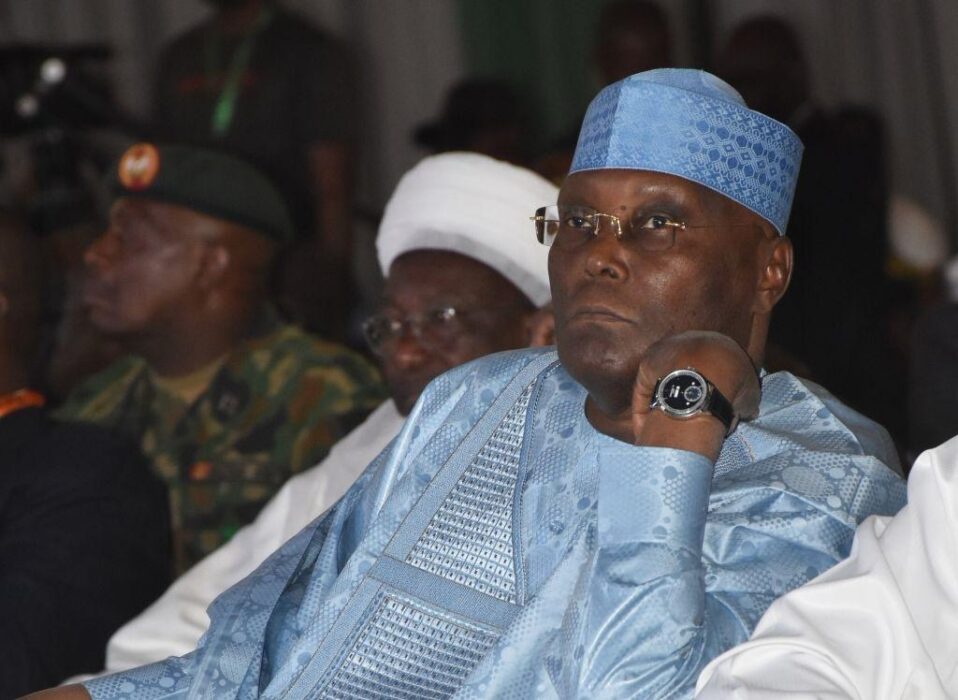
The possibility of former Vice-President Atiku Abubakar being excluded from the 2027 presidential ballot has opened a fresh political debate over opposition politics, electoral competition and the implications for Nigeria’s democracy.
The controversy intensified after the Minister of Aviation and Aerospace Development, Festus Keyamo, said the African Democratic Congress (ADC) would participate in the 2027 general elections, but candidates produced by the David Mark-led faction, including Atiku, might not appear on the ballot.
Keyamo’s position has raised questions about what could happen if the party remains eligible to contest while its presidential candidate is prevented from participating.
For the opposition, the development presents another major challenge at a time when political realignments and efforts to build a formidable coalition against President Bola Tinubu are already facing uncertainty.
Atiku, who contested the 2023 presidential election on the platform of the Peoples Democratic Party (PDP), joined the ADC political coalition ahead of the 2027 elections and emerged as its presidential candidate.
However, his candidacy is now caught in the legal battle over the party’s leadership.
The Legal Battle Behind Atiku’s Uncertainty
The crisis followed a Federal High Court judgment in Abuja which nullified the David Mark-led National Working Committee of the ADC and invalidated decisions taken by the faction, including the process that produced Atiku as the party’s presidential candidate.
The suit, marked FHC/ABJ/CS/1819/2025, was instituted by Nafiu Gombe, a former ADC Deputy National Chairman (North-East), who challenged the emergence of the Mark-led leadership.
Gombe argued that he was constitutionally entitled to assume leadership following the resignation of former national chairman, Ralph Nwosu.
The judgment has thrown the party’s leadership structure and the validity of decisions taken under the Mark-led faction into uncertainty.
The ADC and Atiku have rejected the ruling and indicated plans to challenge it in court, leaving the final outcome to further judicial proceedings.
Keyamo, in his reaction on Sunday, November 8, maintained that the judgment did not mean the ADC would be prevented from participating in the 2027 elections.
He said: “The ADC will be on the ballot. It is the David Mark faction of candidates, including Atiku Abubakar, that may not be on the ballot (depending on the final judgment of the Supreme Court).”
The minister also questioned why candidates who emerged under the party’s original leadership structure should be denied the opportunity to contest in favour of those produced by the Mark-led faction.
What Happens If Atiku Is Excluded?
Beyond the legal arguments, the possibility of Atiku’s exclusion raises questions about the strength and direction of the opposition ahead of 2027.
Atiku remains one of Nigeria’s most recognisable opposition politicians, having contested the presidency several times and maintained a substantial political following.
His possible absence from the ballot could force the ADC to reconsider its presidential strategy, particularly if the courts ultimately uphold the judgment affecting the leadership structure that produced his candidacy.
It could also intensify disagreements within the opposition coalition over who should lead the party into the election.
For supporters of the former vice-president, the central concern is whether the legal dispute could prevent voters from deciding his political fate at the polls.
For critics, however, the issue is whether political ambition should take precedence over compliance with party rules and electoral regulations.
The debate therefore goes beyond Atiku’s personal ambition. It touches on the rights of party members, the authority of recognised party structures and the responsibility of political organisations to conduct valid primaries.
‘Heaven Will Not Fall’ – APC Chieftain
Reacting to the debate, a lawyer and APC chieftain, Hassan Dotun, said Nigeria’s democracy would not collapse if Atiku failed to appear on the 2027 presidential ballot.
In a proposed comment requiring confirmation, Dotun said: “Heaven will not fall if Atiku Abubakar is not on the ballot in 2027. No individual is indispensable to Nigeria’s democracy. The country is bigger than any politician, and the electoral process must be guided by the law, not sentiments or the political influence of individuals.”
He added: “If the courts eventually determine that the process through which a candidate emerged was not in accordance with the law, the decision should be respected. Political parties must learn to obey their constitutions and follow due process.”
Dotun’s position reflects the argument among supporters of the ruling party that the ADC leadership dispute should be resolved through established legal procedures rather than political pressure.
A Test For Nigeria’s Opposition
The unfolding dispute could become a defining test for the ADC and other opposition forces seeking to challenge the ruling APC in 2027.
The party must contend with the legal uncertainty surrounding its leadership while also addressing the political consequences of a possible change in its presidential ticket.
If Atiku’s candidacy is ultimately invalidated, the ADC could face difficult choices over who should represent it and how to prevent the leadership crisis from further weakening its electoral prospects.
There is also the wider question of whether the opposition can maintain a united front when its major political figures are already navigating competing ambitions and internal disagreements.
The Independent National Electoral Commission (INEC) has also said it would await and study the certified true copy of the court judgment before taking a position on the dispute.
Ultimately, the courts will determine the legal consequences of the judgment and the validity of the affected party decisions.
But the political implications are already unfolding.
Whether Atiku appears on the ballot or not, the controversy has placed the ADC’s internal democracy, the strength of opposition politics and the credibility of the 2027 electoral contest under fresh scrutiny.
We’ve got the edge. Get real-time reports, breaking scoops, and exclusive angles delivered straight to your phone. Don’t settle for stale news. Join LEADERSHIP NEWS on WhatsApp for 24/7 updates →
Join Our WhatsApp Channel