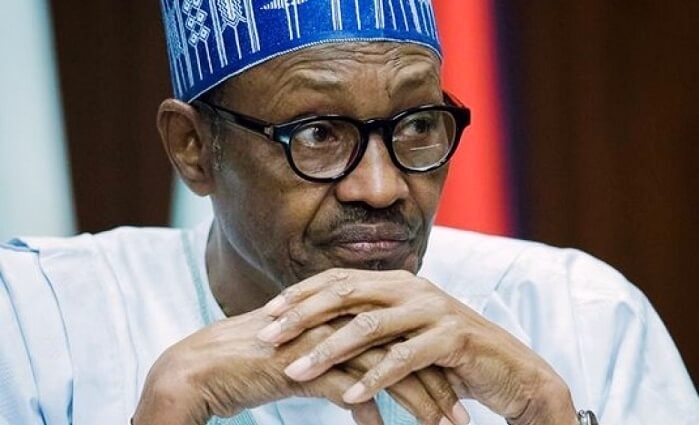
Renowned author and political analyst, Dr Charles Omole, has said former President Muhammadu Buhari’s inner circle wielded more influence than formal state institutions, suggesting that the cabal system didn’t end with him.
According to him, the administration of President Bola Tinubu is shaped by multiple power blocs operating around the presidency.
Omole, author of ‘From Soldier to Statesman: The Legacy of Muhammadu Buhari, stated this on Thursday while speaking on Politics Today, a Channel Television programme.
He said informal power structures, commonly described as cabals, have been a defining feature of every Nigerian presidency since 1999, but the configuration under President Tinubu is more complex.
“The Tinubu government has at least five cabals. The President himself heads one. Others include the Femi Gbajabiamila–Nyesom Wike group, the Seyi Tinubu group, the First Lady, Remi Tinubu’s group, as well as other influential circles within the Presidency,” Omole said.
He explained that cabals are not inherently harmful, noting that they can serve as force multipliers when aligned with a leader’s vision.
Omole said problems arise, however, when such groups pursue personal agendas or compete for influence, which slows decision-making and creates internal friction.
Speaking on Buhari’s eight years in office, Omole said the former president’s cabal was unusually powerful, often shaping access to him and controlling the flow of information.
He noted that Buhari’s tendency to delegate authority meant that those around him exercised enormous influence, sometimes beyond public scrutiny.
“In Buhari’s case, there was one overarching cabal that was difficult to dislodge. They were friends, associates, and people he grew up with. Once they constituted themselves into a power bloc, it became very hard to separate them from him,” he said.
Omole added that concerns about cabal influence were heightened during periods when Buhari was ill, as governance was shrouded in secrecy and key decisions appeared to be managed by a small group around the president.
Turning to his book, Omole said it was not initially planned as a new project, but rather evolved out of the need to update an earlier biography of Buhari written before his presidency.
He explained that the Buhari family did not commission the book to sanitise his image and did not interfere editorially.
“This is not a book about policies; it is about the man, Buhari. His thinking, his character, his strengths and his flaws,” he said.
On President Tinubu, Omole described him as a highly skilled and intelligent politician who understands the dynamics of power and influence around him.
“One of Tinubu’s skills is his ability to manage competing cabals, sometimes using one against the other. He knows what is going on, but the downside is that decision-making can be slower.”
Omole further said that the central lesson from Buhari’s life and leadership is the importance of scrutinising not just who becomes president, but the quality and character of the people surrounding them.
“In the end, who the president is matters less than who has access to him. The people around a leader often determine the outcome of governance,” he said.
We’ve got the edge. Get real-time reports, breaking scoops, and exclusive angles delivered straight to your phone. Don’t settle for stale news. Join LEADERSHIP NEWS on WhatsApp for 24/7 updates →
Join Our WhatsApp Channel