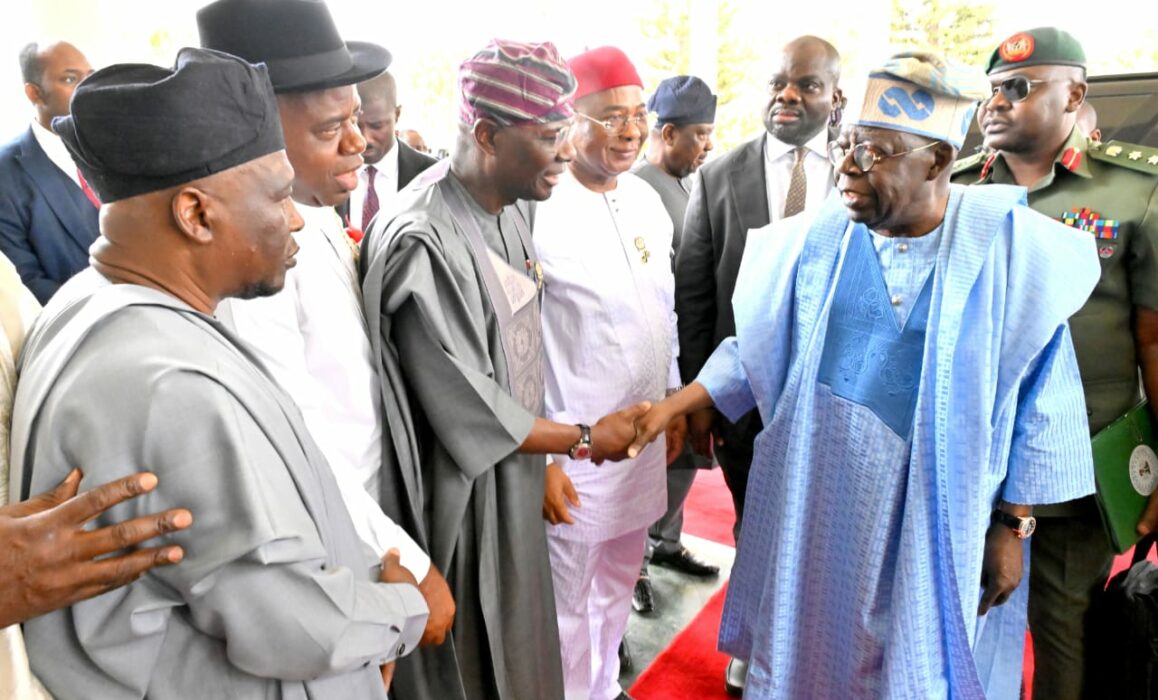
President Bola Tinubu, on Monday, declared that banditry and terrorism were alien to Nigeria’s culture, assuring Nigerians that his administration will defeat insecurity and strengthen the nation’s security architecture to safeguard economic growth and national stability.
Speaking at the Second Edition of the National Economic Council (NEC) Conference held at the State House, Abuja, the President said insecurity remains one of the most serious challenges making Nigerians “sleepless at night,” stressing that failure to address it decisively would continue to undermine economic progress.
According to him, “Banditry and terrorism are not part of our culture. They are foreign to us. Insecurity is an economic hindrance if we do not find immediate solutions to it.”
President Tinubu pledged to further strengthen Nigeria’s security forces to defeat terrorism and banditry, assuring that the country would prevail through determination and resilience.
“That, I promise you, is what affects all of us, keeping us sleepless at night. But I assure you that we will win with determination and resiliency,” he said.
He commended several state governors for their efforts in supporting security operations, singling out the governors of Borno and Kaduna states, among others, for what he described as their commitment to defending freedom, liberty and the commonwealth.
The President spoke while formally opening the second NEC Conference, which he described as taking place at a critical moment in Nigeria’s development journey.
He praised Vice President Kashim Shettima, whom he called “a very good partner on the journey for progress,” for leading the National Economic Council and sustaining it as a platform for strategic dialogue, policy coordination and collective action between the federal and sub-national governments.
Addressing state governors present at the conference, Tinubu acknowledged their collective dedication and commitment.
He noted that while he could not go “item by item and state by state,” their presence reflected shared responsibility for national development.
He also made a light reference to the Governor of the Central Bank of Nigeria, Olayemi Cardoso, describing him as “a very hard nut” and joking that the CBN governor would say “no to everything,” before commending him for sustaining economic stability.
The President said exchange rates had stabilised, inflation was easing and Nigeria’s macroeconomic indicators were improving, outcomes he said were being recognised globally.
Tinubu said the NEC remains “a cornerstone of fiscal federalism and economic governance” and noted that the theme of the conference ;Delivering Inclusive Growth and Sustainable National Development: The Renewed Hope National Development Plan 2026–2030 reflected Nigeria’s resolve to move from recovery to transformation and from narrow growth to inclusive, resilient and sustainable development.
He acknowledged Nigeria’s structural challenges, including macroeconomic imbalances, infrastructure deficits, unemployment, poverty, climate vulnerabilities and limited fiscal space, but said Nigerians possess the resilience, creativity and determination to overcome them.
Since the inception of his administration, Tinubu said bold and necessary reforms had been undertaken to stabilise the economy, restore confidence and lay the foundation for long-term growth, stressing that these reforms were instruments for delivering prosperity, dignity and opportunity to all Nigerians.
He listed key achievements, including increased and more predictable federal allocations to states and local governments, improved macroeconomic stability through stronger revenue performance and public financial management, and expanded investments in infrastructure across transportation, power, digital connectivity, housing and irrigation.
The President also said his administration had expanded social investment and human capital programmes targeting vulnerable households, youths, women and small businesses, adding that the Renewed Hope World Development Project demonstrated a bottom-up approach to national development.
Tinubu explained that the Renewed Hope National Development Plan 2026–2030 would guide the next phase of Nigeria’s journey, describing it as evidence-based, realistic and anchored on inclusive, balanced and environmentally sustainable growth.
He said the plan prioritises economic diversification and productivity, human capital development, national competitiveness based on comparative advantage, private sector-led growth and climate resilience.
According to him, the success of the plan would depend largely on effective implementation at state and local government levels, making the NEC central to aligning national priorities with local realities.
He expressed confidence that resolutions from the conference would include dairy farming, livestock investment and diversification of agricultural production, promising the rollout of mechanisation initiatives across the country’s geopolitical zones.
Reaffirming his commitment to Nigerians, Tinubu said the Renewed Hope Agenda represents a national contract, assuring citizens that the sacrifices they have made would lead to a stronger, fairer and more prosperous nation.
We’ve got the edge. Get real-time reports, breaking scoops, and exclusive angles delivered straight to your phone. Don’t settle for stale news. Join LEADERSHIP NEWS on WhatsApp for 24/7 updates →
Join Our WhatsApp Channel