By Donald Kumun
For years, Memoranda of Understanding (MOUs) were signed in Benue State with fanfare, photo opportunities, and lofty projections. Yet, beyond the ceremonial handshakes, many of those agreements failed to move from paper to practice. Today, under the current administration, His Excellency, the Executive Governor of Benue State, Rev. Dr. Hyacinth Iormem Alia, the narrative has shifted significantly—from symbolic signings to structured implementation.
During the administration of former Governor, Samuel Ortom, Benue State witnessed the signing of multiple MOUs across agriculture, energy, manufacturing, and infrastructure. These agreements often generated optimism, especially given Benue’s reputation as Nigeria’s “Food Basket”, and its vast agricultural potential.
However, many of those arrangements, lacked the institutional mechanisms, technical frameworks, and follow-through structures required for execution. Observers frequently pointed to the absence of dedicated implementation committees, feasibility validation, funding clarity, and monitoring systems.
In several cases, processing plants were proposed without securing reliable raw material supply chains. Investors expressed interest, but enabling legislation, land acquisition processes, and financial guarantees, were either slow or undefined. As a result, numerous agreements stalled at the conceptual stage.
This created a climate of skepticism. MOUs became associated with political optics rather than economic transformation. While some groundwork may have been laid, the broader perception was that Benue State, struggled to convert signed agreements into tangible industrial outcomes. The consequence was persistent post-harvest losses, underutilized arable land, youth unemployment, and limited value addition in the agricultural sector.
The current administration has reversed that pattern. Rather than focusing solely on signing agreements, Governor Alia’s government/renewed hope agenda, has emphasized building institutional pathways to implement them.
The recent Public-Private Partnership initiatives with Kaotheem Energy Services, and Taicorp Capital Partners, signal this new direction.
Facilitated through the Benue Investment and Property Company Limited (BIPC), the partnership framework goes beyond declarations of intent. Technical committees have been constituted. Legal and financial structures are being drafted.
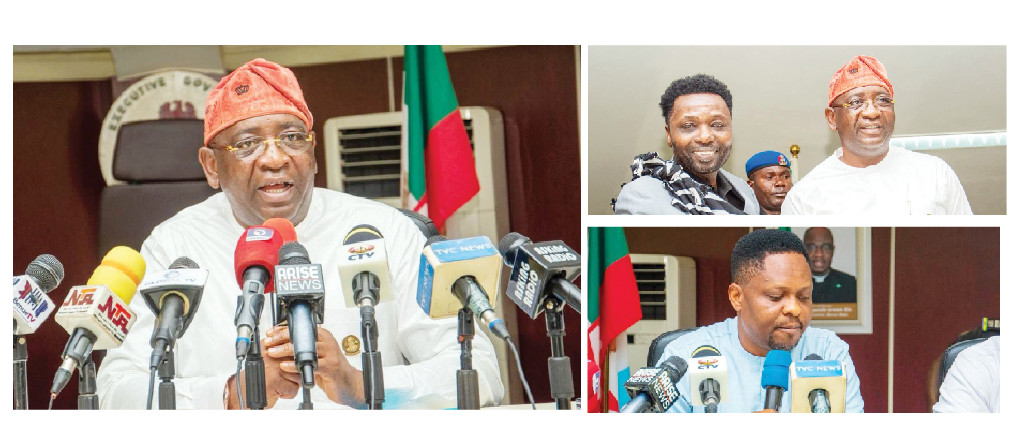
Chairman of KAOTHEEM Energy Services, Tom Iseghohi, said Benue’s agricultural strength is widely acknowledged but underutilized due to weak value chains.
“I am glad to announce our partnership to develop Benue’s agricultural value chain,” he maintained, adding that the consortium plans to invest $2 billion in the first year alone, in Benue State, without requesting a sovereign guarantee from the state government.
The seasoned investment pathfinder, revealed that the 10-year development plan is designed to grow Benue’s GDP from an estimated $2 billion to $20 billion, raise per capita income to $5,000, and create millions of jobs.
Equally, he noted that job creation would significantly improve security, increase internally generated revenue, expand VAT generation, and attract broadband and technology infrastructure to the state.
Land has been secured for agro-processing hubs. The emphasis, according to state officials, is on implementation architecture before expansion announcements.
Representing the Governor at the high-level strategic meeting, the Deputy Governor, Barr. Dr. Sam Odeh, MNI, acknowledged the state’s past disappointments with unfulfilled agreements. His public recognition of those shortcomings, signals an awareness that credibility must now be earned through delivery.
At the center of the new MOUs is a clear economic philosophy: Benue must move from exporting raw agricultural produce, to processing high-value goods. Under the proposed framework, agro-processing hubs will convert yam into flour, tomatoes into paste, and expand soybean value chains. These hubs aim to reduce post-harvest losses that have historically cost farmers billions of Naira.
Crucially, the approach seeks to avoid earlier pitfalls by strengthening the entire agricultural value chain. Out-grower schemes, aggregation models, precision farming, and geo-fencing of farmlands, are being incorporated into the implementation blueprint. Instead of installing factories first, and sourcing produce later—a flaw of past attempts—the new strategy begins with structured supply systems.
This integrated model reflects lessons learned from earlier stalled projects where processing facilities reportedly lacked sufficient raw material feedstock. By prioritizing farmer inclusion and production scaling, the administration is attempting to ensure that industrial capacity aligns with agricultural output.
Another distinguishing feature of the new MOUs, is the integration of academia and technology. The proposed Artificial Intelligence (AI) School at the Benue State University of Agriculture, Science and Technology (UAST), Ihugh, signals an effort to merge research with industry.
The Pioneer Vice Chancellor of the University, Prof Qrisstuberg Amua, has emphasized the university’s innovation-driven structure, where departments function as production-oriented units. This alignment between academic research, and industrial processing contrasts with earlier eras when university output was rarely connected directly to state industrial policy.
The plan also includes broadband expansion, digital skills training, and artificial intelligence applications in agriculture—positioning Benue not merely as an agro-processing state, but as a technology-enabled agro-industrial hub.
The proposed investment blueprint—reportedly beginning with a $2 billion injection—projects ambitious outcomes: GDP growth from $2 billion to $20 billion over the medium term, significant increases in internally generated revenue, and large-scale job creation.
Chairman of the Benue State Internal Revenue Service (BIRS), Mr. Joseph Kwaghba, highlighted the tax advantages of value addition. According to him, under Nigeria’s VAT system, processed goods generate more revenue than raw produce hence, Operationalizing these MOUs could therefore, strengthen the state’s fiscal independence.
Unlike previous arrangements, the investors have indicated willingness to proceed without requesting sovereign guarantees from the state government. This suggests a commercial confidence that may reduce public financial exposure while expanding economic opportunity.
The true test of Governor Alia’s strategy lies not in projections but in measurable outcomes—groundbreaking ceremonies, factory construction, farmer enrollment in out-grower schemes, job placements, and revenue growth. By establishing technical committees, securing land, and aligning executive council approvals before grand announcements, the administration appears intent on avoiding the optics-driven model of the past.
Operationalizing MOUs requires more than signing documents; it demands governance discipline, transparency, and continuity. It also requires managing public expectations, while building investor trust.
Benue’s economic history demonstrates that potential alone is insufficient. What distinguishes this moment is the deliberate effort to embed structure into ambition. The current approach is redefining how development agreements are handled in the state.
Today, the state leadership is comprehensively engrossed in the task of transforming them into engines of industrialization, technological advancement, and inclusive growth. One thing is clear: the conversation has shifted. In place of ceremonial signings, the focus is now on operationalization. And in governance, that shift can make all the difference.
Donald Kumun, is the Principal Special Assistant to the Benue State Governor on Print Media, and writes from Makurdi the State Capital of Benue.
We’ve got the edge. Get real-time reports, breaking scoops, and exclusive angles delivered straight to your phone. Don’t settle for stale news. Join LEADERSHIP NEWS on WhatsApp for 24/7 updates →
Join Our WhatsApp Channel