By Nwachuku Nnamdi
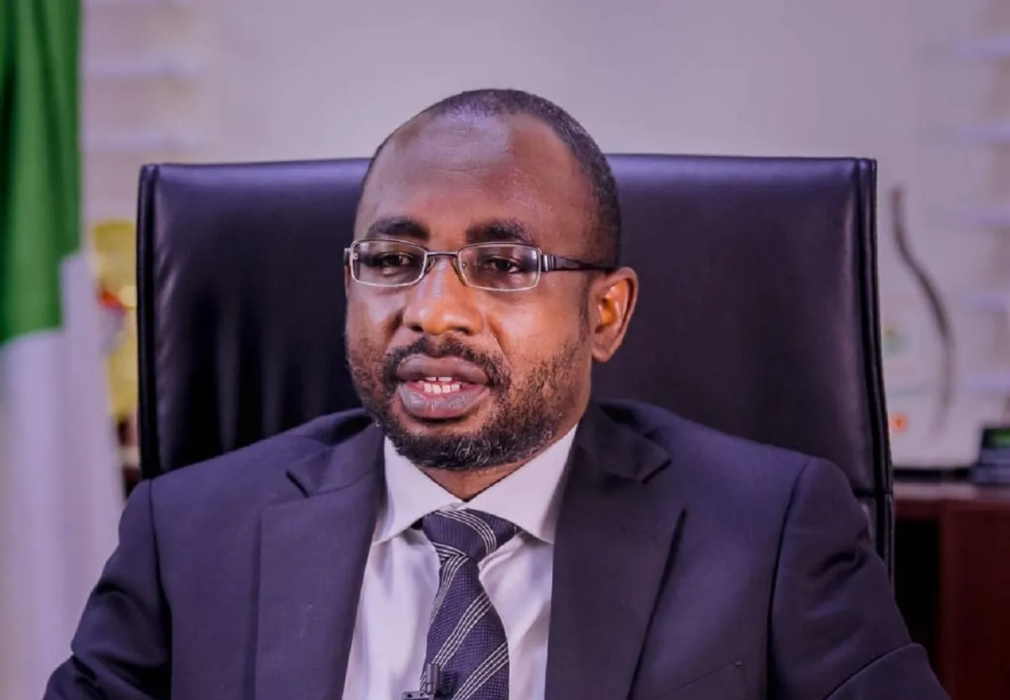
Kashifu Inuwa Abdullahi is widely recognized for his role in Nigeria’s technology governance landscape, particularly as the Director General of the National Information Technology Development Agency (NITDA).
Beyond public office, his involvement in social
impact initiatives has evolved through two non-profit organisations: The Malam Inuwa
Foundation and The Future Map Foundation, both of which Kashifu founded and continues
to support as a patron to promote access to education and digital inclusion.
While Kashifu provides strategic backing, both foundations operate independently with
dedicated leadership and programme structures. Leadership Newspaper spoke separately
with the executive heads of the two organisations to understand their progress and future plans.
Integrating Qur’anic and Formal Education
According to Dr Husaini Yusuf Baban, Executive Chairman of the Malam Inuwa Foundation
and an Associate Professor of Qur’anic Studies at the Sule Lamido University, Kafin Hausa,
in Jigawa State, the foundation was established to address gaps in educational access and
to bridge Western and Islamic education.
“The objective has been to ensure that religious education does not exclude children from
literacy, numeracy, and broader learning opportunities,” Dr Husaini said. “We are working
to blend Qur’anic instruction with elements of Western education in a way that is culturally
grounded and practical.”
Malam Inuwa Foundation operates a purpose-built school comprising three components:
a basic education school running from Nursery 1 to Basic 3, an Islamiya section with seven
classes, and a Halka Qur’anic school.
Since inception, it has supported the education of 520 students through sponsorships, learning materials, teacher support, and curriculum
integration. Demand remains strong, with more than 150 students currently on the waiting
list for admission.
In addition to classroom learning, the foundation has introduced a digital centre that
exposes students to digital literacy and practical skills. Technology is also integrated into
the Islamiya programme, enabling students to connect with teachers and mentors abroad.
Beyond pure academics, the foundation also runs structured career guidance programmes
that have supported over 400 beneficiaries with guidance on JAMB applications, international admissions, and scholarship opportunities. More than 100 students have also received specialized training and scholarships in preparation for the 2026 JAMB examinations. Since 2024, the foundation has implemented feeding and welfare support programmes for over 400 beneficiaries during Ramadan.
Dr Husaini noted that the foundation’s next phase will focus on sustainability and strategic
expansion. “Our goal is to expand the infrastructure available to improve and increase
admission, but we are not looking to scale rapidly; instead, we want to build impact that
can be sustained and replicated within communities,” he said. “We want to develop a
model that other local communities can replicate. We intend to expand, but in a way that
preserves quality and cultural relevance.”
Improving Access to Technology through Future Map Foundation
The Future Map Foundation focuses on expanding access to technology and digital skills, particularly for young Nigerians with limited exposure to the digital economy. According to its Executive Director, Ahmad Shuaibu, the foundation’s work centres on awareness, skills development, and early exposure to technology-enabled opportunities.
“Many young people, especially in vulnerable communities, are excluded not because of
ability, but because of access and information gaps,” Shuaibu said. “Our programmes are
designed to introduce technology in a way that is practical and relevant to their realities.
We do not design projects just for the sake of designing them; we are intentional about
the purpose and intended impact of all projects before we implement them.”
The Future Map Foundation has implemented digital literacy and introductory technology
programmes to help students and young adults better understand technology pathways.
“We don’t just train participants, we also match them with mentors and other partner organizations, thereby creating jobs and allowing program beneficiaries practice the skills they acquire.
While the organization remains modest in scale, Shuaibu said its emphasis has been on building a strong operational base before expansion. “So far, we have empowered 1,527 beneficiaries across 12 communities directly. Our goal is to deepen tech skill access in hard-to-reach communities and complement government efforts for such programs. Looking ahead, the foundation plans to deepen partnerships with more schools and community organizations, particularly in underserved areas, to broaden its reach”
A Complementary Role to Public Service
Although Kashifu is best known for his role in technology governance, both foundations operate separately from his public responsibilities. His role, according to both executives, is primarily that of founder and supporter rather than day-to-day manager.
Taken together, the Malam Inuwa Foundation and Future Map Foundation reflect a consistent theme: expanding access, whether to education or technology for groups that are often left behind. While their approaches differ, both organisations point to Kashifu’s long-term commitment to inclusion, delivered through structured, community-focused interventions rather than one-off philanthropy.
We’ve got the edge. Get real-time reports, breaking scoops, and exclusive angles delivered straight to your phone. Don’t settle for stale news. Join LEADERSHIP NEWS on WhatsApp for 24/7 updates →
Join Our WhatsApp Channel