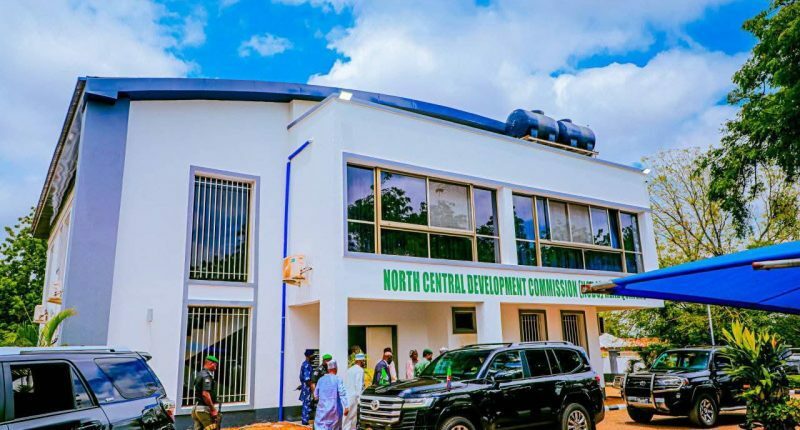
The North Central Development Commission’s (NCDC) decision to convene a stakeholders’ summit and engage with key groups, partners, and public- and private-sector players, during which it unveiled an ambitious 20-year economic, infrastructure, and social development plan for the region, is a welcome step.
The Nigerian government’s decision to establish the six regional development commissions was informed by the need to provide a platform for examining why development gaps persist and, ultimately, to work towards closing them.
Understandably, Nigerians expect the regional Commissions to deliver the necessary change by focusing on key development priorities and the specific needs of each region.
We believe that meeting those expectations should be the driving force behind the NCDC’s actions, given the unique challenges faced by the six states of Benue, Kogi, Kwara, Nasarawa, Niger, and Plateau.
Across the states in the region, there are demands for roads and rail projects, industrialisation, security, investment, human capital development, education, and improved healthcare delivery.
What should the Commission’s focus be amid the region’s enormous potential in agriculture, food production and agro-processing, and in solid minerals development? How can the Commission drive change in a region that has, over the years, operated below its potential? Amid the wave of insecurity that has long bedevilled the region, how can the NCDC best foster stability to enable development?
As the NCDC’s managing director, Cyril Yiltsen Tsenyil, stated, the summit was intended to mark the region’s transition from a collection of states with enormous but fragmented potential to a coordinated regional economy characterised by a common vision, investable projects, integrated infrastructure and shared prosperity.
The NCDC (Establishment) Act, 2024, which established the Commission, tasked it with expanding transport and boosting agriculture, security, entrepreneurship, industrialisation, employment, health, education, housing, water, electricity and telecommunications across the region.
The Commission is to serve as a regional coordination, development and investment-enabling platform, identifying constraints, convening stakeholders, mobilising partnerships and monitoring implementation to benefit the entire region.
Is it on the path to achieving its mandates? How can the Commission ensure that agriculture in the region does more than merely produce raw commodities, that minerals are processed for export rather than exported raw, and that the youth are not merely job seekers but are equipped to become employers?
To live up to its calling, the Commission must facilitate a process that ensures the conversion of the rich potential of vast agricultural land, water, and mineral resources, and a young population into productive assets, competitive businesses, quality jobs, and measurable improvements.
That is the philosophy underpinning the 20-year development plan, which, if implemented diligently, will support the development of a north-central region that is productive, connected, secure, inclusive, innovative and globally competitive.
In the 21st century, with all the technological advances, it is no longer enough for a region to pride itself on being the country’s agricultural hub. It must strive to secure a place among the most competitive agro-industrial regions. Beyond calling itself the home of solid minerals, it must ensure that its minerals benefit the people by deliberately moving beyond extraction towards value addition.
These are challenges not just for the NCDC but for all the state governments in the region. In this context, we condemn the poor attendance of the governors at the summit. Of the six governors, only Abdullahi Sule of Nasarawa State attended the summit. Their absence is inexcusable.
Perhaps the summit offers an opportunity to set out key priorities to accelerate the region’s transformation and development. This can be achieved through state-specific agricultural and livestock value chains covering quality inputs, mechanisation, irrigation, farmers’ capacity, storage, processing, packaging, branding, logistics, and exports.
Plausibly, the plan to establish an integrated North Central infrastructure programme linking states in the region and the Federal Capital Territory via strategic roads, rail, inland waterways, and logistics systems is an exciting and welcome development.
However, beyond the summit, the NCDC must prioritise infrastructure development to boost the economy and develop practical measures to ensure the effective utilisation of the Rivers Benue and Niger, Baro Port, and the Jos Dry Inland Port.
NCDC must, as a matter of necessity, prioritise the rehabilitation and completion of corridors that unlock agricultural production, markets and investment across the region.
Above all, concerted efforts must be made to ensure that the summit does not end up like similar ones, where ideas are presented and reports are generated, only to gather dust on shelves. The NCDC should set a better example by following through with implementation.
We’ve got the edge. Get real-time reports, breaking scoops, and exclusive angles delivered straight to your phone. Don’t settle for stale news. Join LEADERSHIP NEWS on WhatsApp for 24/7 updates →
Join Our WhatsApp Channel